


Do you know about sago?
Sago is a type of starch flour used primarily in the region centered around Papua New Guinea.
Of course, I'm not going to eat it like this!
There are many dishes made with sago, and they are enjoyed in various regions.
Each has its own regional characteristics, ranging from rice porridge and dumplings to sweets.
This time, I'd like to introduce some dishes made with sago.
Please be sure to watch until the very end.
What is sago?
Palm-derived starch powder
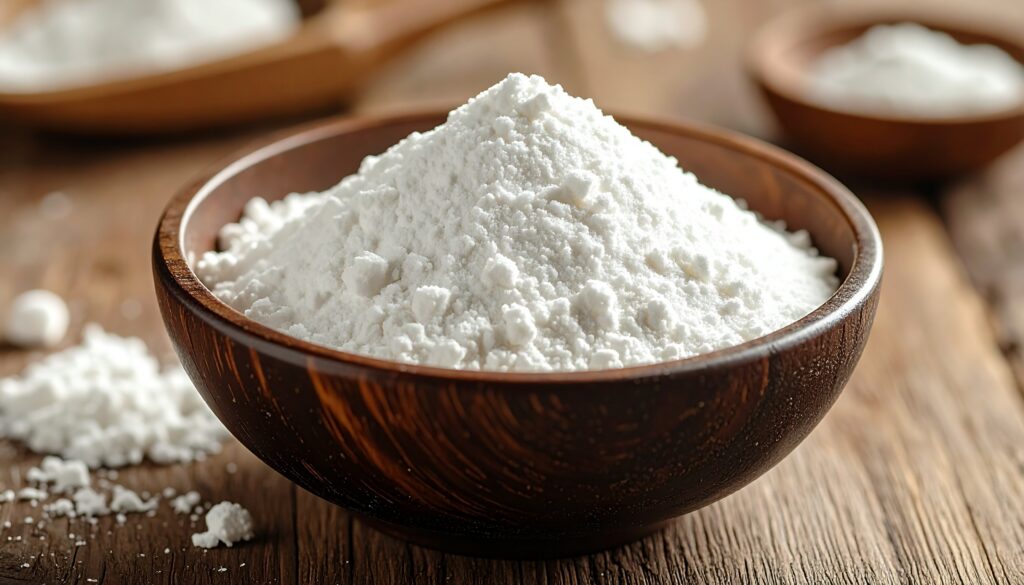
Sago is a powder made from the starchy trunk of a type of sago palm.
This sago palm is a type of palm tree native to Southeast Asia and Oceania that stores large amounts of starch within its trunk.
Sago is produced by drying that starch.
Drying starch produces a white, fine powder with a smooth texture and appearance.
Adding water enhances its stickiness, while cooling it as is creates elasticity.
However, sago itself is almost tasteless and odorless.
It has only a faint sweetness and cannot be used for cooking on its own.
Sago truly shines when combined with other ingredients.
What kinds of Sago dishes are there?
In the previous section, we explained that sago is a tasteless and odorless starch powder.
So what kinds of dishes are made with what kinds of ingredients?
Here we introduce some of them.
Sago Porridge
Sago porridge is a gruel-like dish made by boiling sago.
By utilizing its property of becoming sticky when mixed with sago water, it creates a texture reminiscent of rice porridge.
The ingredients used include:
For regular meals using salt and vegetables
Dessert-style using coconut and sugar
There are two ways.
The flavor profile also makes it easy to bring out the natural taste of ingredients, and sago serves as a supporting player in this regard.
Therefore, the chewiness and subtle sweetness form the base, allowing you to enjoy the differences between ingredients.
Sago Pancake / Sago Cake
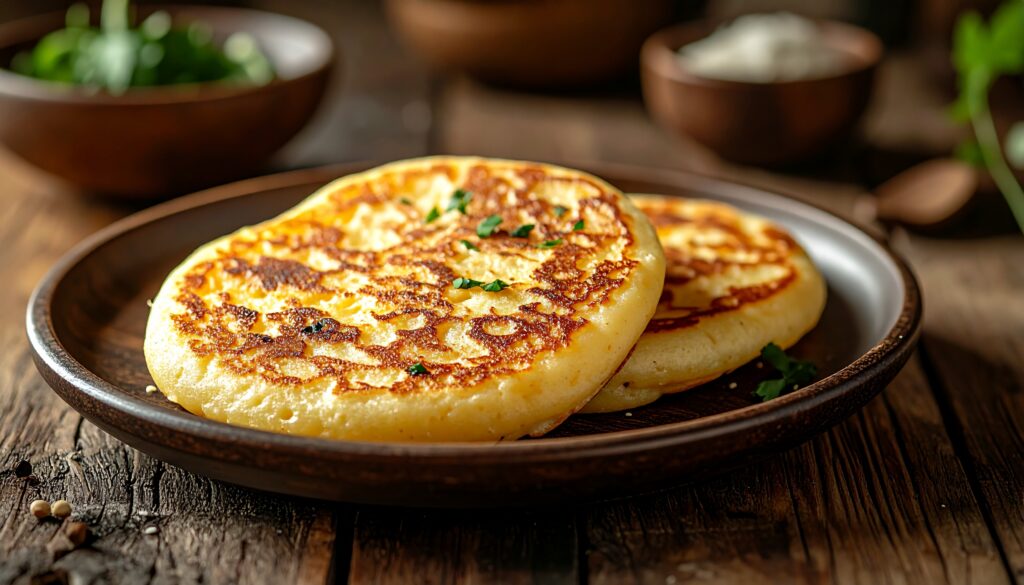
It is made by mixing sago with water or coconut milk, sometimes adding banana or sweet potato, and then baking it.
This dish also comes in two varieties depending on whether sugar is added and the ingredients used: one suited for dessert and another for a side dish.
The dessert-style version features sugar, coconut oil, and ripe bananas enveloped in the natural sweetness of sago.
It is also flavored with coconut and banana, giving it a tropical flavor characteristic of the region.
There is also a dish called “Saksak” where this is wrapped in banana leaves and grilled.
On the other hand, the side dish variety is characterized by its saltiness and mild flavor.
It enhances the flavor of fish and vegetables, but it's strongly associated with being eaten as a substitute for rice or porridge.
It has a chewy texture and is satisfyingly filling.
Sago balls / Saksak
Sago is kneaded into balls and then boiled or steamed.
It is often eaten as a dessert, and it is popular to top it with coconut sauce or palm sugar.
It is popular across a wide range of countries, including Papua New Guinea, Indonesia, and the Solomon Islands.
With its tropical aroma and sweetness, the sauce and chewy dumplings are addictive.
Sago with meat or fish
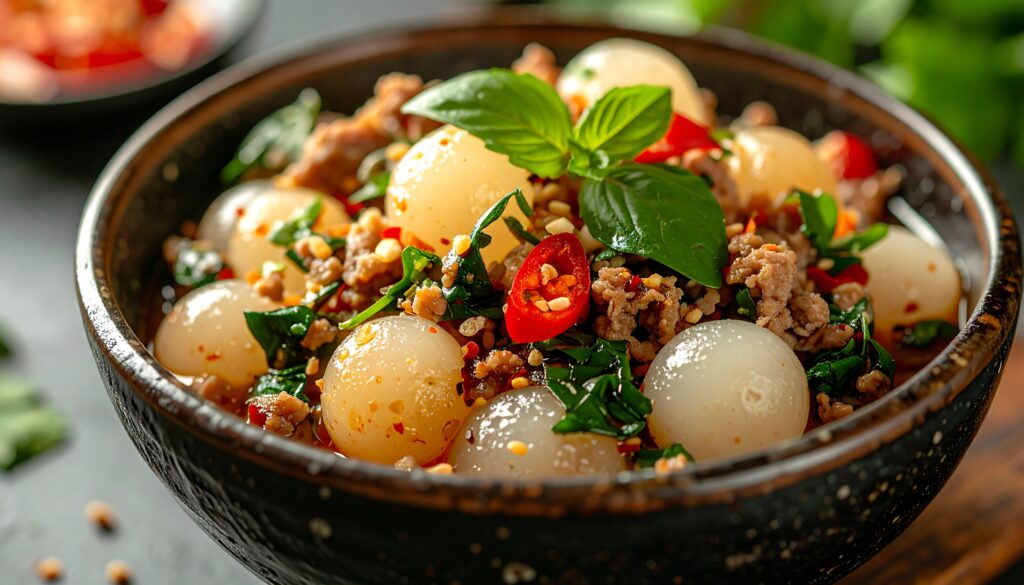
This refers to a style where sago is heated to develop its stickiness and eaten alongside grilled fish, smoked meat, and vegetables.
Additionally, sago is sometimes served as a staple food instead of rice.
The History of Sago Cuisine
Sago palms are widely distributed throughout Southeast Asia to Oceania, particularly in present-day Papua New Guinea and the Indonesian province of Papua.
Rather than being cultivated, it often grew naturally and was highly valued as a food source in wetlands and lowland areas.
According to historical records, evidence confirms that sago was consumed as food in the 13th century around the Sunda Islands and the Maluku Islands.
Therefore, it is thought that sago had been used as food even before that time.
In areas such as the Sepik River basin in northern Papua New Guinea, sago served as a daily staple food and played multifaceted roles in the diet, rituals, and construction materials of settlements.
Compared to rice and wheat, which are constrained by seasonal factors, sago palms can grow in wetlands and marshes, and have thus traditionally served as an alternative grain or staple food.
The process of harvesting, grinding, and cooking sago was culturally divided among roles based on gender and age.
Additionally, there are instances where it is incorporated into rituals as a symbol of “fertility” and “vitality.”
In recent years, efforts have also advanced in establishing cultivation and processing facilities, as well as expanding applications into food and industrial uses (noodles, glass noodles, confectionery, starch materials).
On the other hand, there are regions where the penetration of imported rice and rice culture has led to a decline in Sago's food self-sufficiency.
It's sad that sago, which has supported so many lives, is now on the decline.
How to Make Sago Dishes
Sago is widely used in the Pacific Islands and Southeast Asia, including Papua New Guinea and Indonesia.
Therefore, dishes made with sago vary widely, serving as “staple foods,” “desserts,” and “thickening agents.”
This time, we'll introduce several representative sago dishes from different regions.
1. Papua New Guinea's Sago Porridge

As I mentioned a little while ago, it's a traditional porridge-like dish made from sago.
It is often eaten for breakfast or as a light meal.
Ingredients (for 2 people)
- Sago: 1 cup (1 cup in a measuring cup = 200ml)
- Water: 3 cups
- Coconut milk: 1 cup
- Sugar: 2 to 3 tablespoons (to taste)
- Salt: a pinch
How to make them
- Add water to a pot and heat it, then gradually add the sago.
- Stir over low heat until thickened (about 10 minutes).
- Add coconut milk, sugar, and salt, then simmer for another 5 minutes.
- Serve while warm to complete.
You can make it sweet for dessert or savory for a main dish.
2. Sago Pudding
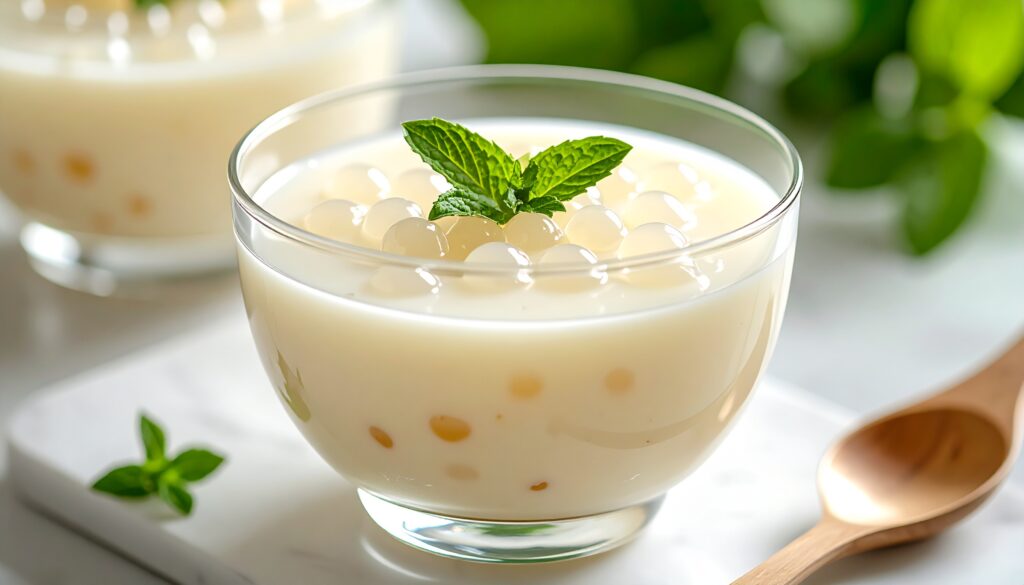
It is a popular dessert in Malaysia and Indonesia.
We use small sago pearls similar to tapioca.
Ingredients (serves 2-3)
- Sago pearls: 1/2 cup
- Coconut milk: 200ml
- Palm sugar (or brown sugar): 50g
- Water: 2 cups
- Salt: a pinch
How to make them
- Place sago pearls in water and boil for about 10 minutes until they become transparent.
- Rinse the cooked sago in cold water to remove the slime.
- Melt palm sugar with a small amount of water in a pot to make syrup.
- Add salt to the coconut milk and gently warm it.
- Spoon the sago into a bowl, then pour the syrup and coconut milk over the top to finish.
3. Sago Leme
Traditional sago steamed cake from eastern Indonesia.
Its characteristic feature is a chewy texture.
Ingredients (Serves 3–4)
- Sago flour: 1 cup
- Coconut milk: 1 cup
- Sugar: 1/2 cup
- Salt: a pinch
- Banana leaves (or heat-resistant container)
How to make them
- Mix the sago flour, sugar, and salt in a bowl.
- Gradually add coconut milk until the batter is smooth.
- Wrap in banana leaves or pour into a heatproof container.
- Steam for 20 to 30 minutes in a steamer.
- Let it cool before slicing and serving.
4. Papeda from Ambon Island
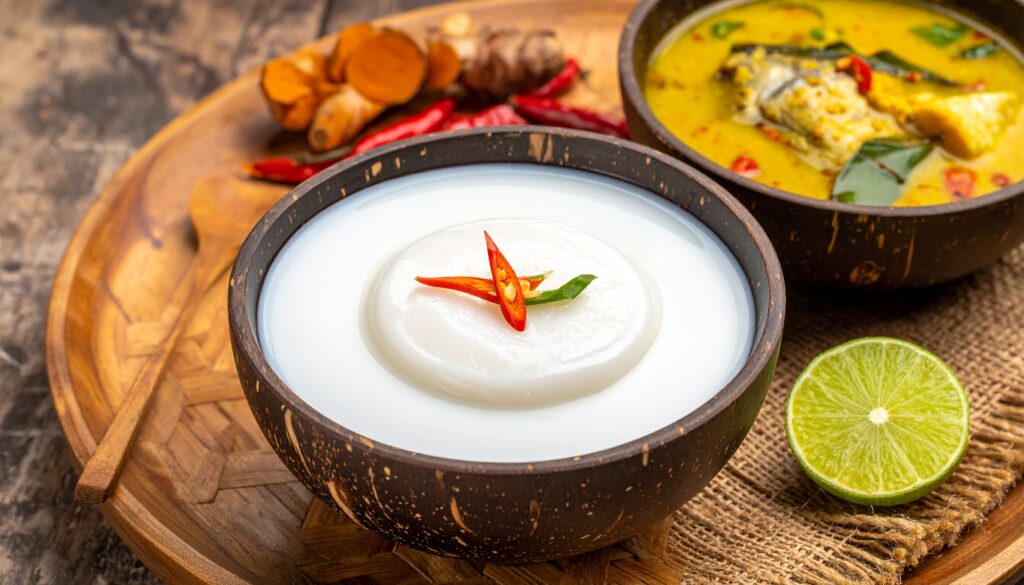
It is the staple food of the Maluku Islands in Indonesia.
Sago is simmered until tender and eaten with fish soup.
Ingredients (for 2 people)
- Sago flour: 1 cup
- Water: 3 cups
- Salt: a pinch
How to make them
- Add water to the pot and bring half of it to a boil.
- Dissolve the sago starch in the remaining water.
- Gradually pour the sago water into the boiling water while stirring.
- Once it thickens and_ becomes a clear, jelly-like consistency, it's done.
It is usually eaten with “ikan kunin” (turmeric-flavored fish soup).
5. Sago Biscuits
A baked good popular in Malaysia and Singapore.
It features a crisp and light texture.
Ingredients (for about 15 pieces)
- Sago flour: 100g
- Butter: 50g
- Sugar: 40g
- Egg yolk: 1
- Vanilla extract: a little
How to make them
- In a bowl, cream the butter and sugar until pale.
- Add the egg yolks and vanilla and mix.
- Add sago flour and knead into a dough.
- Roll into small balls and bake at 180°C for 15 minutes.
Summary
How was it?
This time, we explained dishes made with sago, a staple particularly popular in Papua New Guinea.
Sago, with its subtle sweetness and_ ability to create_ diverse textures, has inspired numerous dishes that blend well with many ingredients and_ bring out their best qualities.
I think it's a dish everyone should try at least once!
And explore your own preferences.
So, are there any restaurants in Japan that serve sago dishes?
To cut to the chase, it doesn't seem likely.
There are no such specialty shops, but you might find it at restaurants serving “South Pacific/Melanesian cuisine” or “Papua New Guinean cuisine.” If you're interested, give it a look.
The recommended method is to make it at home.
Since it's commonly eaten locally for breakfast and other daily meals, the preparation itself is very simple.
Sago flour may also be available for purchase online or at stores specializing in ethnic/Southeast Asian ingredients.
It's a bit of a challenge, but being able to enjoy foreign flavors right at home is great, isn't it!
If you're interested, please give it a try!
Thank you for watching until the end.
Feel free to check out our other articles too!
Comments