

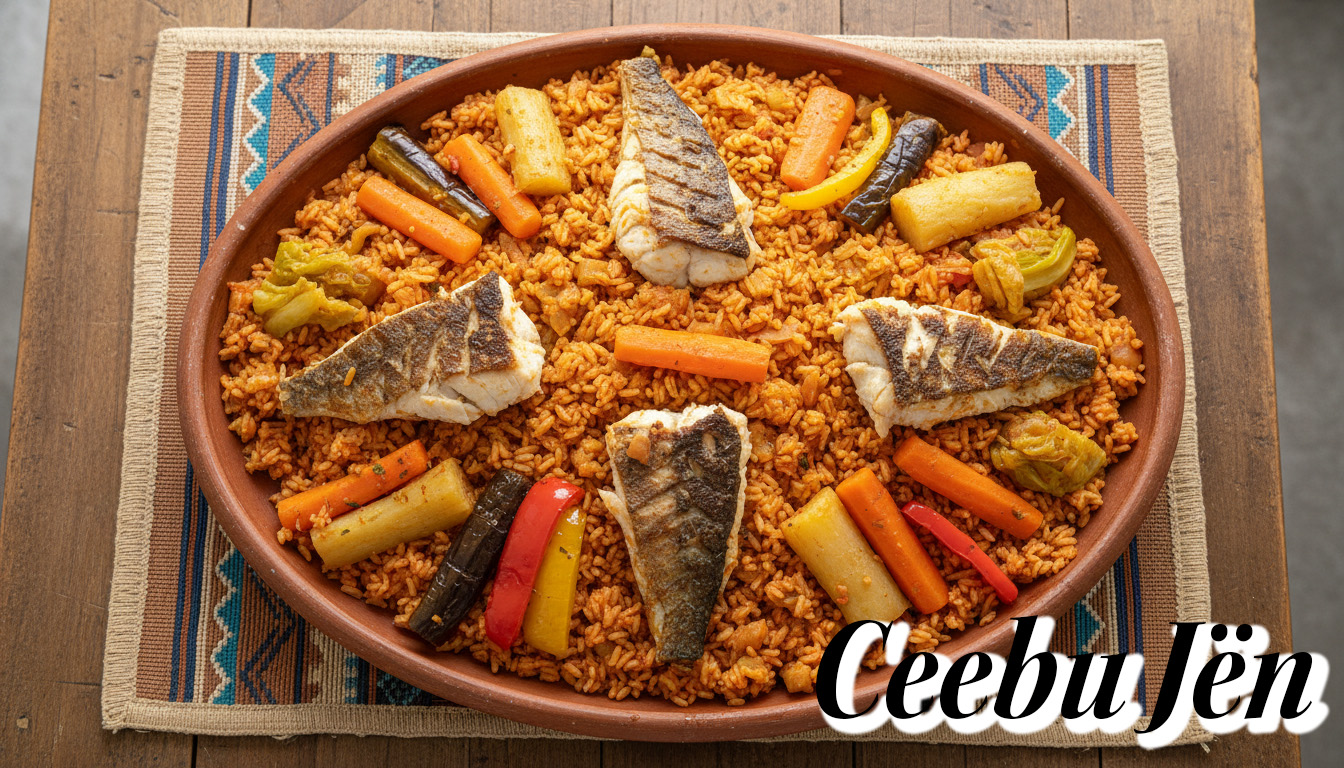
Have you ever eaten Ceebu Jën?
Ceebu Jën is a stew where rice takes center stage.
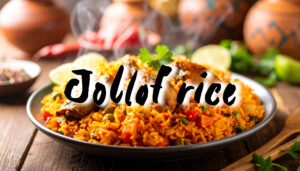
It is said to be the origin of Jollof rice and is cherished as a national dish in West Africa.
This article will introduce you to Ceebu Jën!
Please watch until the very end!
~Notice~
This site introduces cuisines from around the world and also features songs that express those dishes.
You can also listen on YouTube and various subscription services, so please give it a listen!
We've also started accepting requests for music production!
Perfect for personal use or in-store background music!
We offer a wide range of services, from existing dishes to original creations, so feel free to place your order anytime!
What kind of dish is Ceebu Jën?

Ceebu Jën is a dish made by simmering rice, fish, and plenty of vegetables in a tomato-based sauce.
The name “Ceebu Jën” comes from the Wolof words ceeb = rice and_ jën = fish.
“One-pot dishes” are prepared in a single pot, characterized by a rich, full-bodied flavor where the savory essence of rice, vegetables, and_ fish meld together.
Primarily a dish commonly eaten in Senegal, West Africa, it is also a staple at celebrations and_ family gatherings.
Similar dishes and variations can also be found in neighboring countries such as The Gambia, Mauritania, and_ Guinea-Bissau.
The main ingredients in Ceebu Jën are fish and rice.
Fish such as grouper and snapper are used.
On the other hand, broken rice—rice grains that have cracked during milling—is used.
This allows the rice to absorb the fish broth and tomato sauce, letting it shine as the star of the dish.
Additionally, the relative ease of obtaining broken rice is another reason why it was used in Ceebu Jën.
The vegetables used are diverse, including cassava, carrots, cabbage, eggplant, okra, and_ sweet potatoes.
Then simmered slowly with tomato sauce and spices to draw out the umami flavor.
Rice infused with richness and umami, spices accented with chili peppers and garlic, and the sweetness of vegetables.
The combination of these elements creates a complex yet well-balanced umami flavor that is truly captivating.
The History of Ceebu Jën

Ceebu Jën is believed to have been born in the 19th century in the Atlantic port city of Saint-Louis in northern Senegal.
Saint-Louis was the central city of the French colonial era at the time and is a town where fishing thrives.
Therefore, the dish called Ceebu Jën, made with fish and rice, naturally came into being.
Furthermore, the town's numerous fishing communities made fresh fish and_ ingredients readily available, which also contributed to the development of its cuisine.
Additionally, the story of the cook “Penda Mbaye” is also famous as a traditional tale about the origins of Ceebu Jën.
She worked as a cook at the French governor's residence in Saint-Louis.
It is said that the fusion of local ingredients with rice and seasonings introduced during the colonial era established the prototype of Ceebu Jën.
Additionally, there is a theory that the use of broken rice also began as a byproduct of imported rice from France at that time and became a characteristic feature of the cuisine.
Later, Ceebu Jën, which originated in Senegal, became widely eaten throughout West Africa, including in Gambia, Mauritania, and Guinea-Bissau.
While ingredients and cooking methods vary by country and region, the fundamental aspects remain the same.
This expansion is thought to have progressed through the distribution of foodstuffs, human migration, and_ trade routes, forming a common foundation for West African food cultures.
Ceebu Jën's Trivia & Interesting Stories
① A national dish where every household has its own “right answer”
In Senegal, people often say, “The real Ceebu Jën is my mother's cooking.”
- Types of Vegetables
- Chili Pepper Heatv
- Tomato richness
- Whether to include fermented shellfish (yett)
These vary from household to household, and there is no official recipe.
This lack of a single correct answer is also a characteristic feature of a national dish.
② The crispy rice at the bottom of the pot is the most popular part.
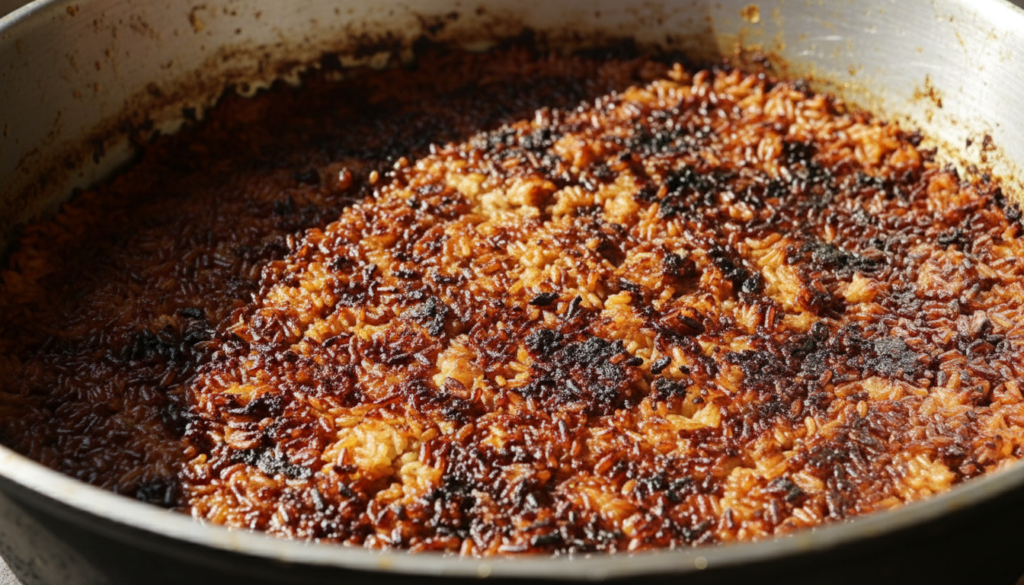
The residue that forms at the bottom of the pot after cooking Ceebu Jën
- Dried and slightly burnt rice (okoge)
is treated as a feast.
Therefore,
- Children fight over it
- If you take it first, you'll get scolded
Such anecdotes, reminiscent of Japan's culture surrounding rice crusts, are often recounted.
③ There are also unspoken rules for arranging ingredients.

When serving on a large platter,
- Central section: Rice
- Topping and sides: Fish and vegetables
This is the basic layout.
The placement of fish fillets is particularly important, and_ it is considered good manners to place them in front of elders or_ guests.
④ Appearing as an “ancestor” in the Jollof rice controversy
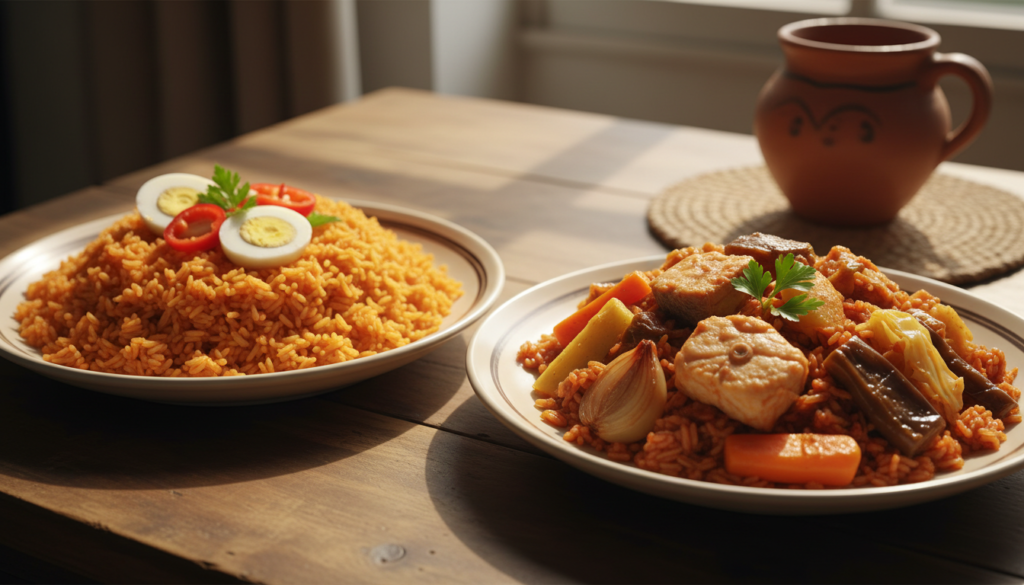
In West Africa, as previously introduced
- Ghana vs Nigeria
The Debate Over Which Jollof is the Real One
is famous, but among them
“It was Ceebu Jën from the very beginning”
And, Senegal is sometimes discussed as the ancestral homeland.
As a result, he became a name that inevitably comes up whenever the topic turns to culinary history.
⑤ UNESCO registration is for “culture,” not “cuisine.”
In 2021, Ceebu Jën was inscribed on the UNESCO Intangible Cultural Heritage list.
However, it was not just the recipes themselves that were valued, but the entire food culture encompassing cooking knowledge, the habit of sharing, and_ family relationships.
Therefore, the way it is made and the way it is eaten are also part of its heritage.
How to Make Ceebu Jën
Ingredients (serves 4)
Main Ingredients
- Rice: 2 cups
※Ideal: Broken rice / Substitute: Long-grain rice or basmati rice - White fish (fillet): 4 pieces
(cod, sea bass, sea bream, etc.) - Onion: 1
- Garlic: 2 cloves
- Tomato paste: 3 to 4 tablespoons
- Canned tomatoes (if available): 1/2 can
- Water or fish stock: 400–500 ml
- Salad oil: 3 tablespoons
Vegetables (e.g., whatever you have on hand is fine)
- Carrot
- Eggplant
- Cabbage
- Potato or sweet potato
- Okra
Seasoning
- Salt: To taste
- Black pepper: a pinch
- Chili pepper: 1 (use as desired for milder heat)
- Consommé or bouillon: a little (adjusted for Japanese tastes)
Preparation (Important)
Seasoning for fish
- Garlic (grated)
- Salt
- Parsley (if available)
Mix and lightly brush onto the fish.
→ Let sit for about 10 minutes (to reduce fishy odor and_ enhance flavor)
How to Make (Basic Process)
① Make the sauce
- Heat oil in a heavy pot.
- Sauté the onions and garlic.
- Add tomato paste and canned tomatoes, then stir-fry thoroughly until the oil separates.
This is the key to flavor (prevents fishiness and adds richness)
② Simmer the fish and vegetables
- Place the fish in the pan and lightly sear the surface.
- Cut the vegetables into larger pieces.
- Add water (or broth) and season with salt.
- Simmer over medium heat for about 15 minutes.
Once the vegetables are cooked through, remove the fish and_ vegetables from the pan.
③ Cook rice
- Add the washed rice to the broth.
- Cook over low to medium heat, allowing the moisture to be absorbed.
- Once the liquid has reduced, cover and let steam (10 minutes).
Once the rice turns red and absorbs the savory flavors of fish and vegetables, it's ready.
④ Finishing
- Put the fish and vegetables you had taken out back in.
- Gently reheat to finish.
Presentation
- Spread the rice on a large plate
- Pile on the fish and vegetables generously
- Chili peppers are just for garnish.
Tips for Making in Japan
- If there were no broken rice
→ Lightly crush the rice or use basmati rice - Fish Odor Countermeasures
→ Sauté the seasoned ingredients and tomatoes thoroughly. - For spiciness, just add chili peppers.
Summary
How was it?
This time, we introduced Ceebu Jën, a dish beloved in West Africa, particularly Senegal!
Couldn't this be one of the finest dishes where Senegalese ingredients and wisdom are brought out by rice?
It has also influenced dishes originating in West Africa, such as Jollof rice, making its presence truly special.
The rice, infused with the savory umami of fish and the rich depth of tomatoes, makes this dish absolutely delicious. If you ever get the chance, you should definitely try it!
Thank you for watching until the very end!
And if you'd like, please check out our other articles too!
Comments