

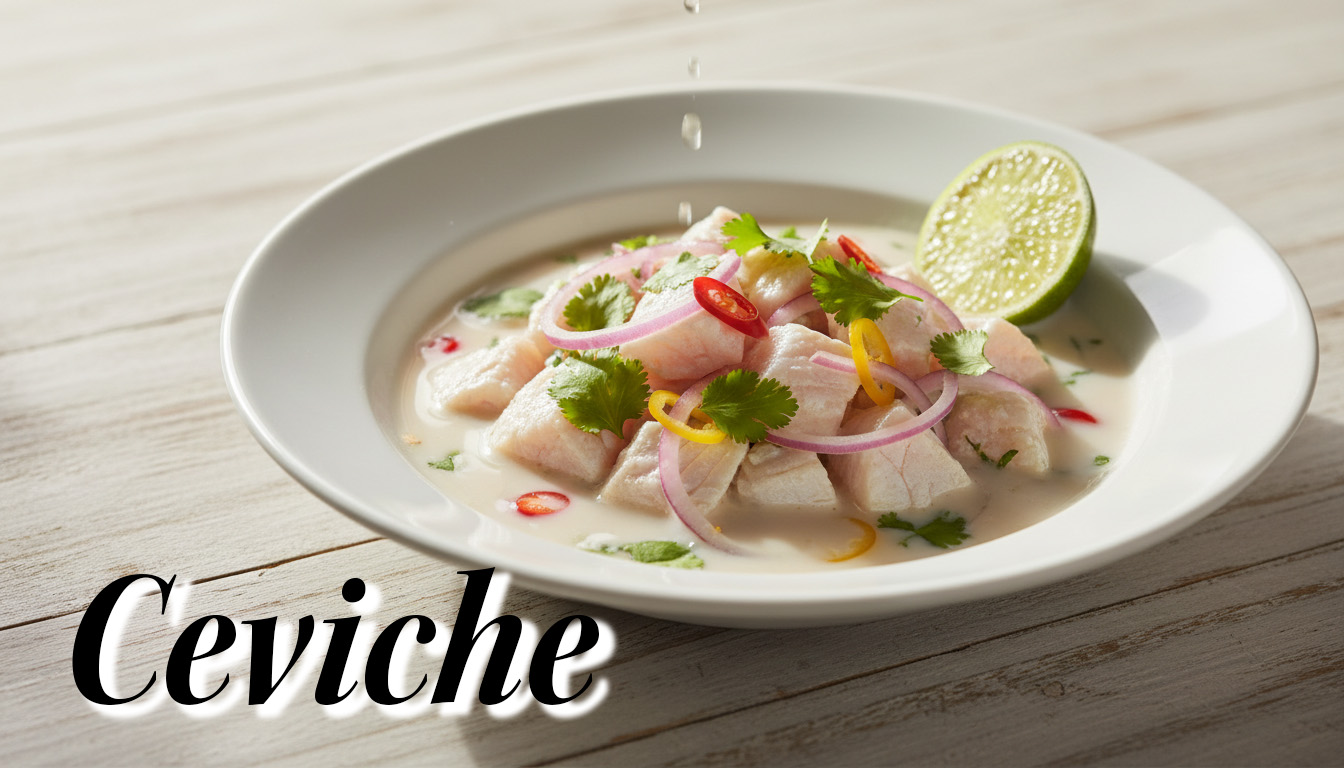
Do you know a dish called ceviche?
The defining feature of this dish is marinating the fish used as an ingredient.
It brings out a variety of flavors and continues to captivate the world with its taste.
This article explores what exactly ceviche is as a dish.
What history does it carry? We explain.
Please watch until the very end!
~Notice~
This site introduces cuisines from around the world and also features songs that express those dishes.
You can also listen on YouTube and various subscription services, so please give it a listen!
We've also started accepting requests for music production!
Perfect for personal use or in-store background music!
We offer a wide range of services, from existing dishes to original creations, so feel free to place your order anytime!
What kind of dish is ceviche?
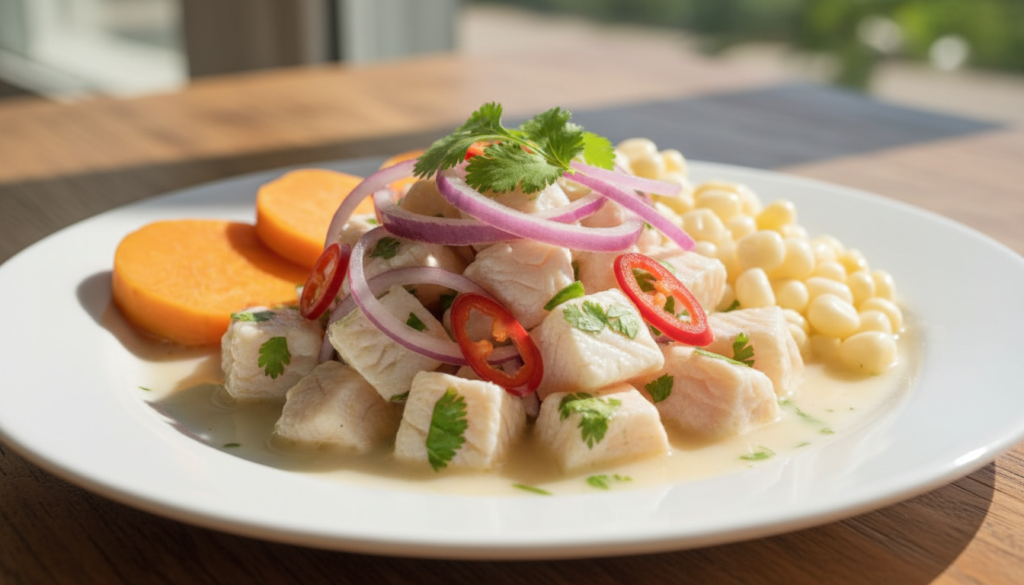
Ceviche is a popular South American dish made by marinating seafood.
It is primarily considered a national dish in Peru, but variations with different ingredients also exist in Ecuador and Mexico, showing that it is widely enjoyed.
The cooking process does not involve heating the fish; instead, the marinade creates a state that “appears as if it has been cooked.”
Marinating is a cooking method that involves soaking food in a liquid made from vinegar, lemon juice, or similar ingredients.
This is done as a preparatory step to add flavor and tenderize the ingredients.
In ceviche, citrus acid is used, and a strong sourness forms the core flavor.
Additionally, the flesh of the fish becomes slightly whitish and develops a firm texture.
By the way, marinating is also used in the Otaika dish I introduced previously, so feel free to check it out if you're interested.
The appeal of ceviche lies not only in its marinade but also in its complex flavors, including the umami of fresh seafood sourced from the sea and_ the spice from ingredients like chili peppers.
This satisfying dish features crisp onions and. the firm texture of white fish.
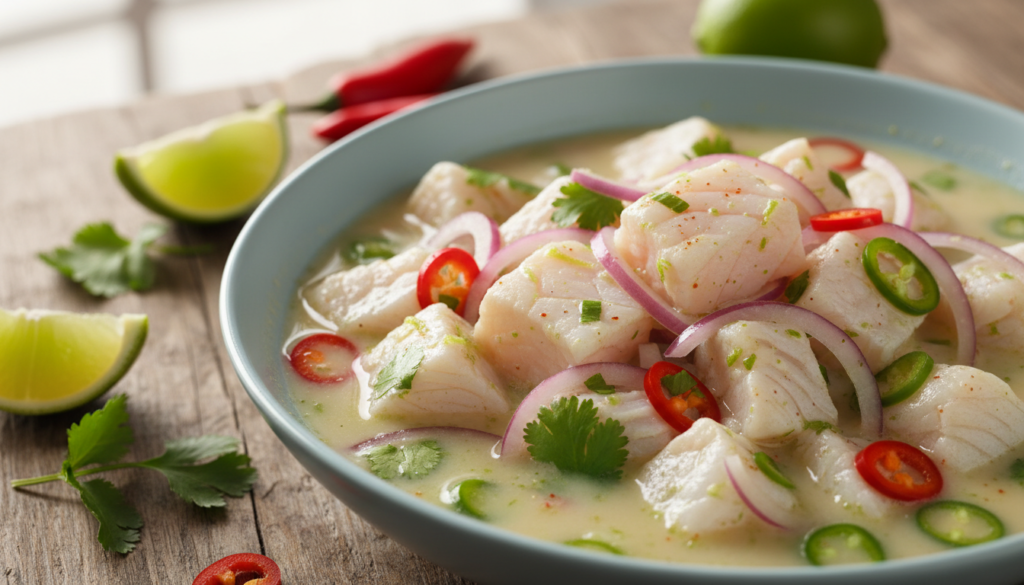
Also, in Peru, the marinade for ceviche is sometimes called “leche de tigre (tiger's milk)”.
This soup, blending sourness, spiciness, and the savory flavor of fish, is enjoyed as a standalone dish in its own right.
The Origins and History of Ceviche
The origins of ceviche date back over 2,000 years.
It is believed that the indigenous peoples of northern Peru at that time consumed fish combined with sea salt and_ sour fruits.
This is precisely what has become established as the current fishing practices of the Peruvian North Coast.
However, at this time it was not yet the form we know today as ceviche, but simply a dish where fresh fish was seasoned with tart fruits or seaweed. This can be considered the origin of what later became ceviche.
This dish, which had previously been seasoned only with seaweed and fruit, changed when limes were introduced to South America in the 16th century.
The introduction of lime, a key ingredient in modern ceviche, established the cooking method of marinating fish in acid.
In regions where limes were unavailable, some areas reportedly used a sour fruit called tumbo, which resembles passion fruit.
Then, in the 19th century, it first appeared in literature under the name ceviche.
After that, ceviche became a beloved national dish in Peru.
Since 2008, June 28th has been celebrated as National Ceviche Day every year.
Furthermore, in 2024, it was inscribed on the UNESCO Intangible Cultural Heritage List, and its cultural value continues to grow year by year.
And it will also be rolled out independently in Pacific coastal regions such as Ecuador and_ Mexico, not just Peru.
Nowadays, its popularity has spread as distinctive regional versions featuring local seafood and seasonings.
Fun Facts and Interesting Stories About Ceviche
① Ceviche and the Japanese
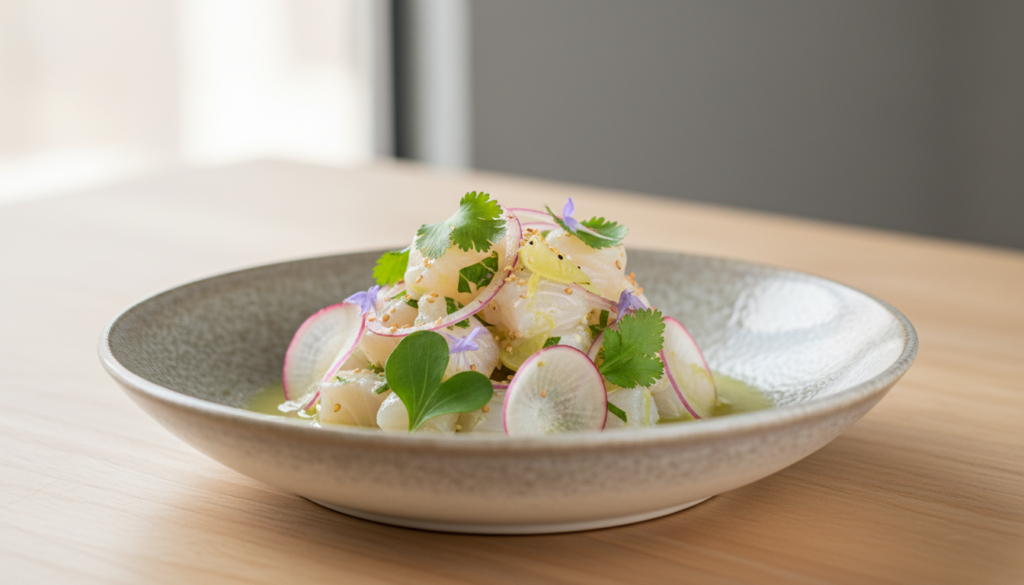
It is said that Japanese immigrants to Peru played a role in shaping ceviche into its current form.
Originally, ceviche was typically prepared by marinating fish in a marinade for several hours to a day.
However, Japanese immigrants introduced the Japanese sashimi culture of enjoying fresh fish in a state close to raw, which would influence marinades.
As a result, the lengthy marinating time was reduced, leading to the current style of ceviche that highlights the fresh texture and_ acidity of the fish.
The taste of ceviche, which is gaining popularity worldwide, was influenced by Japanese immigrants to Peru.
② The Origin of the Name “Ceviche”
The etymology of ceviche has multiple theories and is considered linguistically interesting.
The first theory is that it originated from the Quechua word “siwichi” (pronounced “shivichi”) through dialectal change.
Quechua is the collective term for the languages spoken by indigenous peoples living in the Andes region.
Siwichi means fresh fish in this Quechua language.
The second theory is that it evolved from the Spanish escabeche (pickled dish).
This is thought to suggest the possibility that it was influenced by the pickled food culture introduced during the Spanish colonial era.
There are other theories about its origins, but these two are particularly well-known.
And today, it is considered a name resulting from the blending of language and_ food culture.
③ Is ceviche really just a “lunch dish”?
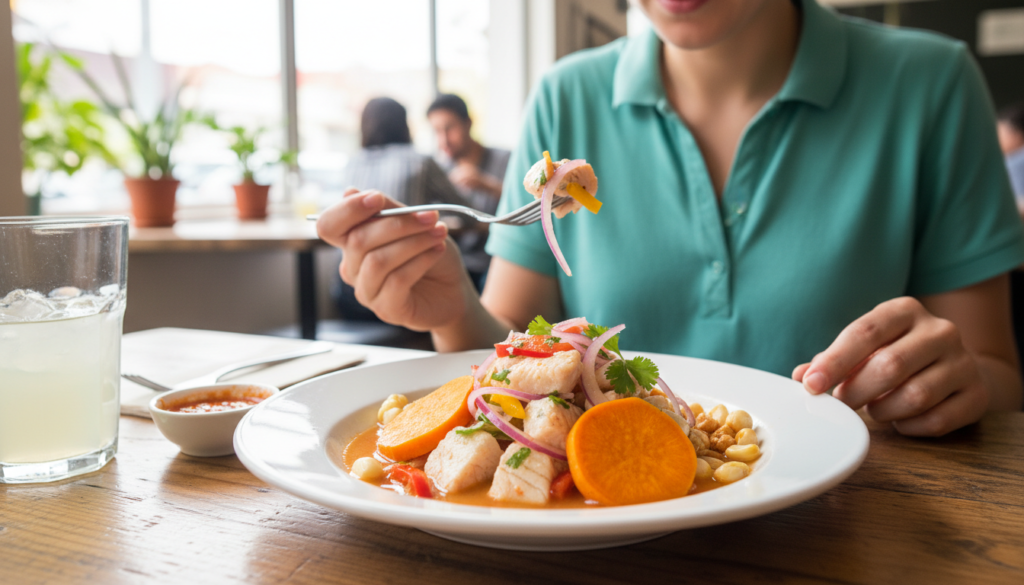
In many regions of Peru, ceviche is traditionally eaten during the daytime.
As a result, it's so popular that they sometimes run out of ingredients by evening and have to close the shop.
This theory originates from the fishermen's culture that states, “Fish caught in the morning are the freshest.”
Ceviche Recipe
Ingredients (for 2 people)
- White fish (for sashimi, fresh)……200g
※Sea bass, sea bream, flounder, red sea bream, cod (suitable for raw consumption), etc. - Lime juice …… 3 to 4 limes
※If unavailable, substitute with lemon (domestic preferred) - Red onion …… 1/4
- Cilantro (Chinese parsley) …… To taste (optional)
- Chili pepper …… a little
※In the region of origin, ají limo / ají amarillo is used; in Japan, sliced chili peppers or green chili peppers are substituted. - Salt …… About 1/2 teaspoon
- Pepper …… A pinch (to taste)
Side dish (if available, authentic)
- Boiled sweet potato
- Boiled corn (or sweet corn)
- Toasted corn
How to make them
① Cut the fish
- Cut the fish into bite-sized pieces measuring 1.5 to 2 cm square.
- If there is moisture, lightly wipe it with paper towels.
👉 Slightly larger than sashimi is the authentic size.
② Preparing onions
- Slice the red onion very thinly.
- If the spiciness is too strong, soak in cold water for about 5 minutes, then drain well.
③ Marinate (Most Important Point)
- Place the fish in a bowl and sprinkle with salt.
- Add lime juice and stir gently.
- Add chili peppers
Marinating time: 5–15 minutes
- Once the surface turns white, it's OK.
- If you soak it too long, the texture will become tough.
④ Finishing
- Add the red onion and chopped cilantro, then gently toss to combine.
- Taste and adjust the salt and acidity slightly.
- Arrange on a plate and serve with sweet potatoes and corn.
Bonus: Tigers Milk
The marinade left in the bowl
- The savory flavor of fish
- The tartness of lime
- The spiciness of chili peppers
is served as “leche de tigre”, a blend of these ingredients.
👉 In Peru
- Drink from a small glass
- Believed to be effective for hangovers
There is also this interesting culture.
Summary
How was it?
This article introduced ceviche, a dish beloved primarily in Peru!
This dish featured a refreshing acidity that complemented the fish beautifully, along with a satisfyingly springy texture.
I was really surprised to learn that Japanese people were involved in its creation!
February, when ceviche is often eaten, is summer in the Southern Hemisphere.
Please give refreshing ceviche a try on hot days!
Thank you for watching until the very end!
Feel free to check out our other articles too!


Comments