

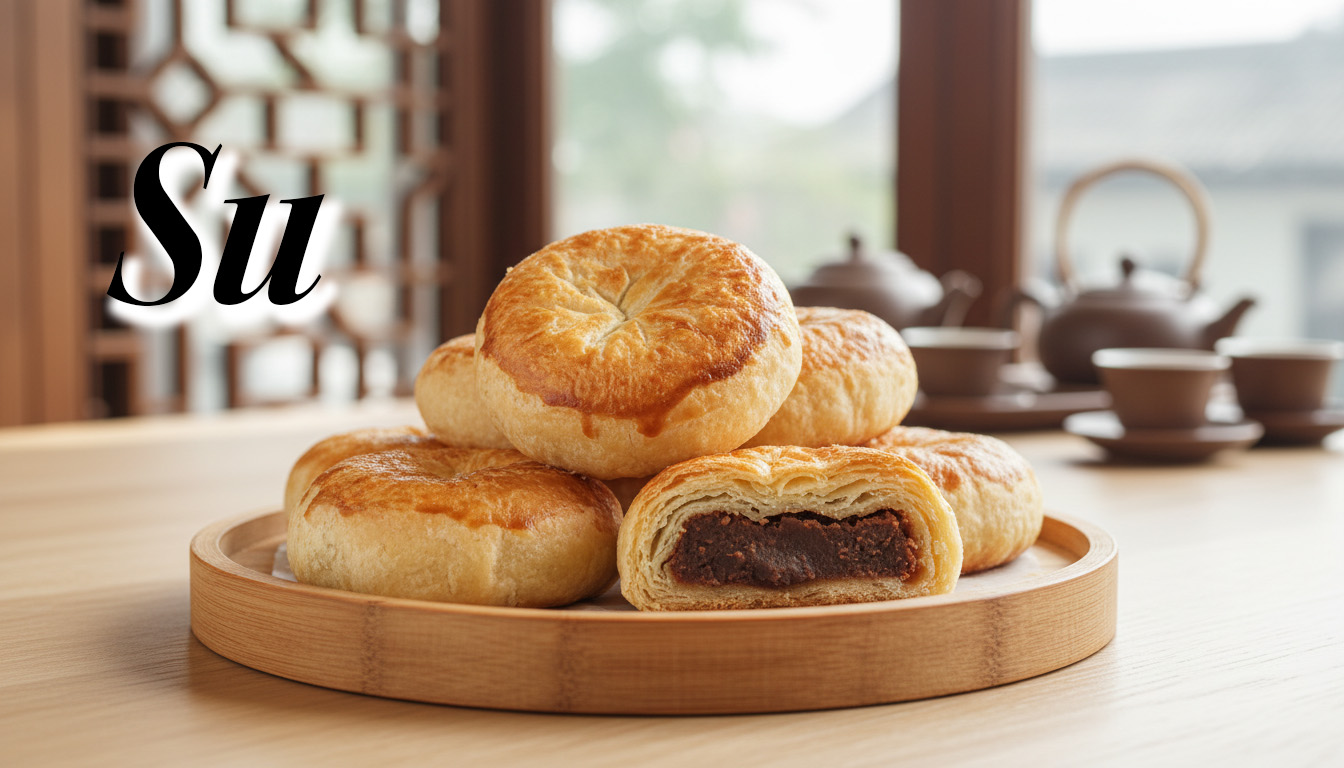
Do you all know what su (酥) is?
Originating in China, this confection has gained popularity in recent years due to its beautiful appearance.
What charm could possibly be hidden within this dish said to have existed since ancient times?
This article will cover everything about su, from its history to how it's made.
Please watch until the very end!
~Notice~
This site introduces cuisines from around the world and also features songs that express those dishes.
You can also listen on YouTube and various subscription services, so please give it a listen!
We've also started accepting requests for music production!
Perfect for personal use or in-store background music!
We offer a wide range of services, from existing dishes to original creations, so feel free to place your order anytime!
Click here for our guide page!
What kind of dish is su?
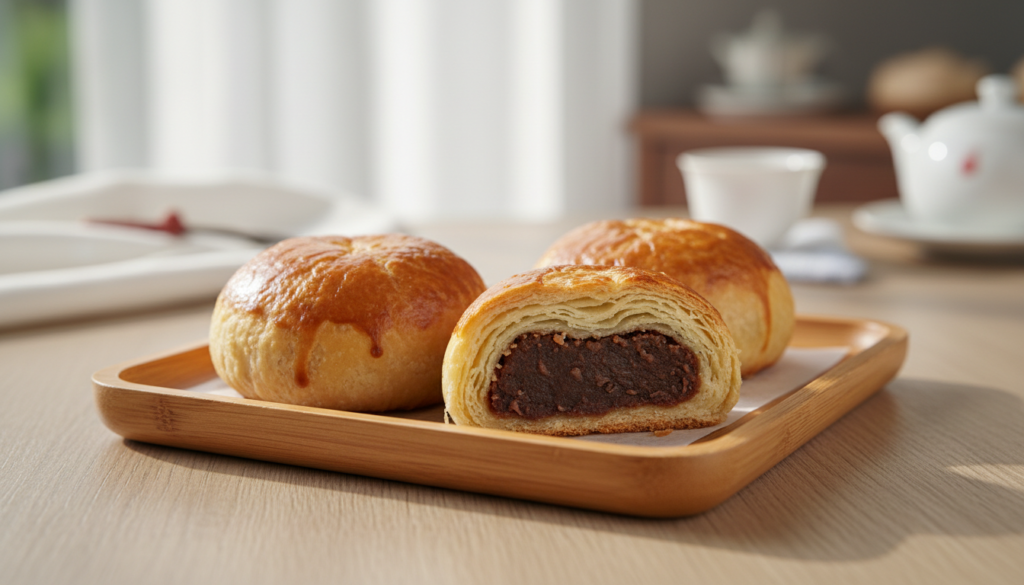
Su (酥) is one of China's traditional baked sweets.
The name “Su” refers to a pastry with a crispy, flaky texture in Chinese.
True to its name, it has a texture similar to pie crust, and_ its defining feature is the crispy layers created by folding and_ baking it multiple times.
Furthermore, this “Su” also describes the nature of the dough itself.
Therefore, while it features a crispy and crumbly texture, its flavor is relatively mild.
The dough itself has a rich aroma and subtle sweetness, making it an excellent match for fillings like bean paste, meat, and_ sesame.
For example, it is used in various sweets and_ dim sum, such as “su bing” and_ “char siu sou”.
Such su is a type of dough used throughout the Chinese-speaking world, and can be found in dim sum restaurants, confectioneries, and_ souvenir shops.
Regional variations exist, with Shanghai, Jiangsu Province, Guangdong Province, and Taiwan each having their own unique versions of su sweets.
In recent years, modern arrangements of Su have gained popularity for their social media appeal.
Shanghai-style and Jiangnan-style soups, in particular, have gained popularity as gift-wrapped packaged goods, increasing their appeal as regional souvenirs.
It's not just about crispy dough; multi-layered, uniquely shaped, and colorful su-style pastries are rising as a modern dessert trend.
The History of Su
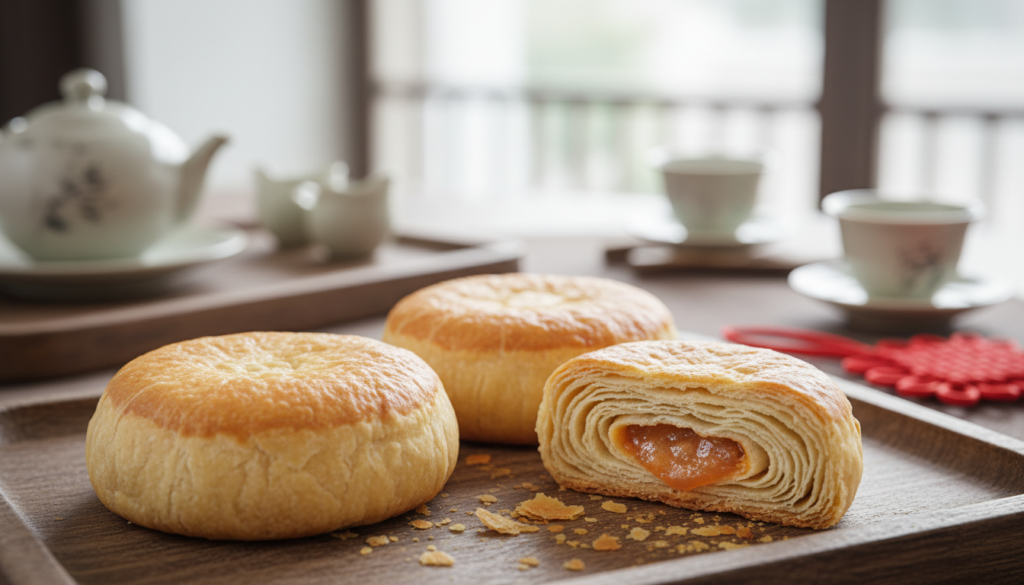
It is said that the technique for creating multi-layered articles like Su originated quite long ago in China.
Therefore, there are accounts suggesting that the method for making su was already widespread during the Southern Song Dynasty in the 12th to 13th centuries.
For example, the “Jinhua Crispy Cake” from Jinhua, Zhejiang Province, can be traced back to its earliest form in documents from the Southern Song Dynasty.
Although manufacturing methods have been improved and there are differences, su is said to have a history of over a thousand years.
Following the Southern Song Dynasty, alongside large-scale migrations of the Han Chinese, dim sum techniques—including the method for making shu—spread to various regions.
After that, Sue underwent its own unique evolution in various regions.
In Jiangnan, it is known as the Huaiyang style, with crab-shell-colored soup—resembling the color and_ shape of a crab shell—being its signature dish.
In Suzhou and Shanghai, where the Huaiyang cuisine is popular, the preparation of soup has been perfected and systematized, and the transmission of techniques is thriving.
In Guangdong, a pastry called char siu su made with su dough is popular as a tea-time treat.
This regional distinctiveness arises because Chinese culinary culture has evolved in close connection with a wide range of diverse lifestyles and_ cultures.
In the 19th century, Western confectionery became known in port cities such as Shanghai and Guangdong.
Influenced by this, Western confectionery blended with local ingredients, leading to greater diversification of su.
In modern times, confectionery techniques have become more refined.
In addition to the proliferation of specialty shops selling souvenir sweets, there has been an increase in visually appealing sweets designed to look good on social media.
Variations of Sue
① Lotus Flower Pastry (He Hua Su)
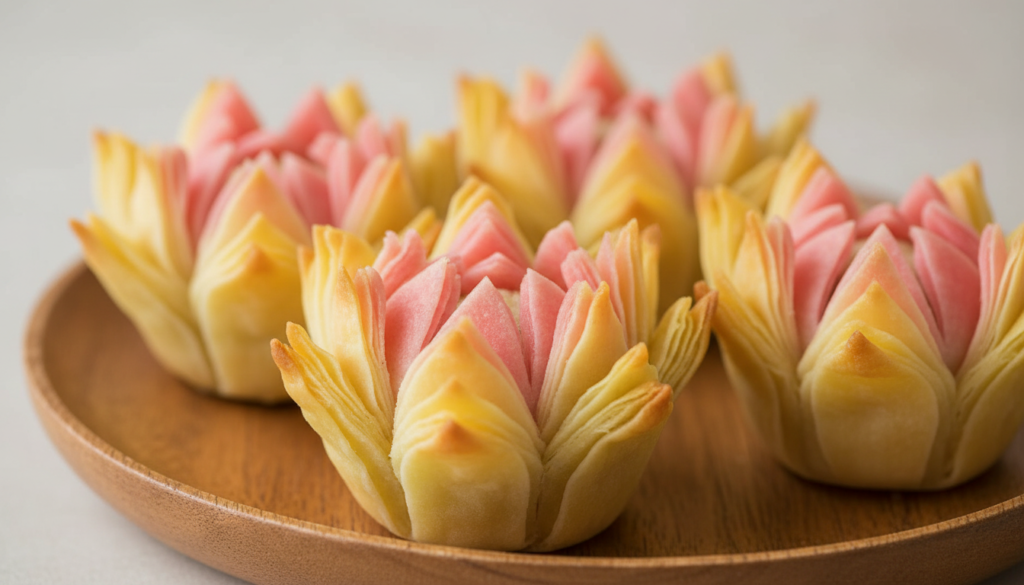
This traditional sweet features dough shaped into a lotus flower, emphasizing its appearance.
The fillings include lotus seed paste made from lotus seeds, white bean paste, and_ jujube paste, resulting in a sweet flavor.
True to its name, the lotus flower—symbolizing purity and auspiciousness—serves as its motif. When baked, its layers open up, creating a distinctive appearance reminiscent of a blooming lotus flower.
Originating in the Kōnan region, it's a prime example of su that's recently regained attention for its social media appeal.
② Char Siu Su
Inside the crispy su dough is a sweet and_ savory char siu filling.
Its strong contrast of sweetness and saltiness makes it a quintessential savory soup.
It is commonly found in the Cantonese and Hong Kong dim sum (yum cha/the culture of eating dim sum while drinking Chinese tea) sphere and_ is popular worldwide as a type of dim sum.
③ Puff Pastry (Thousand-Layer Pastry Type)
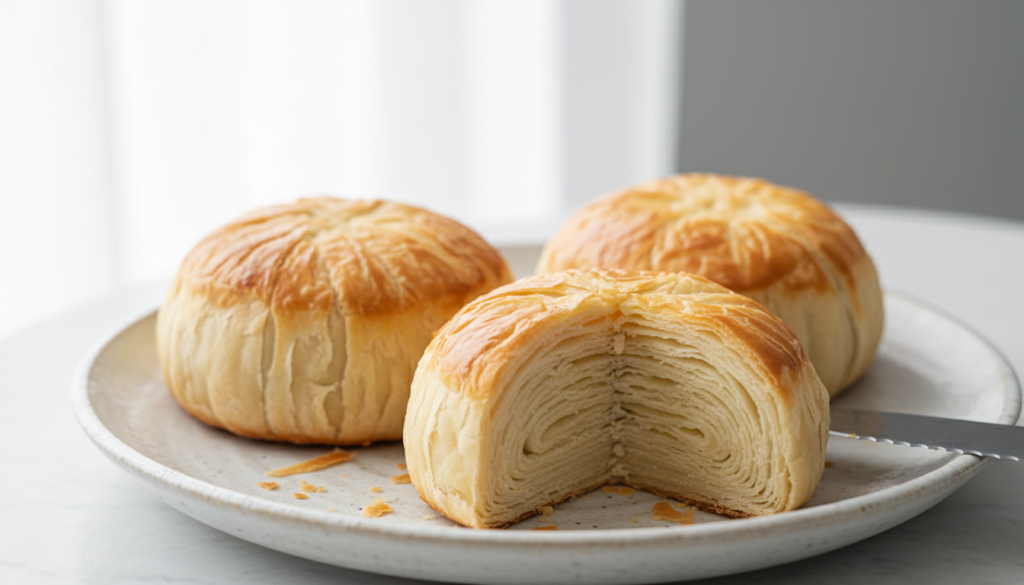
As the name suggests, it is a su-style confection with extremely fine layers.
Though simple in appearance, the beauty of its layered cross-section is captivating.
It is also considered the foundation of lotus flower pie and a skilled artisan-style confection that demands technical expertise.
It has characteristics closer to a pie made with puff pastry.
④ Peach Cookies (Tao su)
It's a sweet treat with a cookie-like texture.
Unlike other su-style sweets, it doesn't have layers, but it retains the crumbly texture of the su dough.
Made with peanuts, sesame seeds, and sugar, it is characterized by its cracked surface.
Moreover, it is extremely popular throughout China and serves as a prime example that su is not limited to layered fabrics.
⑤ Butterfly Pastry (Hu die su / Butterfly Pie)
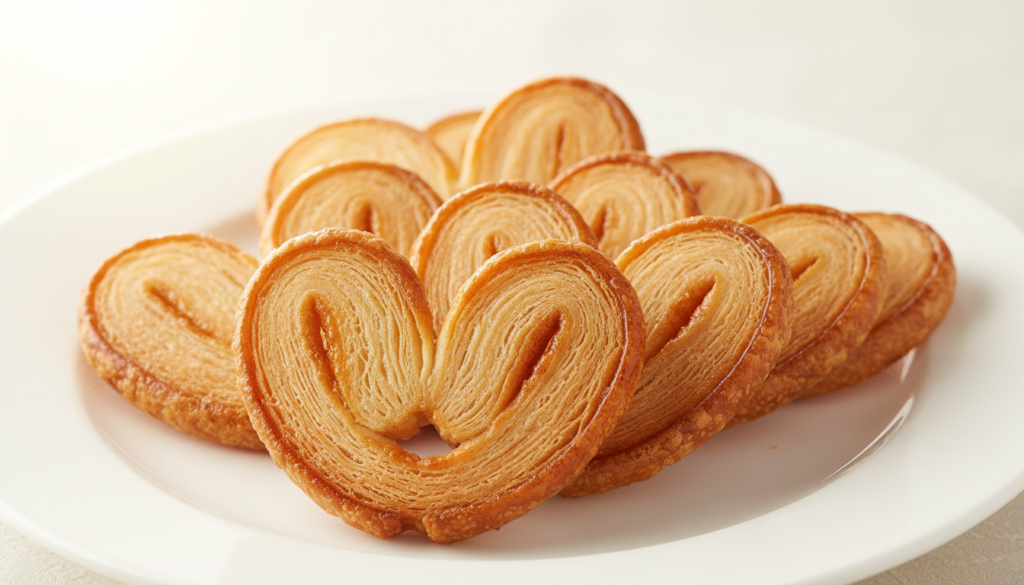
It's a butterfly-shaped su-kashi.
While it resembles a Western pie in appearance, it has evolved uniquely in China.
It is also one example of how Western confectionery influenced and merged with traditional Japanese confectionery culture.
It has become a popular staple menu item at recent super confectionery shops.
Incidentally, it resembles the Genji Pie familiar in Japan, but the Genji Pie is said to have been developed based on the French palmier (a pastry baked into heart or palm leaf shapes).
How to Make Su
The defining feature of Chinese-style shu is combining two types of dough to create layers.
The water-oil skin (Shui you pi) that serves as the outer wrapping.
You su, which plays a role in creating layers inside.
This structure creates a crispy, flaky texture that layers apart when baked.
Additionally, su is rarely made as a standalone finished dish; the primary focus is on the process of making the dough (su dough).
Therefore, here we will introduce the most standard and versatile method for making traditional Chinese puff pastry.
Ingredients (for 8 servings)
Water-Oil Skin
- All-purpose flour (or half cake flour and half bread flour)… 120g
- Sugar … 10g (for sweet confections; optional)
- Lard or vegetable oil … 30g
- Water … approximately 60ml
Oil dough
- Cake flour … 90g
- Lard or vegetable oil … 45g
※ Traditionally, lard is used.
This method yields the crispiest texture.
How to make them
① Make the water-oil skin
- Place the flour and sugar in a bowl.
- Add oil → water in that order
- knead until it forms a cohesive mass
- Once the surface is smooth, wrap it.
- Let it rest for 30 minutes (important)
This step calms the gluten and makes it easier to wrap.
② Make the oil dough
- Mix the cake flour and oil.
- Do not knead (just press and_ shape)
- If it comes together, that's fine.
Kneading will break the layers.
③ Wrap (Start of layer)
- Divide the water-oil dough into 8 equal portions
- Divide the oil pastry into 8 equal portions.
- Roll out the water-oil dough into a circle and wrap the oil dough inside.
- Close your mouth tightly.
④ Insert
- Roll out the wrapped dough into an oval shape
- Roll it up from the front
- Rotate 90 degrees
- Stretch it out again and roll it up
- Take breaks as needed (10 minutes)
👉 The basic technique involves repeating this “stretch → curl” motion twice.
⑤ Shaping → Firing
- Lotus Flower Pie: Cut into petal shapes
- Thousand-layer pastry: Press into a circle
- Char Siu Pastry: Wrapped with filling
Firing Guide
- 170–180°C
- 20–25 minutes
- Once the surface is lightly browned, it's done.
Summary
How was it?
This article introduced the traditional Chinese dessert, su!
Su cannot stand alone as a dish; its various characteristics emerge depending on the fillings or paste inside.
In recent years, it has gradually begun to gain attention on social media and elsewhere, and it can be said to be a confection that is appealing both in appearance and taste.
Please try out various arrangements and find your favorite soup!
Thank you for watching until the very end!
Feel free to check out some of our other articles!

Comments