

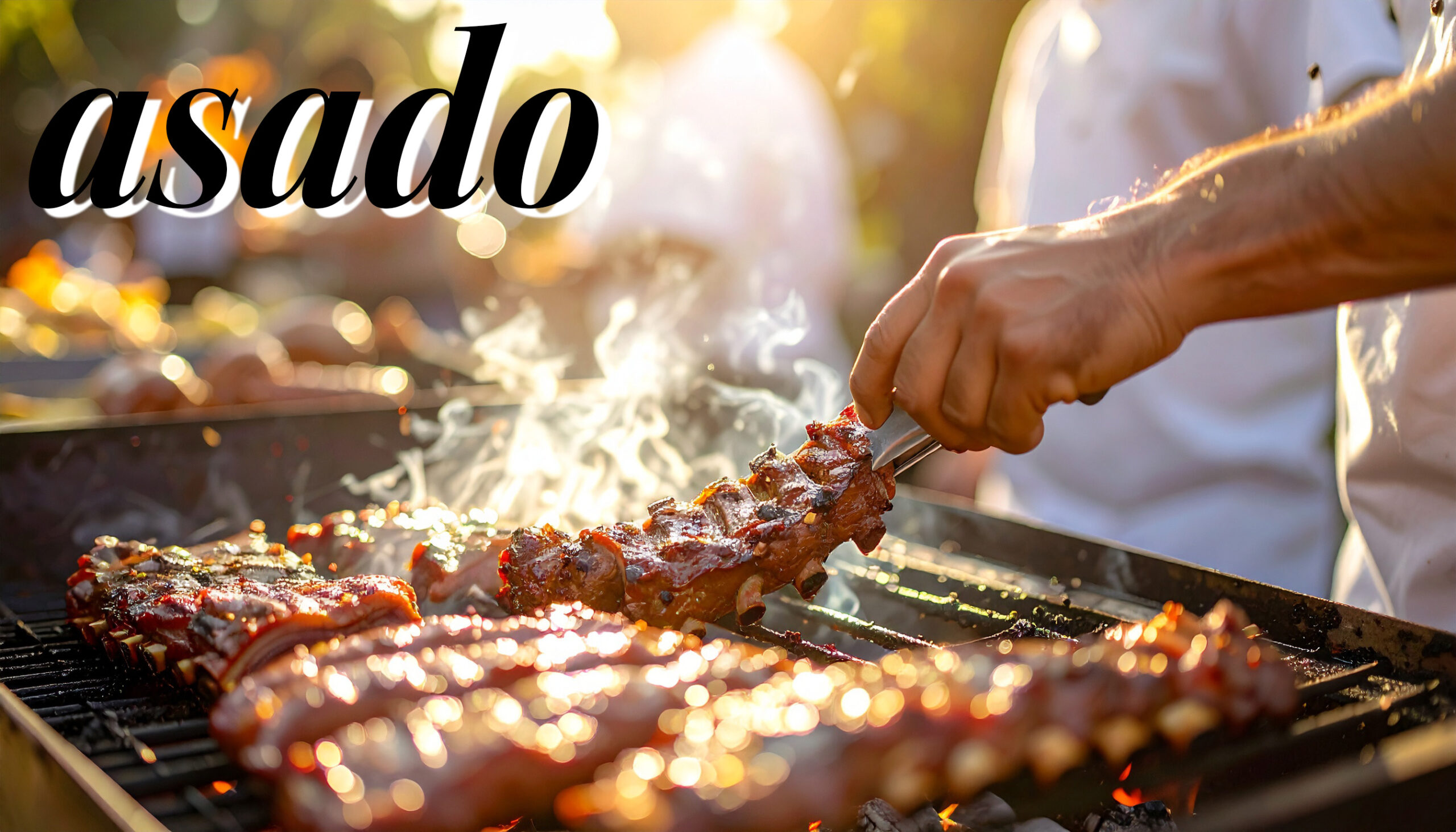
Do you all know about South American asado?
Asado is a cultural ritual encompassing various elements such as barbecue.
It would be more accurate to describe it as a method used when grilling meat rather than the name of a food item.
This time, we're doing something a bit unusual for TasteTune—an article focusing on the cooking process itself!
Please be sure to watch until the very end.
Additionally, TasteTune introduces cuisines from around the world and releases songs that express them♪
You can also enjoy our content on YouTube, Spotify, and other platforms!
What is Asado?
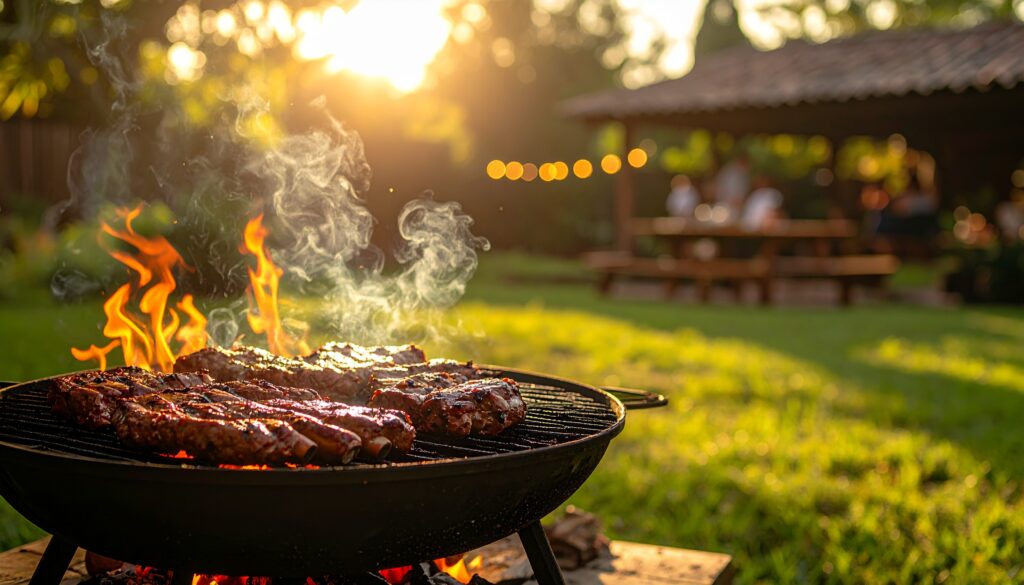
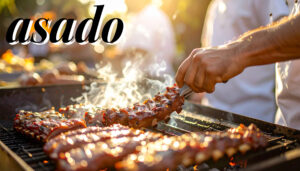
Asado is not just a barbecue; it is also a cultural ritual encompassing the method of grilling meat and the gathering and environment of the occasion.
The gathering of people is cherished, beginning with the act of grilling meat and continuing through shared meals.
Locally, someone called an “asador” or “parrillero” takes on the role of grilling the meat.
We determine the fire management, heat control, and which meat to grill at what timing.
For cooking, a grill called a “parrilla” is used, or a fire pit for direct charcoal/wood fire or charcoal/wood-fired cooking.
The time spent building the fire, the type of charcoal or firewood, and the distance from the fire to the meat all significantly affect the flavor.
TasteTune「Asado」
Everyone, have you heard Tastetune's song “Asado”?
This music draws inspiration from the asado, capturing its bold and festive atmosphere.
And it is a musical work that expresses passionate flavors through sound.
The crackling sound of burning fire and rhythmic guitar strums begin, gradually building to a passionate, tango-inspired melody.
This world of sound invites listeners to a gathering beneath Argentina's vast skies.
Please give it a listen!
Below, we introduce the thoughts, expressions, and creative approaches embodied in this musical work.
The Rhythm of Flames and the Sound of Passion
At the heart of this piece lies the “fire” and “passion” that symbolize the asado.
The crackling sound of burning charcoal is rendered with light percussion and sound effects, creating an immersive experience as if you were standing right in front of the grill.
The guitar's passionate rhythm reflects the heart of Argentina, while the powerful bass resonates with smoky aromas and the deep flavor of meat.
The bright sound of trumpets overlays the scene, instantly heightening the joy and excitement of family and friends gathering together.
The Soul of Tango and the Joy of Gathering
The melody gradually expands into the passionate strains of the tango, symbolizing Argentina.
It portrays the “cultural pride” and “joy of sharing” inherent in the asado through music.
The powerful beat that makes you want to dance blends with the sizzling sound of meat cooking, vividly reflecting the smiles of those gathered around the table.
The composition, shifting from verses evoking the quiet kindling of a fire to a singing and dancing celebratory chorus, perfectly captures the flow of an asado itself.
An atmosphere brimming with celebration and warmth
Throughout this piece, there flows a “vibrant joy,” “festive splendor,” and “irresistible warmth.”
It's like the very sound of laughter surrounding the asado, the clinking of glasses, and_ moments of heartfelt connection.
Music that blends tradition with modern vitality deeply envelops the listener, allowing them to experience the richness and passion inherent in Argentine culture.
The World of Asado: Savored Through the Ears
This Asado-themed piece is not just background music.
It is an experience that embodies boldness, the savory aroma drifting through the smoke, and festive joy—all captured in sound.
If you listen closely, you'll surely feel as though you're standing in an Argentine garden at dusk, enjoying an asado and laughing with the people around you.
Please surrender yourself to this musical journey and fully immerse yourself in the world of “Asado.”
Asado and ingredients
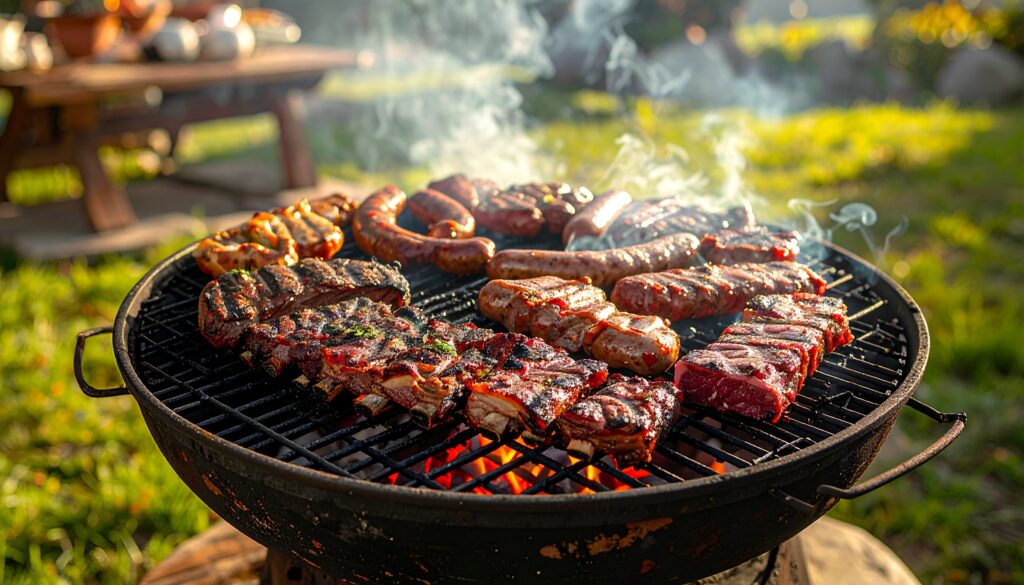
Various ingredients are used in asado.
Meat
- Beef
We use bone-in cuts and steaks, as well as those stuffed with vegetables and cheese. - Pork
We also have pork sausages, including ribs, shoulder, and bacon. - Chicken
We specialize in chicken thighs and wings, and also offer whole grilled chicken. - Sausages
We use fresh sausage and blood sausage.
It is primarily served as an appetizer. - Offal (Achuras)
Small intestines, liver, heart, and other offal are savored.
Vegetables(Side / Things to bake together)
- Bell Pepper (Paprika)
- Onion (Wrap whole in aluminum foil and steam-roast)
- Eggplant
- Potatoes (baked in foil)
- Corn
- Zucchini
Other
- Provoleta
Thick-cut provolone cheese grilled on a hot plate or small dish. A classic appetizer served with herbs (such as oregano). - Bread
Make choripan by sandwiching grilled meat and chorizo.
Flavor and texture

At Asado, we cook using charcoal or firewood, carefully adjusting the heat to a steady, even flame.
The basic principle is to cook the meat slowly over low to medium heat.
This allows the smoky aroma of the wood and the unique charcoal-grilled flavor to permeate the meat.
Additionally, the outside develops a fragrant, golden-brown crust while the inside remains juicy.
Bone-in cuts, in particular, offer an appealing balance of satisfying chewiness and the sweetness of fat.
In areas with layers of fat, the heat melts the fat, causing juices to flow out, while the flavor concentrates around the bones.
On the other hand, depending on the cut, some pieces feature thicker muscle fibers, offering a satisfyingly firm texture.
Seasoning is often kept simple with just salt, allowing the meat's natural umami to shine through.
The History of Asado
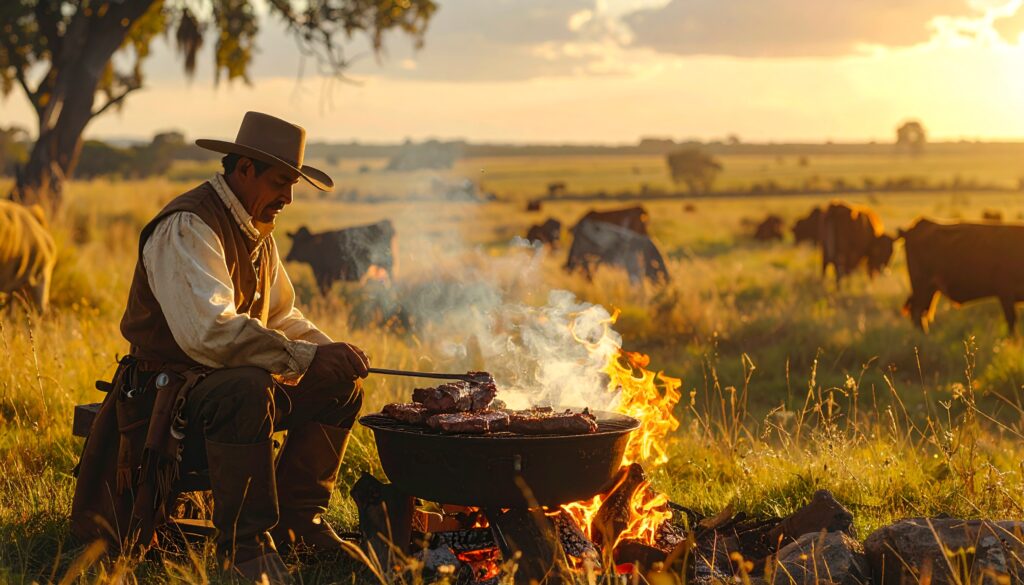
Asado is a traditional barbecue dish beloved in Argentina and Uruguay.
Its origins date back to the 16th century, when the Spanish brought cattle to South America.
Cattle raised on the vast grasslands of the Pampas eventually became central to the culinary culture, spreading the practice of enjoying beef.
During the 17th and 18th centuries, the gauchos—South American cowboys who lived by herding cattle—established the tradition of grilling meat outdoors.
Slow-roasted beef seasoned simply with salt, cooked over wood or charcoal.
This bold and simple cooking method became the prototype for the modern asado.
By the 19th century, the iron grill known as the “parrilla” became widespread, establishing a culture of enjoying asado in homes and urban areas.
The influence of immigrants from Europe led to the incorporation of ingredients such as sausages and vegetables, further expanding the range of dishes.
Since the 20th century, the asado has become more than just a meal; it has established itself as the centerpiece of special gatherings for family and friends.
It has become an indispensable part of weekend traditions and national events, and today it is passed down as a food culture that symbolizes people's lives and identity.
Trivia and Fun Facts About Asado
A national “daily ritual”
In Argentina and Uruguay, asado is considered not just a dish, but a culture unto itself.
Especially on weekends, many households hold barbecues, creating a scene where smoke rises from all around.
The grill master, known as the “Asador”
At an asado gathering, the person who grills the meat is called an “asador.”
This role is extremely important, acting as a leader who manages the cooking process and order. It's often entrusted to someone trusted by family and friends.
There are rules for the order in which you eat.
At an asado, the sequence typically begins with appetizer-style meats like sausages, morcilla (blood sausage), and_ chorizo, followed by ribs and_ steaks, and_ finally offal.
A key feature is that ingredients are gradually introduced as the banquet progresses.
It is also related to diplomacy and sports.
It is a common custom for the entire team to gather around an asado after a soccer match.
Furthermore, asado is often served when entertaining guests from overseas, and it is also known as the “national dish of hospitality.”
Argentina's “unofficial national dish”
In Argentina, although not an official announcement by the government or tourism board, asado is effectively considered the “national dish.”
It is treated as a dish representing the country, featured in every tourist brochure.
Summary
How did you like it?
This time, we introduced asado, a South American culinary tradition.
Did you enjoy this article, which took a different approach than usual for TasteTune?
The main event at the asado was the barbecue—how about joining us this weekend?
You're sure to have a great time with family and friends!
Even if it's not a barbecue, simply enjoying conversation over a home-cooked meal allows you to savor the time spent together with everyone—the very essence of asado.
I hope this article inspires you to enjoy a more delightful food life.
Thank you for watching until the very end!





Comments