

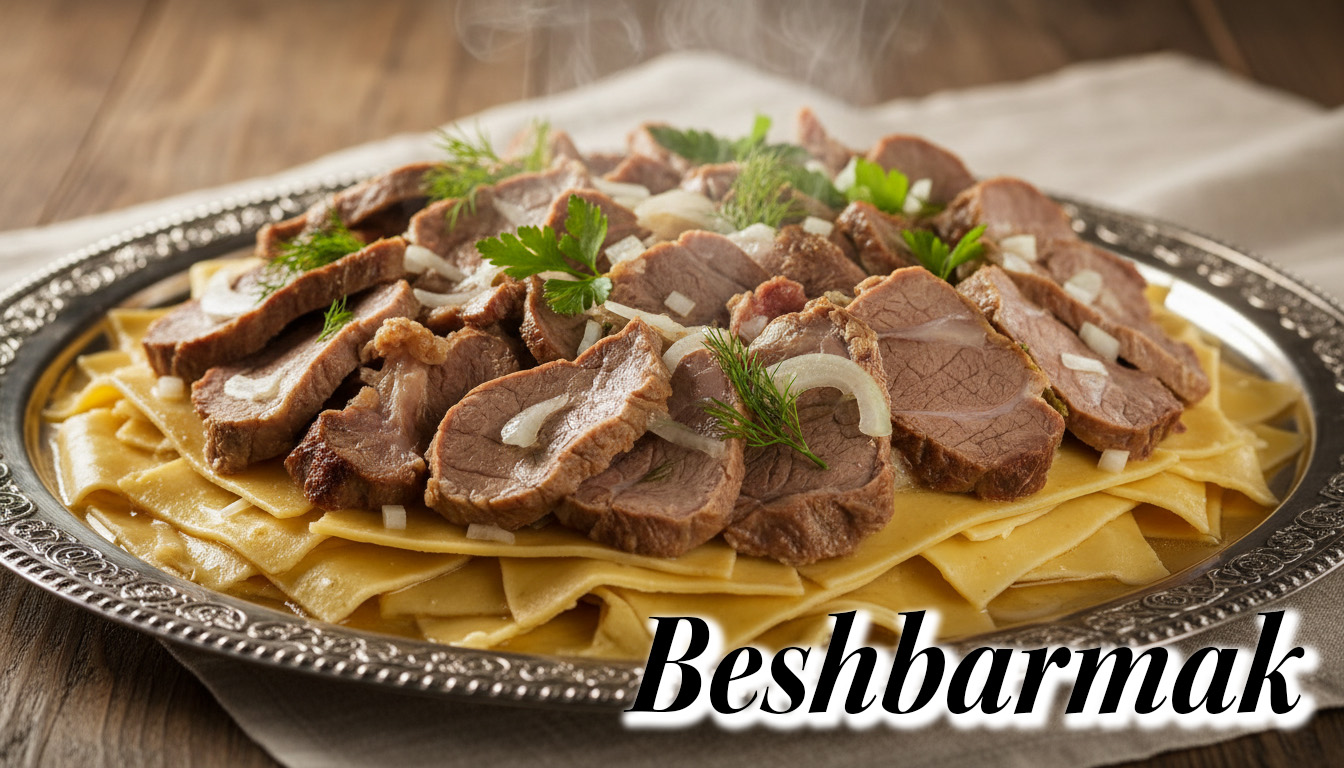
Do you know Beshbarmak?
Beshbarmak is a type of noodle dish eaten throughout Central Asia.
Beloved by many, what was the background to Beshbarmak's past?
This article introduces Beshbarmak, a dish that highlights its ingredients, covering everything from its history to how to make it!
Please watch until the very end!
~Notice~
This site introduces cuisines from around the world and also features songs that express those dishes.
You can also listen on YouTube and various subscription services, so please give it a listen!
We've also started accepting requests for music production!
Perfect for personal use or in-store background music!
We offer a wide range of services, from existing dishes to original creations, so feel free to place your order anytime!
Click here for our guide page!
What kind of dish is Beshbarmak?
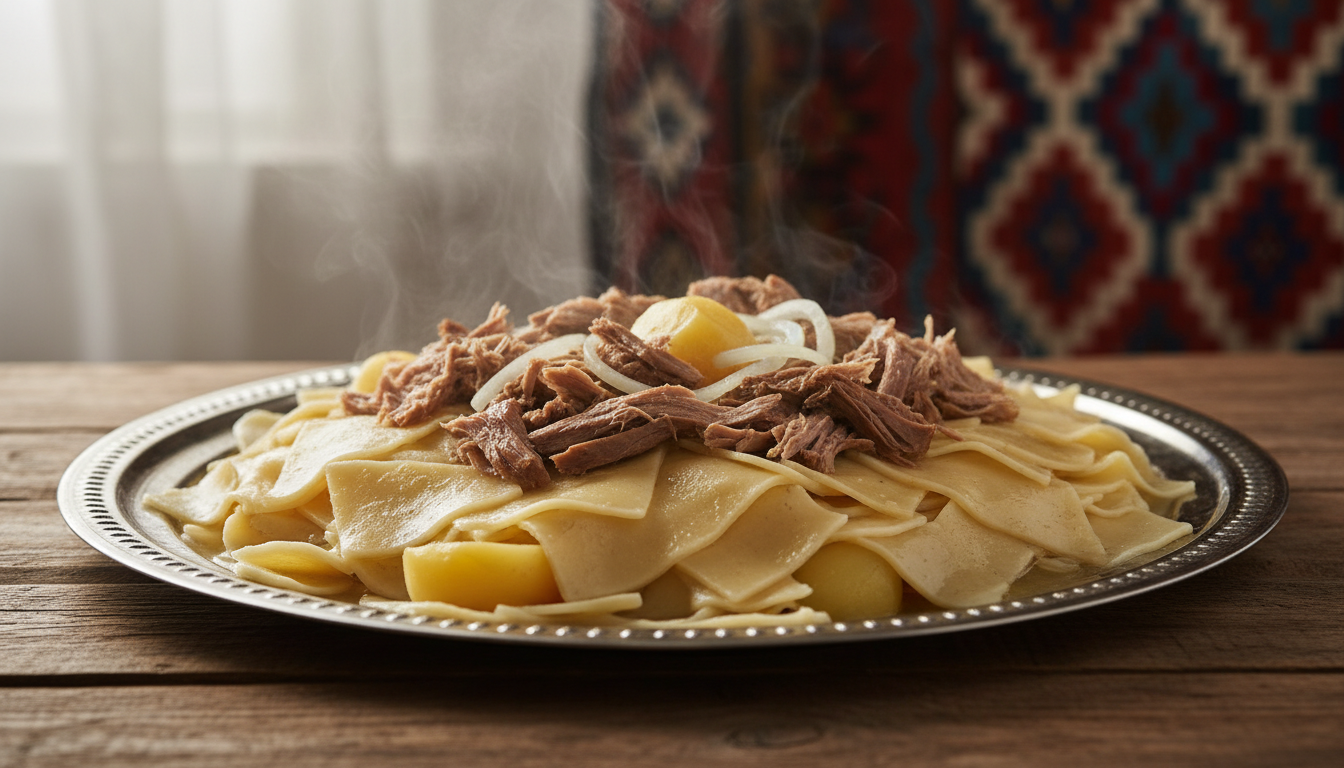
Beshbarmak is a noodle dish representative of Kazakhstan and_ Kyrgyzstan.
The basic combination is meat, onions, and hand-pulled noodles, and similar dishes exist throughout Central Asia.
Examples include Xinjiang Uyghur Autonomous Region and Uzbekistan's “Norin.”
Furthermore, it is also a dish born from nomadic culture, making it particularly cherished in herding communities.
Since ancient times, it has been considered a special delicacy, so it is often served at special occasions such as festivals and weddings.
It is also a type of cuisine that carries the aspect of ceremonial dishes that demonstrate respect for guests and indicate social hierarchy.
The Taste of Beshbarmak
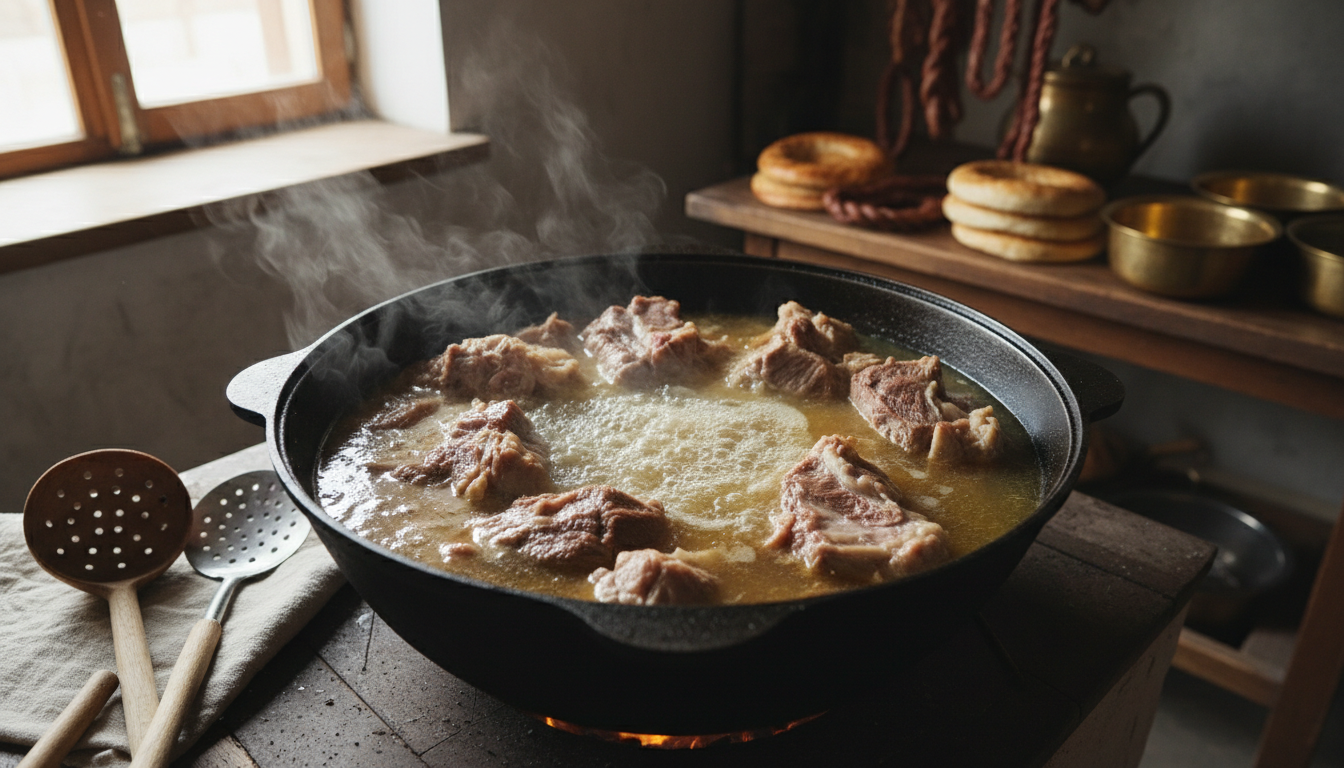
This dish is very simple, but it features a rich, savory flavor from the meat.
Overall, the broth (bouillon) serves as the flavor foundation, built upon the umami of the meat itself and the sweetness of the noodles.
The flavor of meat develops its own character depending on the cut.
In the case of lamb, there is a slight gamey flavor.
However, we savor it as it is, without masking it with spices or other additions.
Comments such as “the scent of grass” and “milky fat” are often made.
Horse meat is characterized by its clear, savory flavor.
It has a strong sweetness and a light, mild fat flavor.
All meats are cooked by simmering for a long time, causing the fibers to break down and making them taste sweeter.
On the other hand, the handmade noodles boiled in the meat broth are unsalted and very lightly seasoned.
Instead, it has the natural sweetness and aroma of wheat itself.
It is said to be completed by absorbing the meat broth.
This dish has almost no saltiness and uses no seasonings.
Therefore, if you've become accustomed to spices, you may find the flavor bland.
It is that simple, and a dish where the natural flavor of the ingredients is cherished.
Origin of the Name
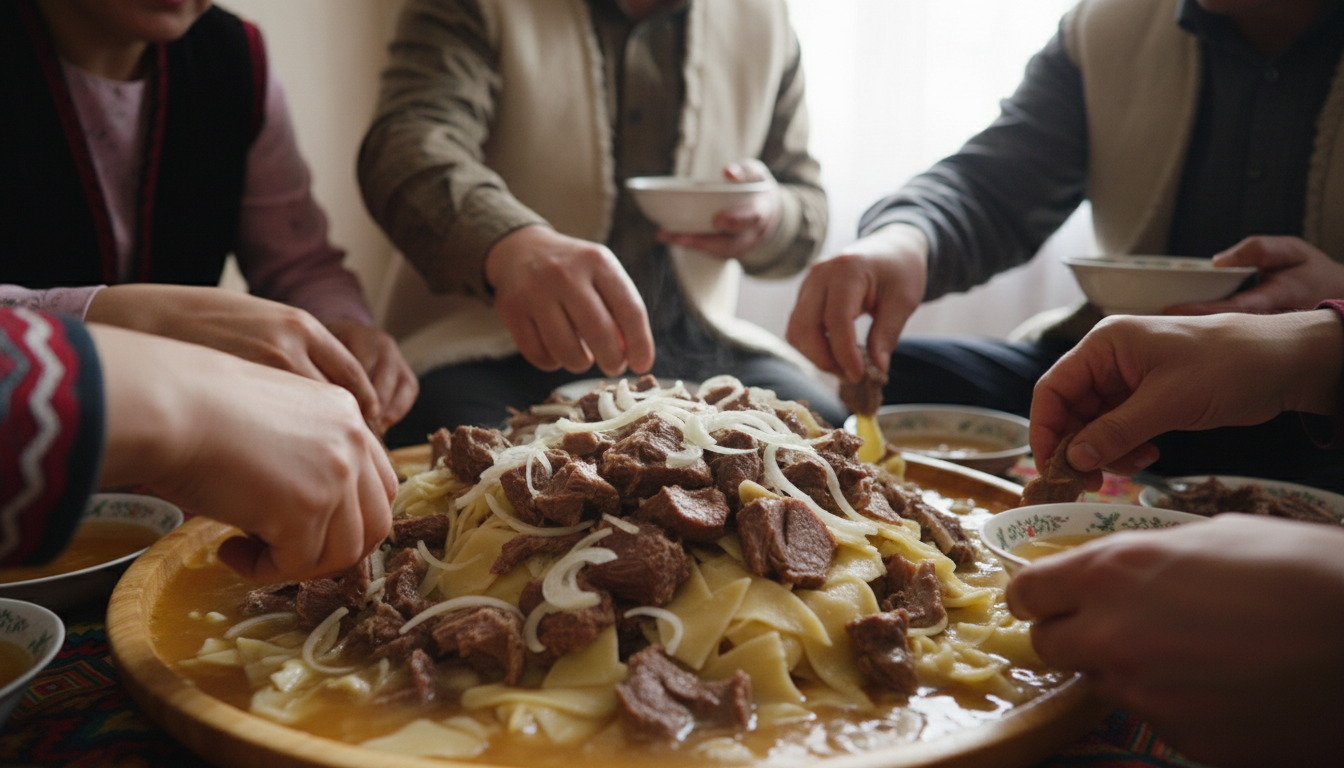
The origin of the term “Beshbarmak” shares a common meaning across Kyrgyz, Kazakh, and other Turkic languages.
Literally translated, Beshbarmak means “five fingers”.
Besh means the number “5”, and Barmak means “finger”.
It is believed that this dish got its name because it is meant to be eaten with the hands.
However, some studies and materials suggest that the name was given as a joke.
During the Soviet colonial era, nomadic culture was considered “uncivilized.”
Therefore, the theory goes that the culture of eating with one's hands was ridiculed, and that name spread and persists to this day.
However, since this theory lacks evidence and remains a subject of debate, it's best to take it with a grain of salt.
The History of the Beshbarmak
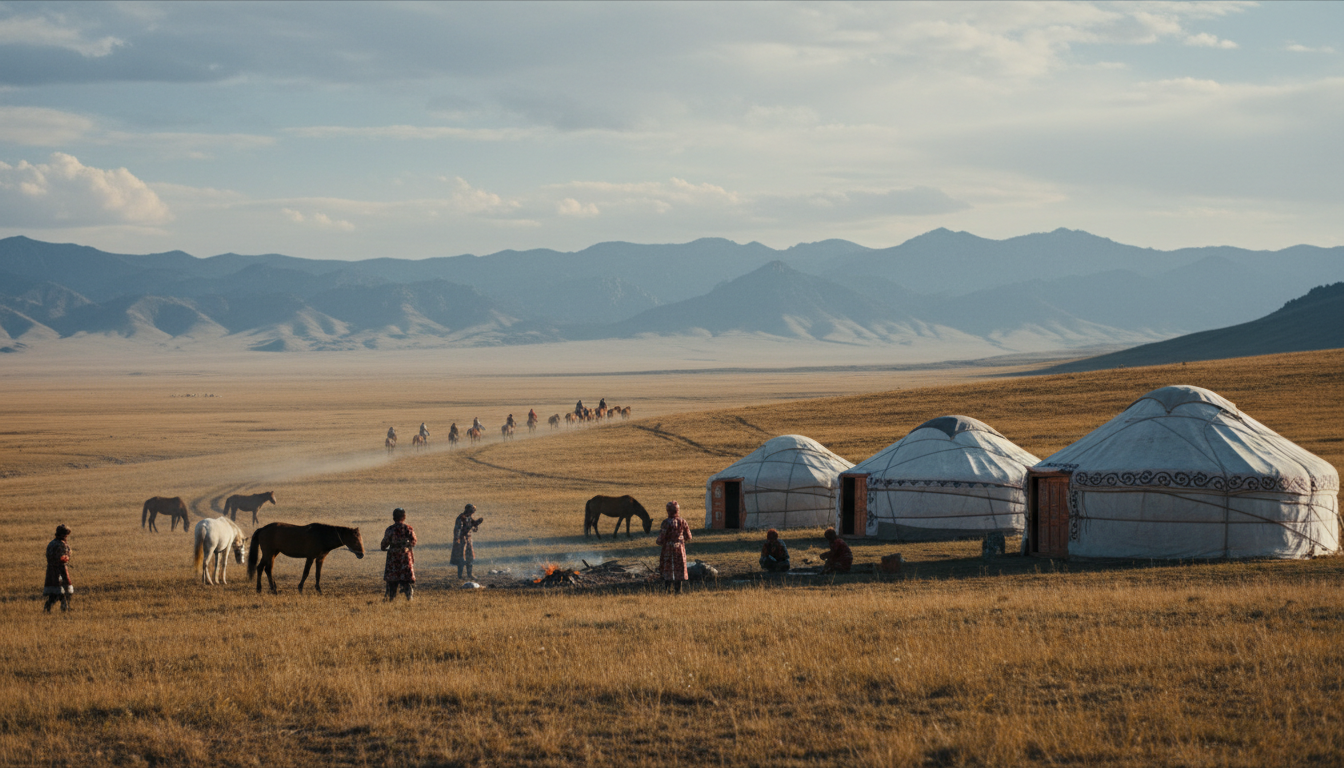
Beshbarmak developed by relying on the nomadic lifestyle of Central Asia.
Traditionally, Central Asian cuisine was centered around meat and dairy products.
Among these, Beshbarmak developed as a high-calorie food supporting long-distance travel.
Therefore, Beshbarmak is a dish that reflects nomadic culture, and its origins can be said to lie in nomadic culture itself.
Incidentally, meat was readily available from livestock at the time, but wheat was a precious commodity obtainable only through trade.
Therefore, noodle dishes were considered a “special treat.”
The first documented record appeared in 1770.
Russian explorer records Beshbarmak in Bashkiria
That's what it is.
- Beef, lamb, and horse meat + noodle dishes
- The meat was finely chopped.
- It was the best meal ever.
is said to be.
As a national dish
It was during the era when the Soviet Union still existed that Beshbarmak came to be regarded as a national dish.
It is said that Soviet cookbooks of the time influenced the cuisines of various ethnic groups.
As a result, the concept of “Kazakhstan's national dish” emerges.
Therefore, the designation as a national dish is also a product of politics and culture.
Since then, the concept of national cuisine has become firmly established in modern times, evolving into a symbolic dish representing the country.
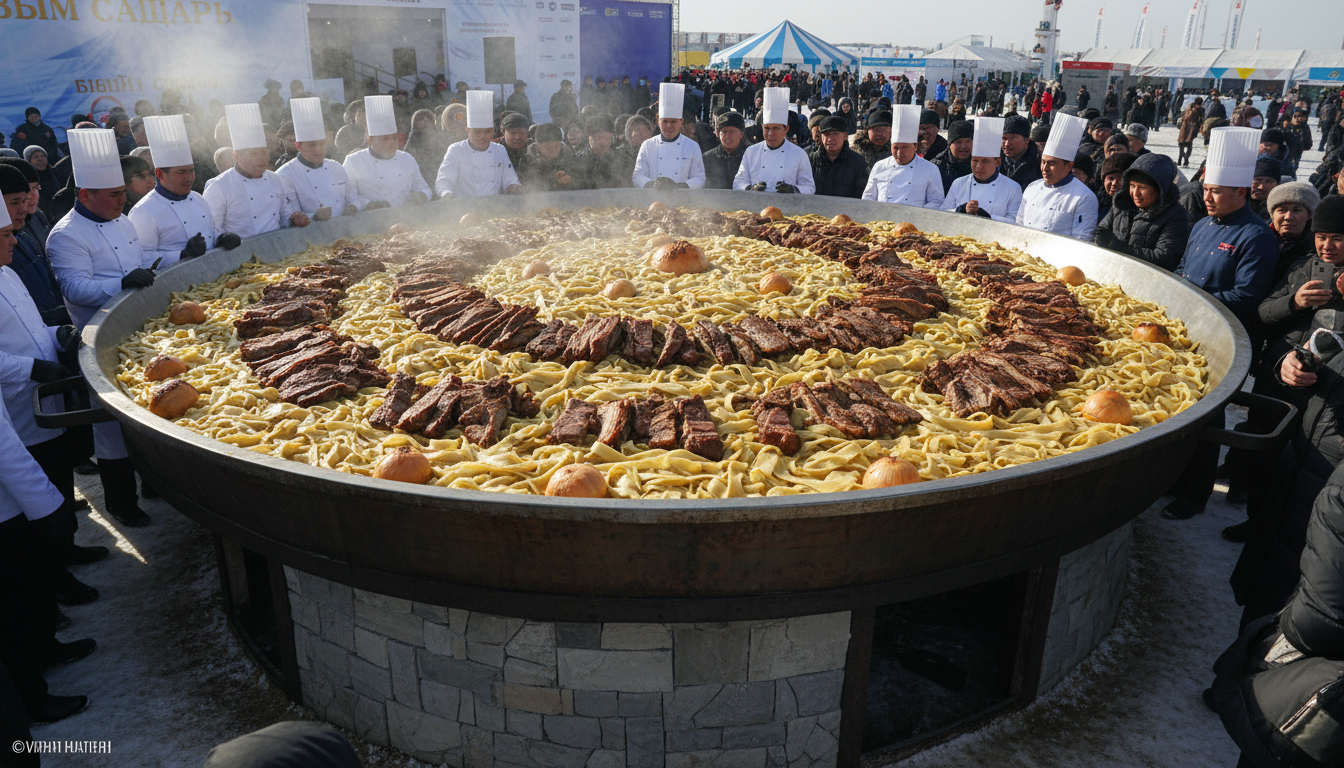
In 2018, a massive Beshbarmak weighing a staggering 1,464 kg was created at a large-scale event and entered the Guinness World Records.
In other words, in modern times, it has come to be cherished both as a ethnic identity and_ as a tourist attraction.
How to Make Beshbarmak
Ingredients (Serves 4)
Meat
- Lamb or beef … 800g–1kg
(Horse meat is also used in the region of origin)
Noodles
- Flour … 300g
- Water … approximately 150ml
- Salt … ½ teaspoon
Soup & Finishing Touches
- Onions … 2
- Salt ... appropriate amount
- Black pepper … a pinch
How to make them
① Simmer the meat
- Put meat and water in the pot.
- Skim off the scum after boiling
- Simmer over low heat for 1.5 to 2 hours.
② Make the noodles
- Mix flour, salt, and water.
- Knead and let rest for 30 minutes
- Spread thinly
- Cut into squares or diamonds
※Dried noodles may be substituted (this varies even in the region of origin depending on the household).
③ Onion Sauce
- Thinly slice the onion
- Pour hot meat soup over it
- A pinch of salt and pepper
→ The onions become slightly tender and sweeter.
④ Boil the noodles
Boil the noodles in the broth left after removing the meat.
(This is the biggest trick)
Reason
→ The rich flavor of the meat permeates the noodles.
⑤ Plating
Traditional Order
- Noodles on a large plate
- Place the sliced meat on top.
- Pour onion soup
Authentic eating style
- Sometimes serving dishes aren't used.Sometimes serving dishes aren't used.
- Some regions eat with their hands.
- Serve the best cuts to guests.
Tips for Getting the Flavor Closer to the Original
Factors affecting reproducibility
✔ Don't add too many spices
✔ Don't skimp on the meat
✔ Let the noodles absorb the broth
This dish is not about adding flavor, but about drawing out the umami.
Summary
How was it?
This article introduced Beshbarmak, a dish beloved throughout Central Asia!
Although it has been influenced by various cultures and sometimes subject to prejudice, it has now become a beloved national dish enjoyed by many people.
While we often have opportunities to eat rich, heavily spiced dishes these days, wouldn't it be nice to occasionally enjoy dishes that highlight these ingredients?
Beshbarmak warms you up and gives you energy.
Why not try making Beshbarmak at home?
Thank you for watching until the end.
Feel free to check out our other articles too!
Comments