

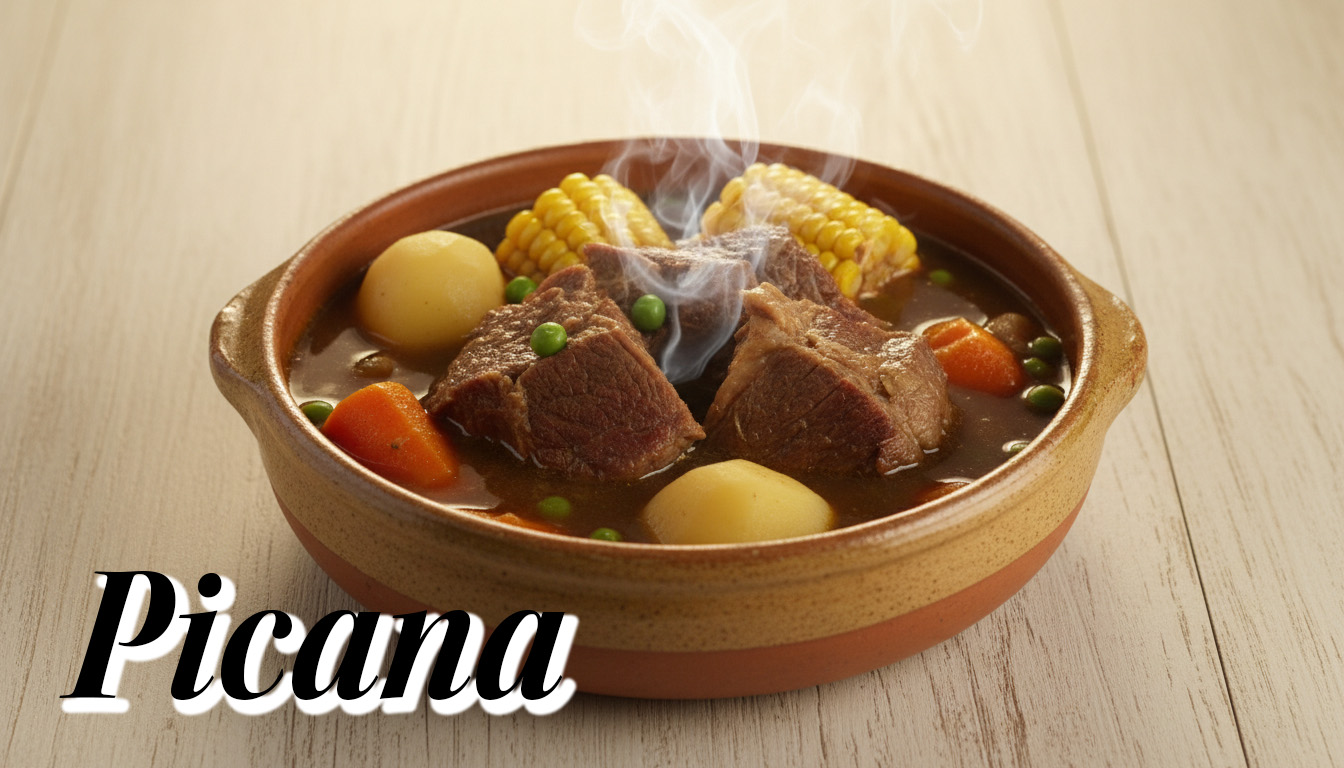
Have you heard of Picana?
This dish, beloved throughout Bolivia, is a luxurious creation born from the fusion of festive traditions and_ culinary ingenuity designed to maximize enjoyment.
What kind of history does such a picana have? How is it made?
We've compiled articles that address your questions.
Please watch until the very end!
~Notice~
This site introduces cuisines from around the world and also features songs that express those dishes.
You can also listen on YouTube and various subscription services, so please give it a listen!
We've also started accepting requests for music production!
We also create original music to complement our dishes and provide in-store background music. Feel free to request our services anytime!
What kind of dish is Picana?
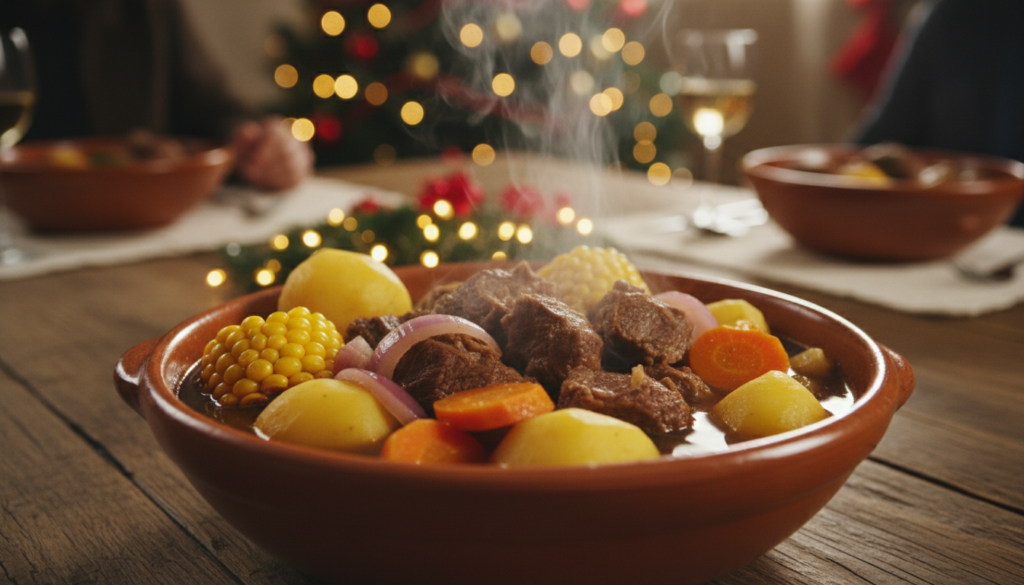
Picana is a traditional Bolivian soup dish.
It is beloved throughout Bolivia and has become a staple dish enjoyed by families, especially on Christmas Eve.
The name is said to derive from the Spanish word “picar” (to prick or to stimulate).
Bolivian cuisine as a whole can be described as a Picana that emerged after the Spanish colonial era.
Therefore, while the ingredients and festive nature are rooted in indigenous Andean cultures, the names and cooking methods are of Spanish origin.
And regarding the word picar, it has two meanings: “to chop” and “to stimulate.”
“to chop” refers to the fact that Picana involves cutting and using multiple pieces of meat.
“to stimulate” is considered the term closest to the original meaning, referring to the sensation of the tongue being stimulated by spices.
Picana is characterized by its rich broth.
Beef, chicken, corn, potatoes, and other root vegetables are simmered together to create a rich, flavorful broth.
Additionally, using wine or beer during the simmering process enhances the richness of this hearty soup.
The spices used include red chili peppers and white sesame seeds, and the aromatic flavor—rather than the heat—is another appealing aspect that enhances this dish.
Overall, it is a dish with a deep, rich flavor where saltiness and sweetness blend together in perfect balance.
The History of Picana
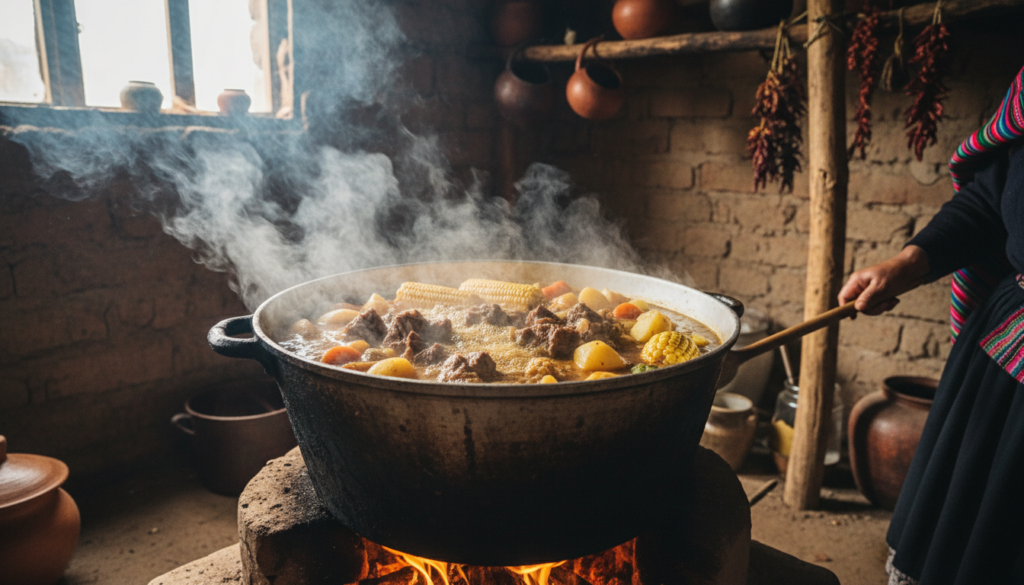
The origins of Picana date back to around the 18th to 19th centuries.
Picana, a traditional Bolivian dish, is said to have originated from a cooking method called “asado en cuero”.
This is a hearty cooking method where cattle, sheep, and other animals are simmered for a long time with their hides still on.
We have previously posted an article about asado on this site.
However, while the asado introduced at that time cooks meat by grilling it barbecue-style, asado en cuero is characterized by wrapping the meat in its own skin (or hide) and slowly cooking it through. This makes it distinct from asado.
This asado en cuero is considered the prototype, from which the current soup-based Picana evolved.
Subsequently, pots and iron pots became more widely used as easier-to-handle cooking utensils.
Following this trend, Picana is no longer cooked with the rind on, but rather simmered in water or_ broth.
As a result, the culinary concept of “slowly tenderizing meat” from Asado en Cuerdo was preserved while evolving into a stew dish where multiple types of meat and vegetables are simmered in spices, wine, and_ beer.
Connection to Christmas
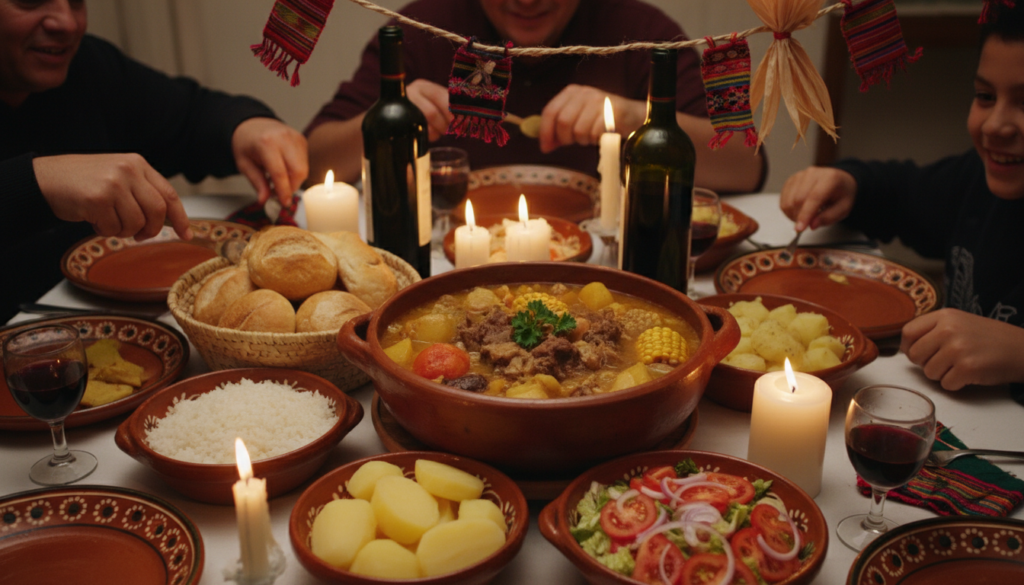
In Bolivia, it has become a tradition for families to eat Picana during the Christmas Eve dinner (Nochebuena).
Therefore, in many households, the custom of celebrating with Picana after the midnight Mass (Misa de Gallo) has taken root.
So why did Picana become a staple of Christmas in Bolivia?
The reason lies in religion and the harvest season.
Historically, Bolivia has been strongly influenced by Roman Catholicism, and Christmas has been passed down as an important holiday.
Therefore, many families attend the Midnight Mass (Misa de Gallo) and_ hold their celebrations around this time.
This custom of “enjoying a lavish meal with family after Mass” is thought to have solidified the position of the Picana in Christmas celebrations.
Additionally, the Christmas season coincides with the harvest season in Bolivia.
This is a season when ingredients become plentiful, and root vegetables like corn and potatoes used for Picana are harvested.
This overlap between harvest festival-like traditions and_ Christmas also contributes to the association between_ Picana and_ Christmas.
Picana's Trivia and Fun Facts
① Showing off with “number of cuts”
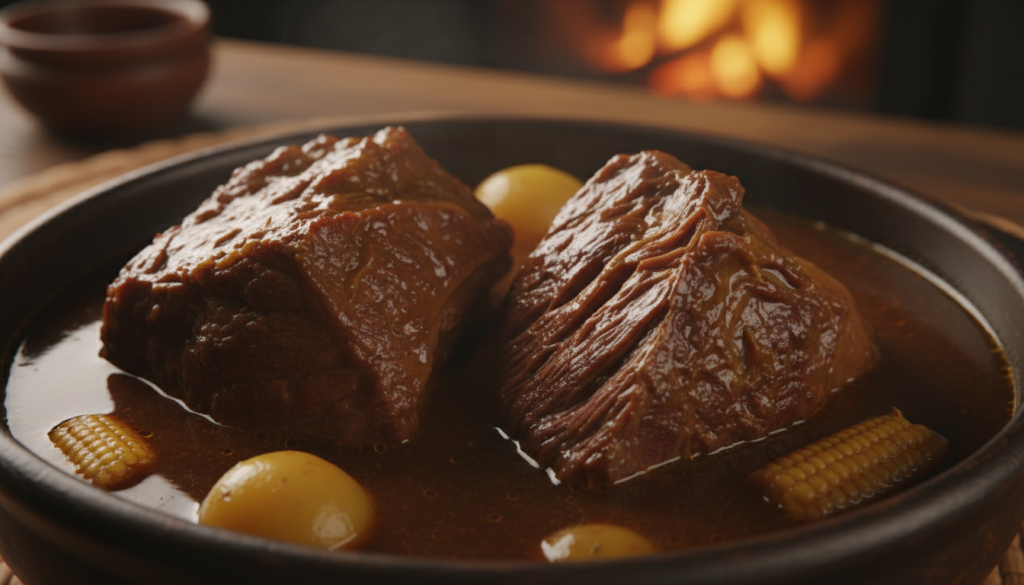
Picana traditionally uses multiple meats such as beef, chicken, and_ lamb.
For that reason, it's said that the type and quantity of meat often becomes a point of pride for households, with people saying things like, “We use three kinds,” or “No, we use four kinds.”
This is a remnant of an era when meat was precious and celebrations emphasized sharing.
It is also said that the opulence represents respect for family and_ guests.
② It's soup, but it's a “staple food.”
As explained earlier, Picana is a soup dish.
However, chunks of meat, corn, potatoes, and other ingredients are generously packed inside, making it very satisfying to eat.
Therefore, in Bolivia, they treat Picana as a staple food for one meal.
Also, keep in mind that since picana is treated as a staple food, dessert may follow picana, and there may be no appetizer.
③ Why wine and beer are included
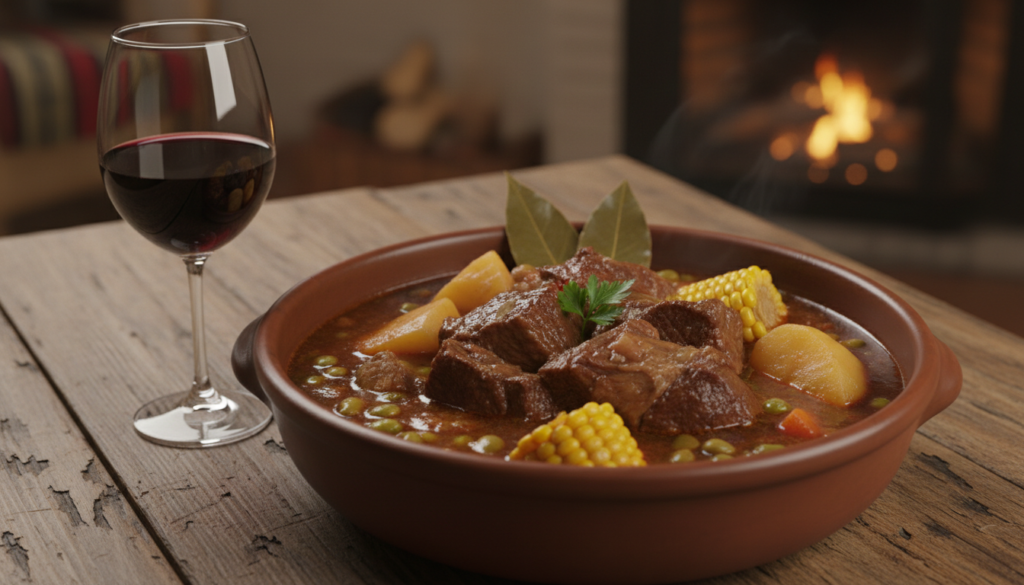
When simmering Picana, wine or beer is also simmered along with the ingredients.
It also explained that this serves to flavor and enhance the rich soup.
However, there are several other reasons that are absolutely essential.
First, because it makes the meat tender.
If you're someone who cooks often, you'll probably understand why.
- Alcohol acts upon the protein structure of meat.
- Acid (such as in wine) relaxes muscle fibers.
- Helps retain moisture during heating.
Alcoholic beverages serve these functions in relation to meat.
The second reason is to improve shelf life.
This stems from reasons such as cooking in large pots and a lack of storage facilities.
This is also the result of various techniques employed to prevent ingredients like meat from spoiling, such as using alcohol or_ heating.
Third, to ensure the flavor is uniform throughout the large pot.
When it comes to alcohol,
- Water-soluble components
- Fat-soluble components
It has the property of drawing out both.
Therefore, it binds the savory umami of meat fats and the water-soluble sweetness of vegetables throughout the soup, serving to unify the flavors.
For these reasons, we can see that there are practical reasons for using alcohol in Picana.
It's festive cuisine with a rational side to it, isn't it?
④ Summer Christmas and piping hot soup
December in Bolivia, when Christmas is celebrated, is summer in the Southern Hemisphere.
Even so, you can eat Picana while it's still piping hot, steaming off the plate.
This is because Picana is positioned more as something that “satisfies the heart” than something that warms the body.
It is a wonderful culture where tradition and symbolism take precedence over the season.
⑤ Even More Delicious Picana
A classic piece of trivia is that Picana tastes even better the next day.
Picana that has been left to rest overnight develops deeper flavor and_ becomes even more delicious.
Therefore,
- Eat on the morning or afternoon of the 25th
- Serve with bread or rice
Many households also enjoy it as a celebratory dish that can be savored over two days.
Picana Recipe
Ingredients (Serves 4–6 people, large pot)
Meat (characterized by using multiple types)
- Beef (ideally shank, brisket, or bone-in cuts)……500g
- Chicken (bone-in thighs, etc.)……1 whole chicken or 400g
- Lamb or pork (if available)……300g
※At least two types, traditionally three or more
Vegetables and Grains
- Potatoes (with skin)……4–6
- Corn (fresh or frozen)……2 ears
- Carrots……1–2
- Onion……1
- Celery (if available)……1 stalk
Seasoning and Flavor
- Red wine……200ml
- Beer... 200ml
- Water or bouillon……as needed (to fill the pot 80-90%)
- Salt... to taste
- Black pepper... a pinch
- Cumin……1 teaspoon
- Bay leaves……1–2 leaves
- Chili pepper (dried, powdered)……a pinch (to avoid making it spicy)
How to make them
① Preparing the meat
- Beef and lamb should be left in larger chunks
- Use chicken with the bones still attached.
👉 The key is not to cut it too small.
(Even after long simmering, it holds its shape and retains its rich flavor)
② Add everything to the pot (in any order)
- Meat
- Vegetables (excluding potatoes)
- Spices
- Wine + Beer
- Water (enough to fully submerge the ingredients)
👉 Do not stir-fry here
→ Originally derived from asado en cuero
③ Simmer over low heat for a long time
- High heat → Boiling
- After boiling: low heat
- 2 to 3 hours or_ more, simmer gently
In the middle:
- Remove the scum
- If the water level drops, add more.
👉 Don't keep boiling it
👉 Keep it steady
is important.
④ Finishing ingredients
- Potato
- Corn
Add the ingredients and simmer for an additional 30 to 40 minutes.
⑤ Final salt adjustment
- Finally, add salt to adjust the seasoning.
👉 If you put it in too early,
The meat becomes tough, and the flavor becomes inconsistent.
How to Eat / Serving Method
- Serve in a deep dish with the soup.
- Eat meat, vegetables, and soup together.
- Many households serve bread alongside their meals.
Tips for Avoiding Mistakes (Important)
- ✔ Meat should include “at least two types”.
- ✔ Use low heat and take your time.
- ✔ Reheating it the next day makes it even more delicious.
- ✔ Flavor: “Light → Decide at the end”.
Summary
How was it?
This time, we introduced Bolivia's classic Christmas dish, Picana!
Practical ingenuity blended with festive culture to create a truly luxurious dish!
Warm hot pot dishes are perfect for warming both our hearts and bodies here in the Northern Hemisphere!
Why not enjoy it with your family and friends?
Thank you for watching until the very end!
I'll continue posting articles like this going forward, so I'd be thrilled if you could support me.

Comments