

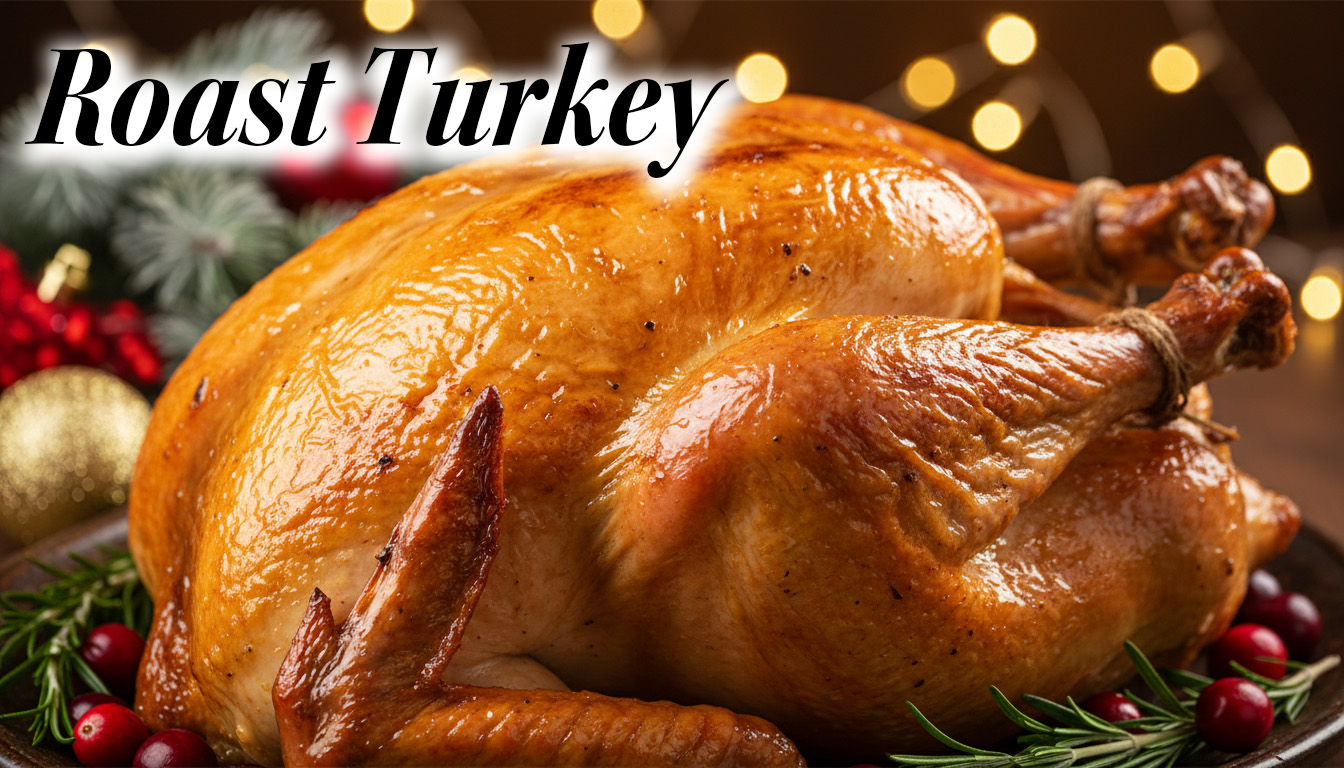
Have you ever eaten roast turkey?
December means Christmas!
Surrounded by various dishes and gifts, we spend a joyful time with loved ones.
Oh, there's one dish in particular that really stands out, isn't there?
This is the roast turkey we're introducing today.
Christmas Dish Introduction, Part 1!
First up is roast turkey!
Get ready for Christmas at the end of this month by reading this article!
This site introduces cuisines from around the world and also features songs that express those dishes.
You can also listen on YouTube and various subscription services, so please give it a listen!
We've also started accepting requests for music production!
We also create original music to complement our dishes and provide in-store background music. Feel free to request our services anytime!
What exactly is roast turkey?
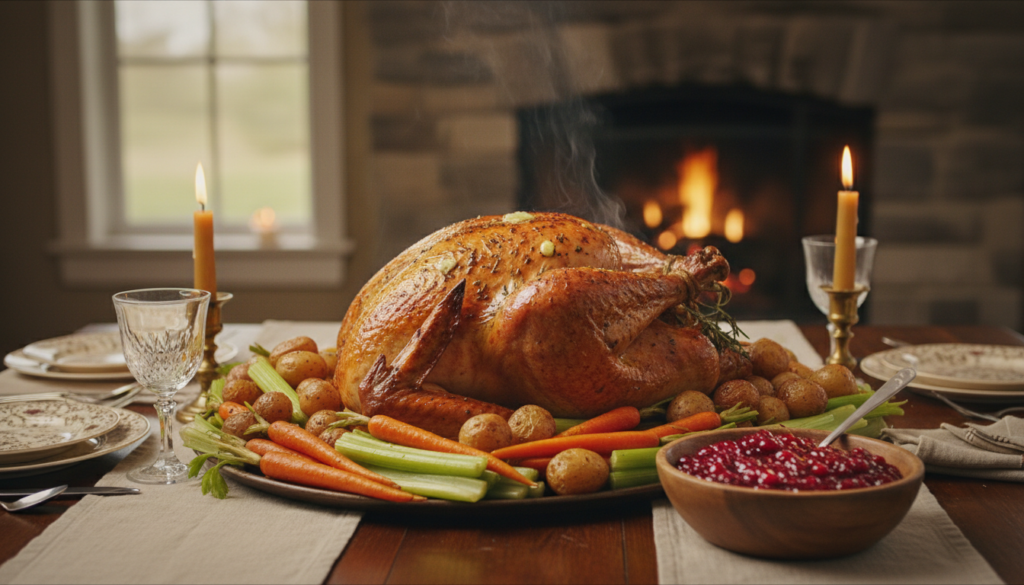
So what exactly is roast turkey?
As many of you may already know, I'll reintroduce it here.
Roast turkey is a dish made by baking a whole turkey.
At this time, domesticated American ring-necked pheasants are primarily used.
Turkeys are fairly large creatures, standing about 120 cm tall and weighing 5 to 12 kg.
Roast turkey is a beloved traditional dish, especially in North America.
As a result, they line up on tables even at celebrations and parties other than Christmas.
Thanksgiving, celebrated in November in the United States and December in Canada, features roast turkey as an essential dish in nearly every household.
Actually, in North America, Thanksgiving has more of an association with roast turkey than Christmas does.
Still, roast turkey remains a Christmas staple.
The taste and flavor of roast turkey
The turkey used for roast turkey is characterized by its mild flavor.
It is said to be milder than chicken, and the breast meat in particular is low in fat and healthy to eat.
On the other hand, the thigh meat is juicy and flavorful, allowing you to enjoy a variety of tastes depending on the cut.
Roasting brings out the aroma of such turkey even more.
The skin is especially fragrant, with a rich aroma of herbs and butter.
Serving it with the stuffing herbs and the roasting juices gravy enhances its richness.
The History of Roast Turkey
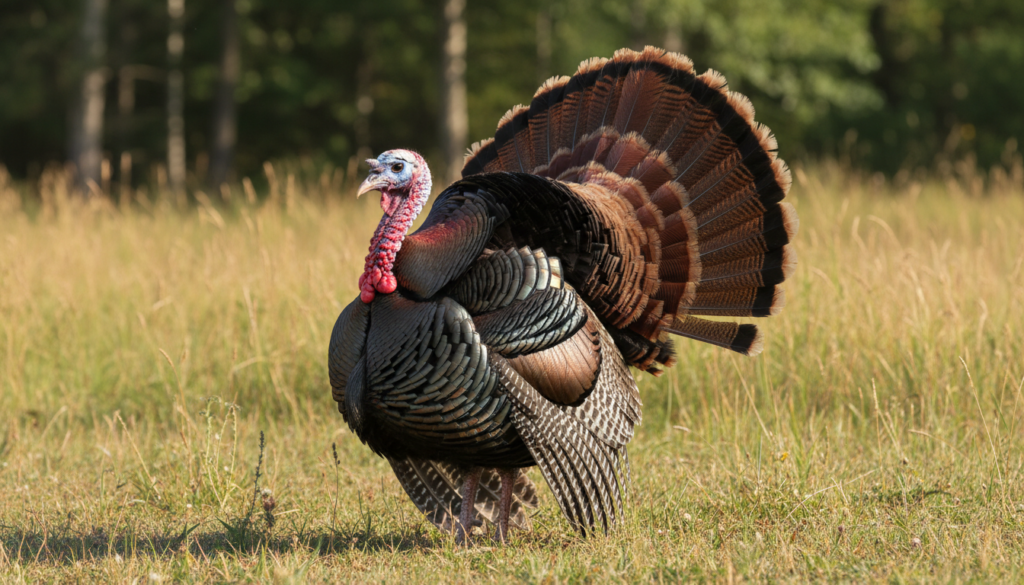
The origins of roast turkey trace back to the lives of Native Americans.
The American Goldfinch, as its name suggests, is native to North America.
Therefore, they have long been domesticated and raised for food by the Native Americans, who are the indigenous peoples of the region.
Incidentally, domestication refers to the process of placing wild birds under human management and control, selectively breeding them to develop specific traits such as meat, eggs, and_ feathers.
To be specific,
- Used as edible meat
- Using feathers as decorative items
- Domesticated and raised
was doing.
By the 16th century, Europeans began settling in North America.
In the process, the turkey became known and was brought back to Europe.
Further improvements in Europe led to the development of breeds with larger meat yields.
It would return to North America and become established as a “large poultry for celebrations.”
Why roast a whole turkey?
So why did we start using turkeys?
There are three reasons: one is that it has less fat and is well-suited for roasting.
Roasting requires prolonged low-temperature heating.
Since fatty meats tend to melt or splatter, lean turkey is actually a better choice.
The second reason is that turkeys are large.
Not only does it save time in the kitchen, but roasting it whole also makes it perfect for entertaining large groups.
Third, it blended with the Western culture of festive cuisine.
Western festive cuisine often features large platters, reflecting traditions of family and relatives gathering together and a strong emphasis on oven cooking.
Therefore, it is said that roast turkey also came to be cooked whole as a result of this influence.
Why roast turkey became a staple for Thanksgiving and Christmas
Roast Turkey and Thanksgiving
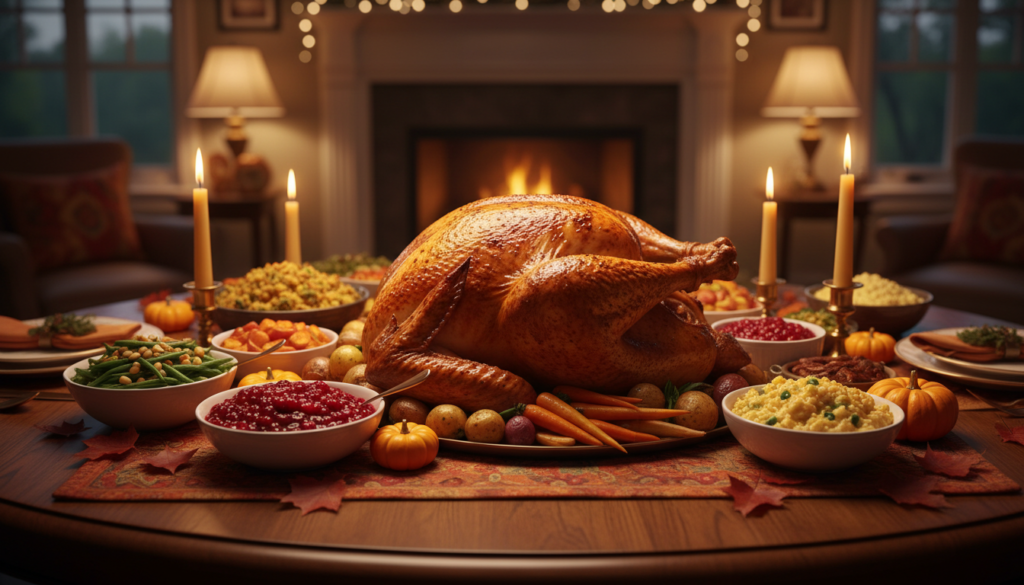
As I explained earlier, roast turkey and Thanksgiving are closely connected.
Thanksgiving is a holiday primarily celebrated in the United States and Canada.
This tradition stems from the 17th century, when British settlers gave thanks to God for the harvest and shared a meal with the indigenous peoples.
So why did turkey become the traditional food for Thanksgiving?
There are three reasons.
① Abundantly inhabited North America
At that time, large game meat was not very common in North America.
The few deer were precious, and there weren't enough pigs being raised either.
Amidst all this, the turkey caught people's attention.
Turkeys were large and lived in great numbers.
Furthermore, the ease of capture was one reason it was chosen.
② One bird can feed a large number of people.
Turkeys were large, making them ideal for large gatherings like harvest feasts.
③ It possessed a festive grandeur.
It looks great, and it tastes especially good when roasted.
As mentioned earlier, it also pairs well with the British tradition of holiday roast dinners.
In 1863, Lincoln made Thanksgiving an official holiday.
By that time, the image of “turkey for Thanksgiving” had already taken hold, but it became firmly established as a national tradition, cementing its place as a beloved staple dish.
Roast Turkey and Christmas
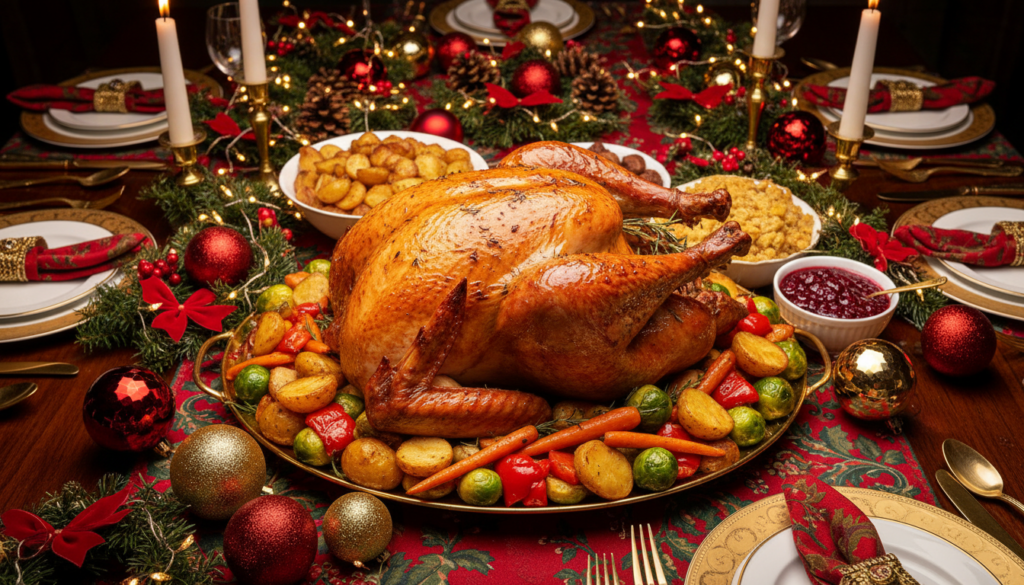
In medieval England, roast goose was originally the standard dish.
However, things began to change when turkeys were brought to Europe.
The reasons turkeys became popular are said to be that they were larger than geese and had a milder flavor, and that they offered good value for money when raised as poultry.
By the 19th century, roast turkey had become a staple of Christmas celebrations.
Basic Roast Turkey Recipe
Whole Turkey: This recipe is designed for a 3–4 kg turkey.
Ingredients (Serves 6–8)
Turkey body
- Turkey: 3–4 kg (If frozen, thaw completely in the refrigerator for two full days)
- Salt: 2 tablespoons
- Black pepper: 1 to 2 teaspoons
- Olive oil or melted butter: 3 to 4 tablespoons
Aroma (fragrance)
- Onion: 1 (cut into quarters)
- Lemon: 1 (cut in half)
- Garlic: 4 cloves (crushed)
- Rosemary: 2 sprigs
- Time: 4 branches
- Sage: To taste
Stuffing (optional)Stuffing (optional)
- Sliced bread: 4 slices (diced)
- Onion: 1/2 medium (finely chopped)
- Celery: 1/2 stalk (finely chopped)
- Butter: 30g
- Salt and pepper: a pinch
- Herbs (thyme, sage): a pinch
Gravy (made from pan juices)
- Turkey drippings: as needed
- Cake flour: 1 to 2 tablespoons
- Chicken stock (or water): 200–300 ml
- Salt and pepper: a pinch
Preparation (Important)
Ninety percent of the success of a roast turkey depends on preparation.
1. Fully thaw (in the refrigerator for about 2 to 3 days)
Always thaw frozen turkey slowly in the refrigerator.
Rapid thawing causes dryness.
2. Wipe the surface thoroughly.
Pat dry with paper towels, then rub salt and pepper into both the outside and inside.
3. Spread butter or oil
Apply it on top of the skin and underneath the skin (between the breast meat and the skin) to prevent it from drying out.
Rub it in between the meat and skin using the following method.
- Using your fingers or a spoon, gently insert your finger between the skin and breast meat, spreading it carefully to avoid tearing the membrane.
- Press softened butter or_ herb butter, brought to room temperature, into_ the space.
- Use your hands to smooth it out from the outside, spreading it evenly under the skin.
This method also helps prevent lean cuts like chicken breast from becoming dry.
Cooking Instruction
① Prepare the stuffing (if adding)
- Melt butter in a frying pan
- Sauté the onions and celery.
- Add bread and season with salt, pepper, and herbs.
- Let it cool slightly, then stuff it lightly into the turkey cavity.
※If you pack it too tightly, it won't cook through.
② Season the turkey
- Rub salt and pepper all over.
- Spread butter or oil generously under the skin as well.
- Place herbs (thyme and rosemary) inside the cavity.
③ Roast
Basic Grilling Techniques
- Preheat the oven to 180–190°C.
- Place the turkey breast-side up on the roasting pan.
- Lightly cover with aluminum foil to prevent drying.
- Every 30 to 45 minutes, baste the surface with the pan juices or_ butter.
Approximate baking time
- Approximately 35 to 40 minutes per 1 kg
Example: 4kg → Approximately 2 hours 30 minutes to 3 hours
※With staffing: +20 to 40 minutes
④ Let it rest after baking (important)
After baking, let it rest for at least 30 minutes to 1 hour.
This allows the juices to redistribute inside, resulting in a moist finish.
⑤ Make gravy (meat juice sauce)
- Pour the drippings into the pot.
- Remove a little oil
- Sprinkle in the flour and lightly sauté.
- Add water or bouillon and stir until thickened.
- Season with salt and pepper to taste.
Key Points for Success
- Butter under the skin
- Regularly baste with the cooking juices
- After baking, let it rest thoroughly.
- Don't overcrowd the stuffing
These will make your turkey moist and juicy.
For Japanese households: Roast Turkey Recreation
Roast turkey is difficult to recreate in Japanese homes due to various factors, isn't it?
Therefore, here we introduce methods and alternatives for enjoying roast turkey at home.
① Turkey Substitute
Turkey is rarely handled in Japan.
Therefore, we recommend the following as an alternative to this turkey.
That's a chicken.
Chicken is sold at any supermarket, but it's the best substitute for turkey.
Chicken is considered to be very similar in flavor profile to turkey.
Also, as you know, it's smaller than a turkey and easier to cook.
Especially the breast meat, being low in fat, offers a taste closer to roasted turkey.
You can enjoy it whole, or we recommend enjoying the breast meat as a single block.
- By the way, add a generous amount of “traditional turkey herbs” like sage, thyme, and_ rosemary.
- Stuffing to transfer the scent.
This way, you can enjoy a more turkey-like flavor.
② The oven is small / Can't bake for long periods
In this case, there are three methods available:
Method 1: Combined Oven and_ Microwave Use (Time-Saving)
While the breast meat can be difficult to cook through, pre-cooking it in the microwave saves time and results in a moist texture.
Procedure:
- Bring the turkey or meat substitute to room temperature.
- Wrap only the breast meat in plastic wrap and heat in the microwave at 600W for 3 to 6 minutes (adjust based on size).
- Spread herb butter all over and bake.
- Oven time is reduced by 30–40%
Method 2: Pre-bake on the stove → Use the oven only for finishing touches
Home ovens have low heat output, so
- Sear the surface in a frying pan/deep pot (to seal in the flavor).
- Place directly into the oven
- The roasted flavor comes through strongly in the final finish.
This also reduces the total baking time.
Method 3: Low-temperature + short-duration hybrid heating
Turkey breast tends to dry out easily, so
- Cook slowly at 120–140°C.
- Finally, crisp the skin at 220–250°C.
※Even with a home oven, you can achieve “moistness + the luxurious feel of roasting.”
Summary
How was it?
This time, we introduced roast turkey in time for Thanksgiving and Christmas.
The festive occasion's signature flamboyant presentation, cooking methods, stuffings, and distinct flavors from different cuts created a charm beloved by many!
Furthermore, Christmas is actively celebrated not only in Japan but also around the world.
I really hope you'll enjoy this dish at home!
That sentiment ended up making the article rather long.
You can recreate it even with chicken, so give it a try!
Thank you for watching until the end.
This month, we plan to introduce various dishes from Christmas through New Year's.
We hope you'll look forward to it.


Comments