

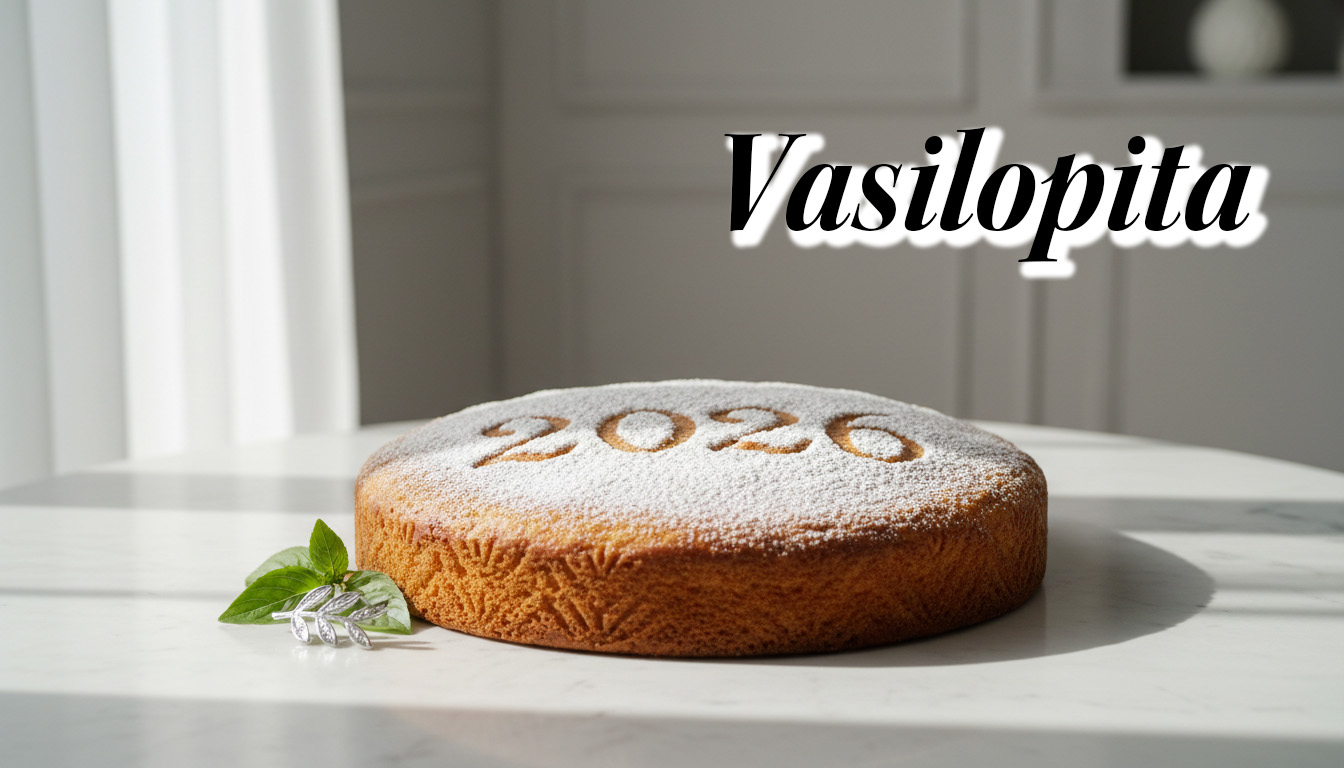
Do you know Vasilopita?
This confectionery dish, cherished during the Greek New Year, has its origins in compassion and possesses a unique culture.
This article explains this essential sweet dish for celebrating the New Year and_ starting anew with hope.
Please watch until the very end!
~Notice~
This site introduces cuisines from around the world and also features songs that express those dishes.
You can also listen on YouTube and various subscription services, so please give it a listen!
We've also started accepting requests for music production!
Perfect for personal use or in-store background music!
We offer a wide range of services, from existing dishes to original creations, so feel free to place your order anytime!
What kind of dish is Vasilopita?

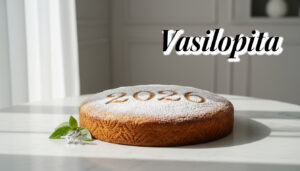
Vasilopita is a traditional sweet that symbolizes the Greek New Year.
The name originates from “Saint Basil (Agios Vasilios)” and_ carries the meaning of a cake/bread for sharing good fortune and_ blessings.
Saint Basil is a 4th-century Christian saint.
He is regarded as an exemplary saint who embodied the ideal of “faith plus charity,” dedicating himself to aiding the poor and_ orphans and_ to social welfare.
Then why is the name related to Saint Basil?
It relates to his actions and the characteristics of Vasilopita.
To begin with, Vasilopita can be broadly divided into two main types.
One is the mainstream cake type made with butter, eggs, and sugar.
The other is a sweet bread type made with yeast fermentation.
While it varies by region and household, Vasilopita generally refers to one of these two types.
And these two types share an important commonality.
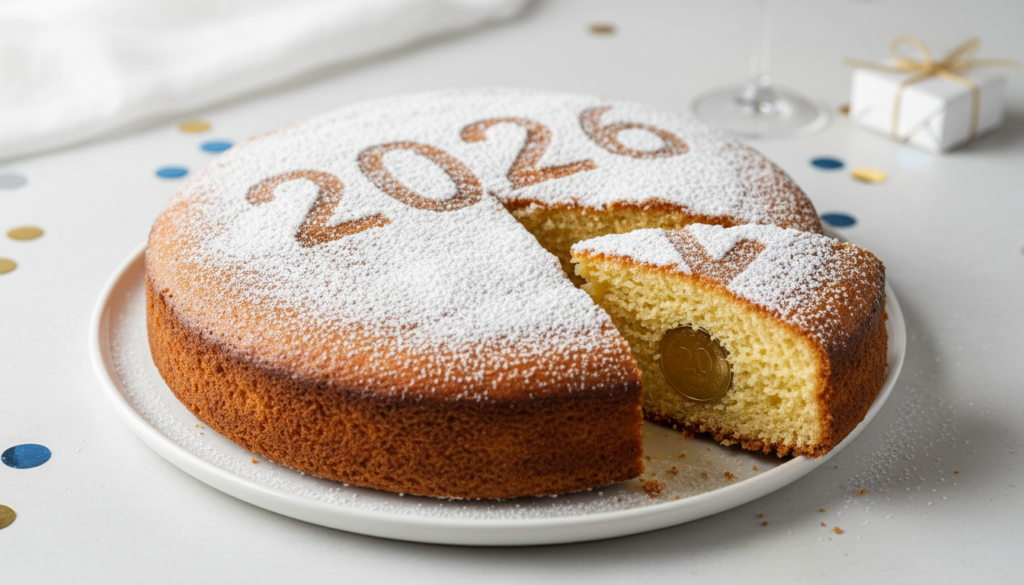
That means there's a coin hidden inside.
This characteristic connects to the relationship with Saint Basil.
According to legend, Saint Basil distributed loaves of bread filled with gold coins to return property unjustly taken from the people.
This tradition gave rise to the custom of placing coins inside the Vasilopita.
Nowadays, it is believed that whoever gets this coin will have good fortune that year, and it has become a symbol for sharing joy during the New Year.
The Taste and Flavor of Vasilopita
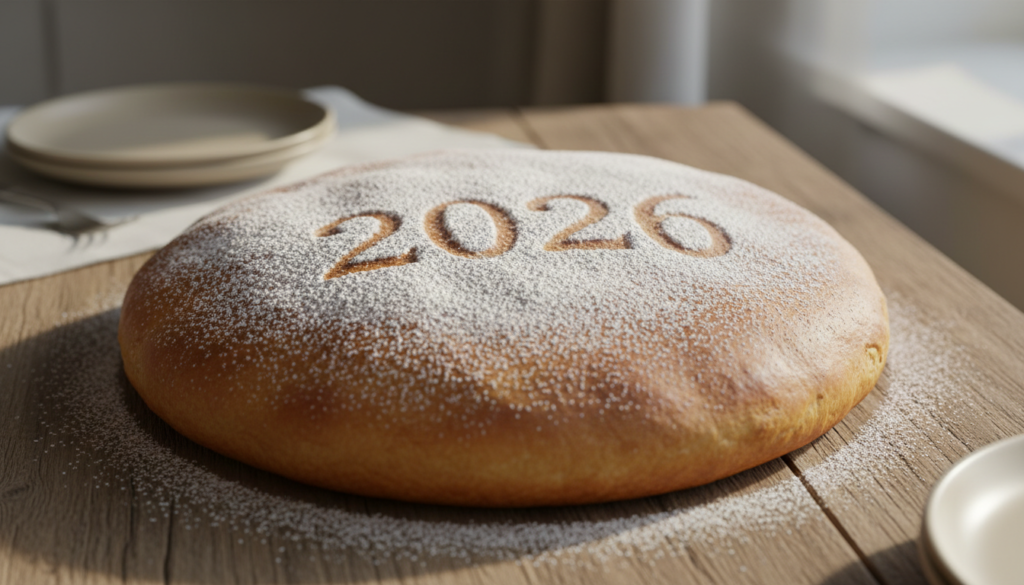
Vasilopita comes in two types: cake-style and bread-style, but both share a subtly sweet flavor.
This is also because Vasilopita is not a dessert but a celebratory cake.
It also has a refreshing citrus aroma, and its lightness—allowing you to eat slice after slice without feeling heavy—is another appealing feature.
Let's look at the characteristics of each type.
The cake type has a slightly dense texture, with characteristics similar to pound cake or sponge cake.
And the rich sweetness of butter and eggs, along with the distinct aromas of orange and mastic, come through clearly.
This type has a slightly stronger dessert-like quality and pairs exceptionally well with black tea.
This bread type features a soft and chewy texture, making it perfect for breakfast or as a light snack.
The overall impression is restrained, featuring a subtle sweetness and the aroma of orange and spices.
Instead, you can smell the aroma of wheat and fermentation.
It is said to be similar to milk bread, for example.
The Origin of Vasilopita
As the origin of Vasilopita, I introduced the tradition of Saint Basil mentioned earlier.
However, some researchers point out that the custom of “entrusting one's fortune to festive bread” may have already existed.
It is said that “lucky bread” was distributed during ancient Greek harvest festivals and Roman New Year celebrations.
Therefore, Vasilopita can be considered a dish that emerged from the fusion of ancient folk customs and_ Christian symbolism.
From the Middle Ages to the modern era, Vasilopita became established as bread blessed in churches and_ as New Year's sweets shared in homes.
From this era onward,
- The whole family gathers to carve it up.
- Cut the portion for the gods and the household first.
- Congratulate the person who won the coin.
A ceremonial form closer to the present day was established.
Originally, the bread-type was the mainstream, but as sugar and butter became more common, the cake-type Vasilopita also became widespread.
In short, Vasilopita is
“A celebratory confection born from a tale of charity, passed down to share New Year's hopes”
It can be said.
Fun Facts and Interesting Stories About Vasilopita
① Coins aren't always “money.”
The word φλουρί (flouri), which originally means gold coin, is inserted here.
However, in modern times
- Golden decorative coin
- Medals engraved with crosses and saints
- A specially made coin blessed at church
... may also be used.
In other words, it means that “symbols of blessing” are valued more than “value”.
② The order of cutting is strictly defined.

Depending on the household or region, they cut in the following order.
- Christ (God)
- House
- Poor people and visitors
- Family (from the eldest)
In other words, a slice is always prepared for someone who does not actually exist.
This reflects the Greek value of “collective responsibility.”
③ Give it your all at work or school
Vasilopita is not only for the home,
- Company
- Government offices
- School
- Sports team
But it can be separated.
Moreover, for those who win the coin,
- Cash
- Gift Certificate
- Vacation
- Company Logo Merchandise
Practical prizes may also be offered.
In other words, it also serves as a New Year's party and a lottery drawing.
④ In fact, similar cultures exist all over the world.
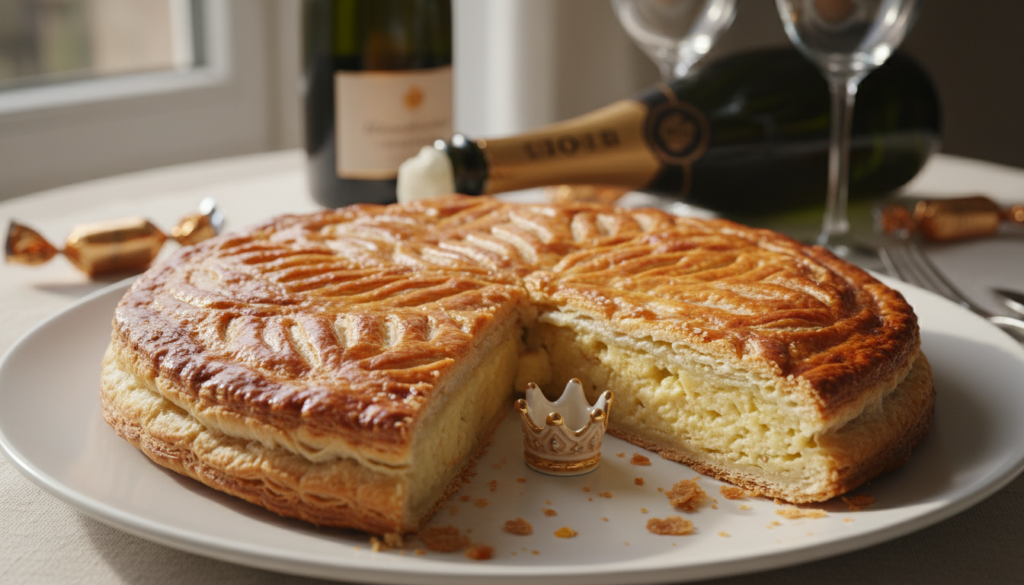
Dishes often compared to Vasilopita:
- France: Galette des Rois
- Spain: Roscón de Reyes
- Bulgaria: Banitsa (with paper fortune slips inside)
The culture of “placing something inside to divine fortune” is a common element found throughout Europe.
⑤ The day you eat it doesn't have to be January 1st.
The Vasilopita is traditionally eaten on January 1st, but
- A day when the whole family can gather together
- Mid- to late January
- After the service for Saint Basil
and_ so on, quite flexibly.
In other words, what matters most is not the date, but getting together.
How to Make Vasilopita (Cake Type)
Ingredients (for one 18cm round cake)
- Unsalted butter … 100g
- Granulated sugar … 120g
- Eggs … 2
- Milk … 100ml
- Cake flour … 200g
- Baking powder … 2 teaspoons
- Orange zest (grated) … 1 orange
- Vanilla extract … a little
- Salt … a pinch
- Powdered sugar (for finishing) … as needed
- Coin (wrapped in aluminum foil) … 1 piece
Preparation
- Preheat the oven to 170°C.
- Line the pan with parchment paper.
- Always wrap coins in aluminum foil.
How to make them
① Cream the butter and sugar together.
Place the butter, brought to room temperature, in a bowl,
Add sugar and mix well until it turns white.
② Add the eggs.
Add the eggs one at a time, mixing well after each addition.
If it starts to separate, add a small amount of powder to adjust.
③ Flavoring
Add orange zest, vanilla, and salt, then mix.
👉 The key to that distinctive Vesiropita aroma.
④ Alternately add the dry ingredients and milk.
Sift in the cake flour and baking powder,
Alternately add the milk and flour, mixing lightly with a rubber spatula.
⑤ Insert coins
Pour half the batter into the pan,
- Gently bury the coin toward the edge.
- Pour the remaining batter
⑥ Firing
Bake at 170°C for 40 to 45 minutes.
Insert a bamboo skewer; if no batter sticks, it's done.
⑦ Finishing
Once cooled, sprinkle with powdered sugar.
It's standard practice to write the year (e.g., 2026).
How to Make Vasilopita (Bread Type)
※ Fermentation occurs only once・Fewer steps
Ingredients (Easy-to-make amount)
- Bread flour … 250g
- Sugar: 50g
- Salt: 1/2 teaspoon
- Dry yeast: 2 teaspoons
- Egg: 1
- Milk: 120ml
- Olive oil or butter: 40g
- Orange zest: a little
- Coin (wrapped): 1 piece
How to Make (Simplified Version)
- Mix all the ingredients in a bowl.
- Knead for about 10 minutes.
- Ferment at room temperature for 1 hour (until doubled in size).
- Deflate and roll into a ball, then insert the coin.
- Bake at 170°C for 30 to 35 minutes.
Safety Precautions
- Always wrap the coins.
- Before cutting, inform them that “there is a coin inside.”
- If you have children, the rear-loading method is also acceptable.
Summary
How was it?
This article introduced the Vasilopita, a cake popular during the New Year in Greece.
Vasilopita is not only about eating, but also about sharing and celebrating together.
It's essential for everyone to gather and eat together to start the new year with hope.
Please enjoy this dish with friends and family while thinking about its background!
Thank you for watching until the very end!
And if you'd like, please check out our other articles too!

Comments