

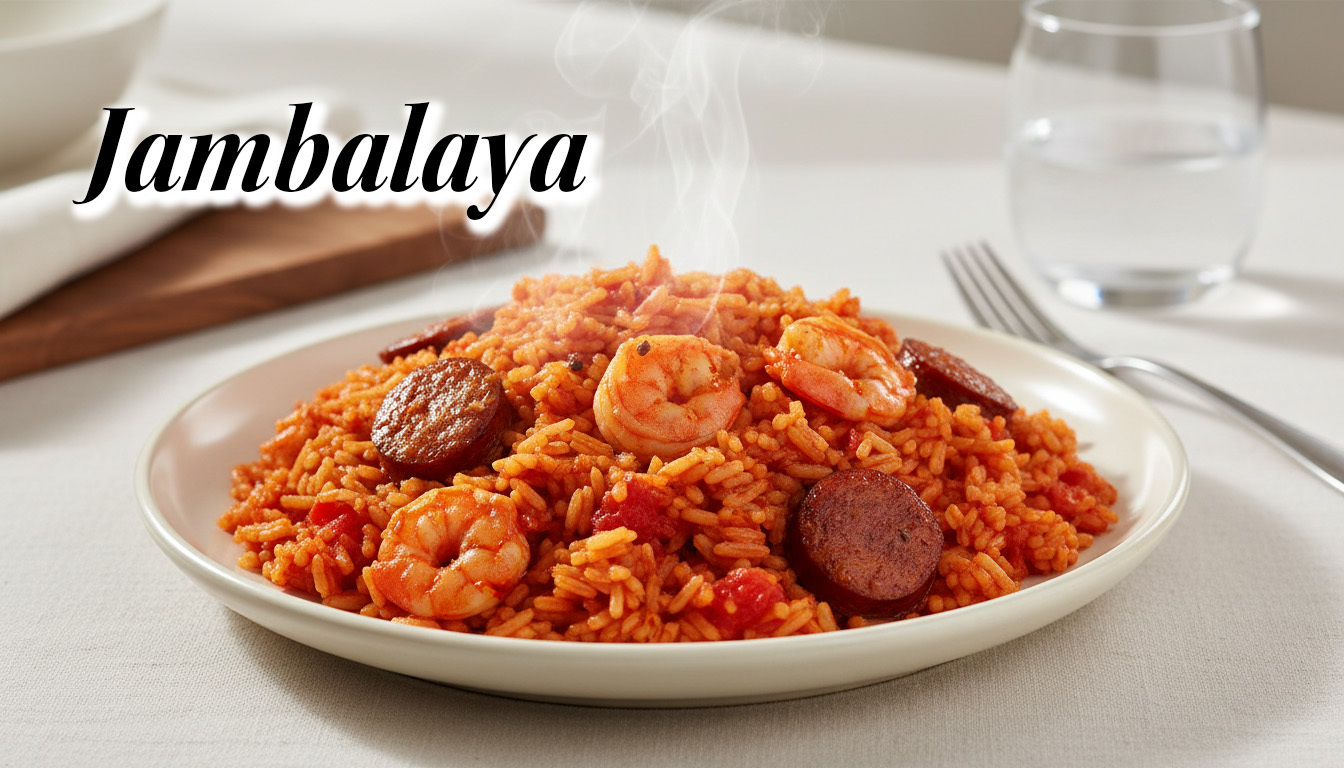
Have you ever tried Jambalaya?
Jambalaya is deeply cherished by locals as a regional dish in the American South.
How did this dish, blending with foreign cultures and taking root in this land, come to be so beloved?
This article will introduce you to everything about Jambalaya, including its history and recipes!
Please watch until the very end!
~Notice~
This site introduces cuisines from around the world and also features songs that express those dishes.
You can also listen on YouTube and various subscription services, so please give it a listen!
We've also started accepting requests for music production!
Perfect for personal use or in-store background music!
We offer a wide range of services, from existing dishes to original creations, so feel free to place your order anytime!
Click here for our guide page!
What kind of dish is Jambalaya?
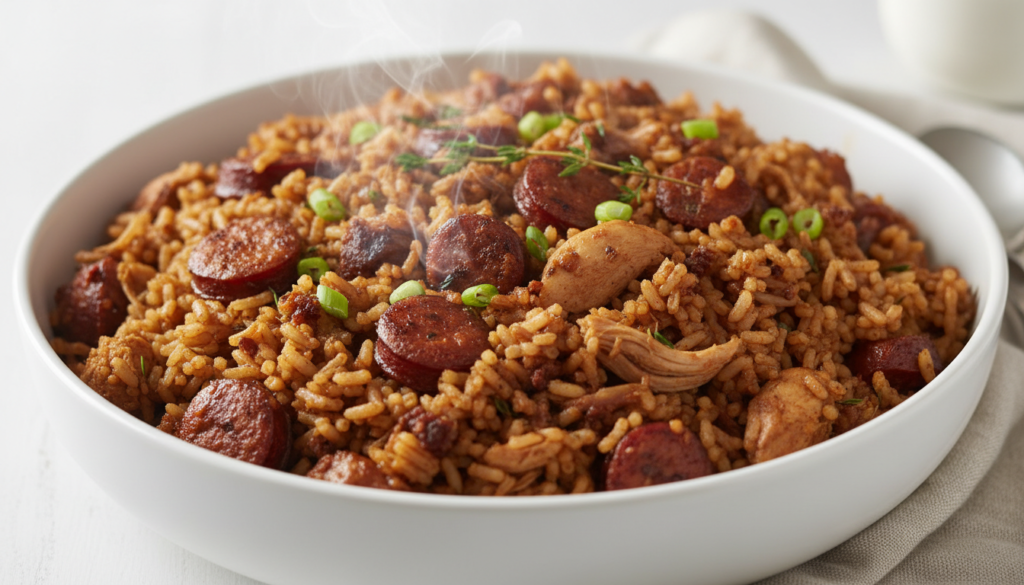
Jambalaya is one of the representative rice dishes of Louisiana in the American South.
It has been influenced by Spain, France, West Africa, and Native Americans, and shares characteristics similar to rice dishes like paella and_ jollof rice.
The most widely accepted theory is that the name originates from the Provençal word jambalaia, meaning “mixture” or_ “stew.”
Provençal is one of the dialects of Occitan spoken in southern France.
Additionally, there are other theories suggesting combinations such as Spanish jamón (ham) + paella (rice dish) and French jambon (ham) + Yoruba yaya (rice).
The origins of these names also suggest that Jambalaya has been influenced by various countries.
Variations on Jambalaya
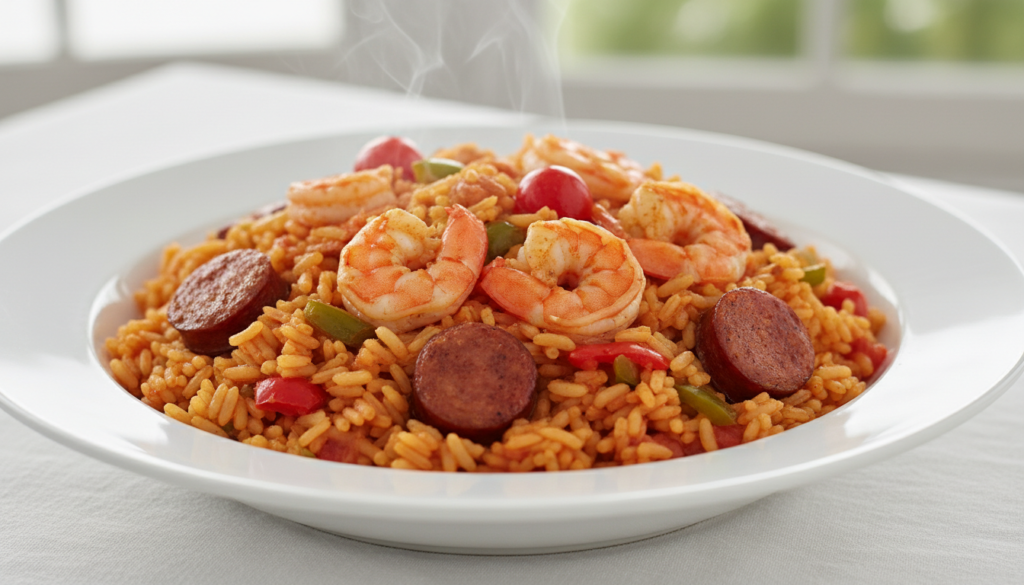
There are two types of Jambalaya: Creole-style and Cajun-style .
First, Creole-style refers to a type of Jambalaya eaten around New Orleans.
Made with tomatoes and characterized by an overall reddish appearance.
Adding tomatoes not only changes the appearance but also enhances the flavor with a refreshing taste and allows you to enjoy a fruity aroma.
The Cajun style, on the other hand, is the type commonly eaten in rural Louisiana.
It does not use tomatoes, but it has the characteristic of grilling meat to bring out its savory flavor.
Therefore, you can enjoy its smoky, savory flavor.
And what both variations have in common is their appeal: a rich, deep flavor with a hint of spice.
The rice absorbs the savory flavors of each ingredient, allowing you to savor the smoky aroma and the harmony of multiple flavors in every bite.
Additionally, Jambalaya is also a so-called one-pot dish that cooks multiple ingredients together in a single pot.
That's why it's also popular as a home-cooked meal—it's easy to prepare.
The History of Jambalaya
Actually, there are no records regarding the inventor or the time of origin of Jambalaya, so its exact origins remain unclear.
Actually, there are no records regarding the inventor or_ the time of origin of Jambalaya, so its exact origins remain unclear.
Therefore, it is believed that Jambalaya existed at least as early as 1885.
The Birth of Jambalaya
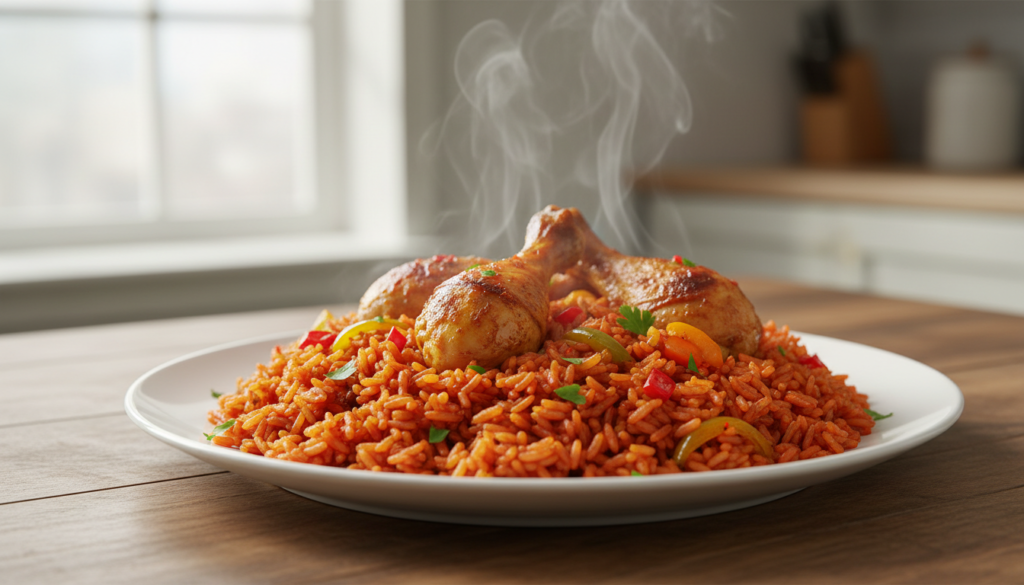
The origin of Jambalaya is unknown, but its birth is speculated based on its characteristics.
That is, a fusion cuisine blending West African, Spanish, and_ French culinary traditions.
In particular, it has been strongly influenced by the culinary culture of West African slaves brought over during the colonial era.
The basis for this is that West Africa has a culinary tradition of cooking meat, fish, and rice together in a single pot.
The structure is similar to Senegalese Jollof rice.
It is also said that about sixty percent of the slaves brought to Louisiana originated from Senegal, where rice cultivation was widespread.
Therefore, the structure of Jambalaya can be said to be based on African culinary traditions.
Influence of European cuisine
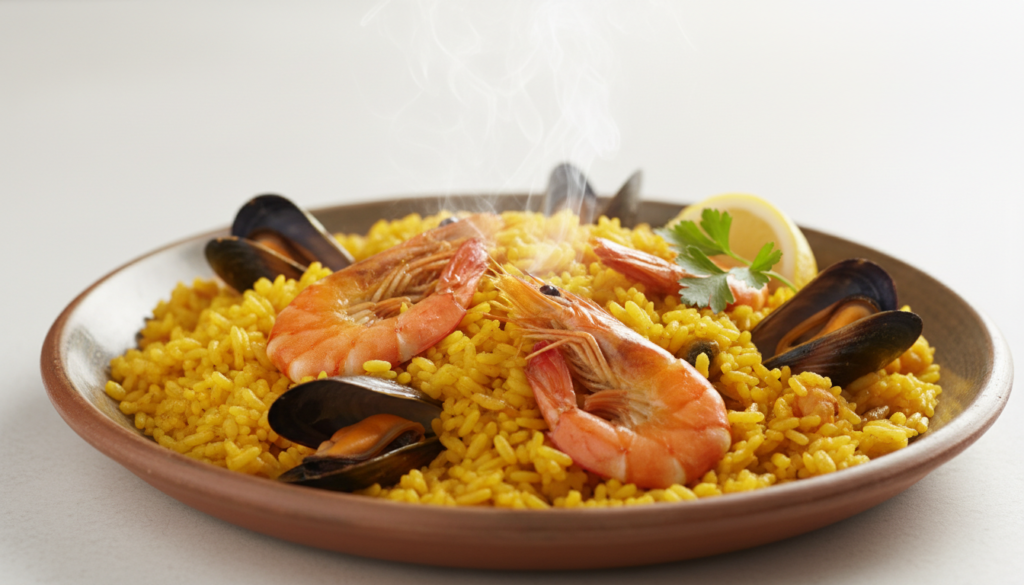
The foundation of African culinary culture is further enriched by the culinary traditions of Spain and France.
It is said that the Spanish brought the idea of paella.
This is said to be the reason tomatoes are used in Jambalaya.
Paella uses a spice called saffron, which is harvested from crocuses.
This spice is famous for being said to be the most expensive in the world.
However, it cannot be obtained in Africa, and import costs are high.
Tomatoes began to be used as a substitute.
By using tomatoes, we were able to recreate the color and aroma found in paella.
Meanwhile, the French have added andouille, a sausage originating in France.
This enhances the richness, aroma, and flavor profile of Jambalaya.
It is also said that the French laid the flavor foundation for what is known as the “Holy Trinity” in Jambalaya.
They adapted the aromatic trio of onions, celery, and carrots—known as mirepoix—for local use.
The Holy Trinity is a flavor base structure using onions, celery, and bell peppers.
In Louisiana regional cuisine, this base is used in most dishes, including Jambalaya.
The Evolution and Current State of Jambalaya
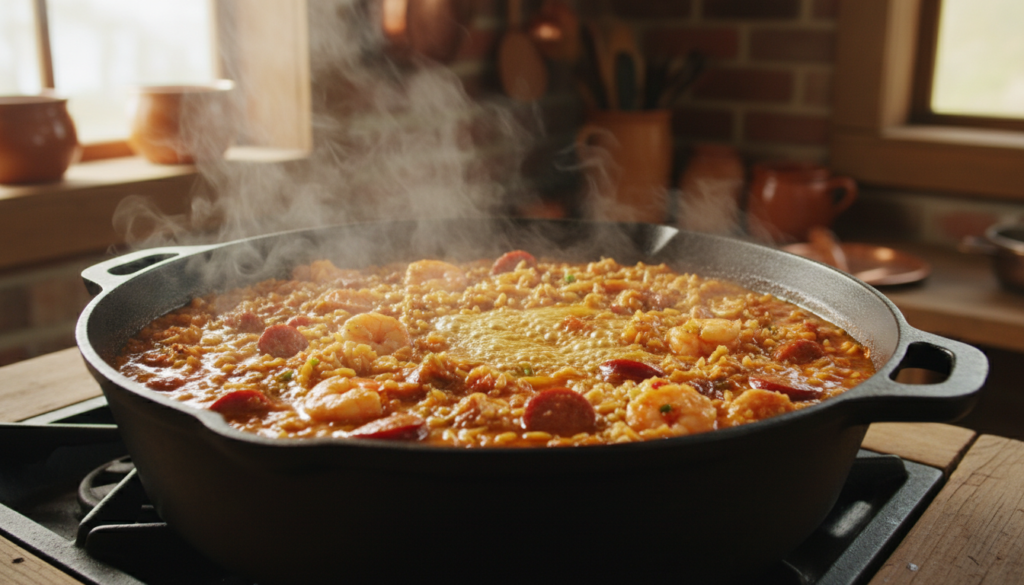
Jambalaya is not only a home-cooked meal,
- A staple at large-scale events like church festivals
- A dish that can be made in one large pot, is inexpensive, and fills you up.
It will also gain popularity.
Furthermore, during the Great Depression of the 1930s, it became widely used as an inexpensive staple food.
It also became a staple dish for ordinary people during times of economic hardship.
In modern times, Jambalaya has become a signature dish of Louisiana cuisine.
It is cherished as a traditional dish whose recipes vary by region and household.
Additionally, in 1968, Louisiana declared itself the “Jambalaya Capital of the World.”
Since then, a festival celebrating regional culture, including Jambalaya, has been held annually.
How to Make Jambalaya
Ingredients (Serves 2–3)
- Rice … 1 cup (unwashed)
- Chicken thigh meat … 200g
- Sausage … 120g
- Shrimp … 100g
- Chicken soup … 350ml
- Salt ... 1/2 teaspoon
- Black pepper ... a pinch
- Paprika powder … 1 teaspoon
- Cayenne pepper … a pinch (to adjust spiciness)
- Salad oil or_ olive oil … 1 tablespoon
Aromatic Wild Greens (Essential Base)
- Onion … 1/2
- Bell pepper … 1
- Celery … 1/2 stalk
In the case of the Creole method
- Tomato … 100g
How to make them
① Preparation
- Chicken → Cut into bite-sized pieces
- Sausage → sliced into rounds
- Vegetables → Finely chopped
Cut each one.
The authentic way is not to wash the rice.
Starch absorbs umami more easily.
② Grill the meat
Heat oil in a deep skillet.
Cook the chicken over medium heat, followed by the sausages.
✔ Key Point
Achieving a deep, rich browning is essential for developing the savory aroma that forms the core of the flavor.
③ Stir-fry the vegetables
In the same pot, sauté the onions → celery → bell peppers in that order over medium-low heat for about 5 minutes.
The onions should be translucent.
For the Creole style, add the tomatoes here.
After adding the tomatoes, simmer over medium heat for 2 minutes.
④ Add rice and spices
Add the rice and stir-fry for 1 minute, coating it with oil.
Add all the seasonings.
⑤ Simmer
Add 350ml of chicken broth and stir gently.
Once it comes to a boil, reduce the heat to low and cover it.
Leave it for about 15 minutes.
⑥ Finishing
Add the shrimp and steam for another 5 minutes.
Criteria for determining completion
The successful state is
- The rice is fluffy.
- Contains almost no moisture.
- The bottom of the pot is lightly scorched.
Tips for Avoiding Mistakes (Important)
① Do not stir during cooking.
This causes the rice to become mushy.
② Keep the heat on low
To prevent burning.
③ Maintain proper hydration levels
Too much = rice porridge
Too little = core remains
Summary
How was it?
This time, we explained Jambalaya, a dish beloved primarily in the U.S. state of Louisiana.
Its spicy and rich flavor is sure to get you hooked after just one bite!
Additionally, it's easy to prepare and is enjoyed as a home-cooked meal locally, so it's also recommended for making at home!
Please give the recipes in this article a try!
Thank you for watching until the end.
Feel free to check out our other articles too!




Comments