

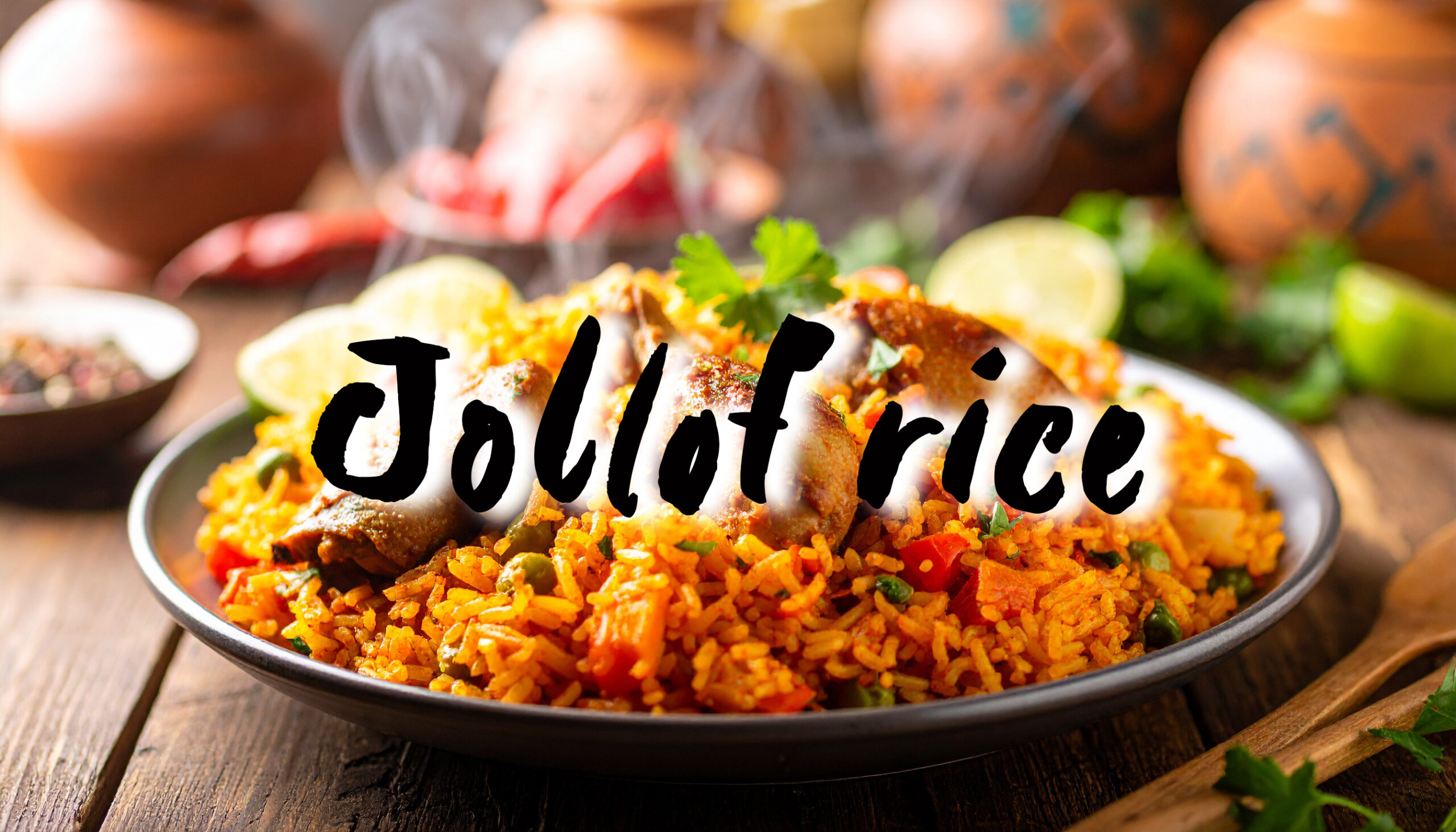
Have you heard of a dish called Jorofuri rice?
While it may be a dish not often heard of in Japan, it has become a beloved staple menu item enjoyed by many people across Africa.
This time, I'd like to dive deep into that spicy and diverse Jollof rice.
Please watch until the very end!
If you'd like to learn how to make Jorofuri rice, please visit the URL below!
~Notice~
This site introduces cuisines from around the world and also features songs that express those dishes.
You can also listen on YouTube and various subscription services, so please give it a listen!
We've also started accepting requests for music production!
Perfect for personal use or in-store background music!
We offer a wide range of services, from existing dishes to original creations, so feel free to place your order anytime!
Click here for our guide page!
What is Jollof Rice?
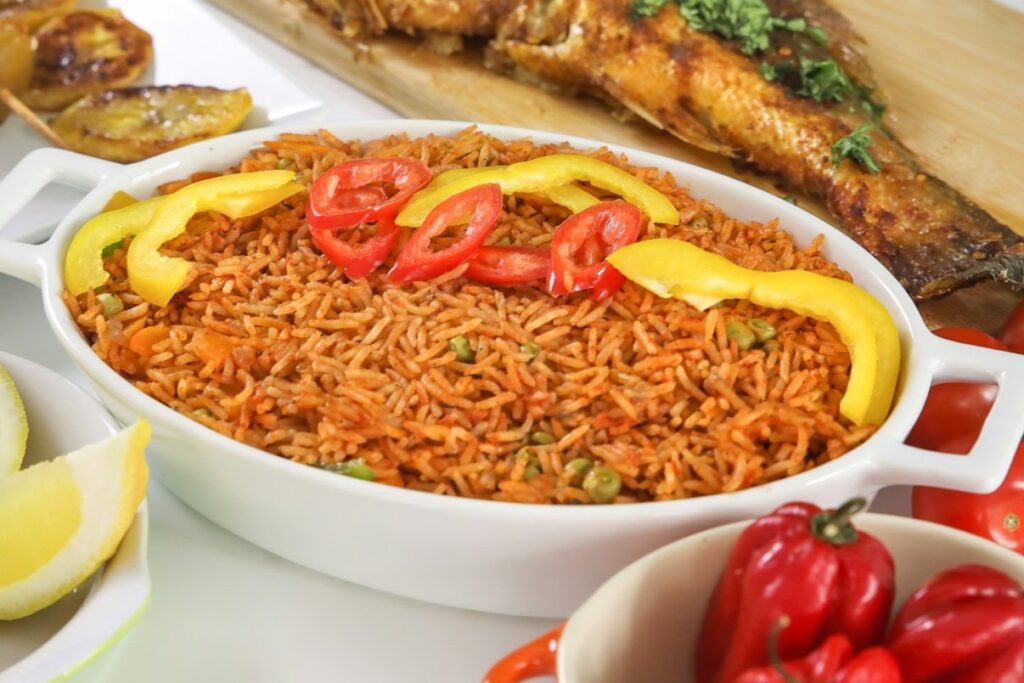
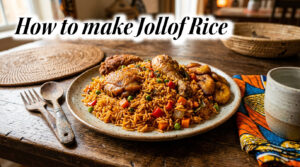
Jollof Rice is a pilaf-style rice dish made by simmering chicken or beef with vegetables in a tomato-based soup.
This is a West African dish eaten in countries on the northern coast of the Gulf of Guinea, on the western side of the African continent.
It is eaten for lunch and other meals, and is loved as a national dish.
The name “Jolof rice” is related to the Wolof people, who will be introduced later.
A literal translation would be “Wolof rice”.
TasteTune「Jollof rice」
Hey everyone, have you heard Tastetune's song “Jollof Rice”?
This vibrant and energetic musical work draws inspiration from Jollof Rice, expressing its lively flavor and the communal food culture of West Africa through sound.
Experience the world of sound woven from warm, powerful brass and rhythmic percussion—be sure to give it a listen!
Below, we introduce the thoughts, expressions, and creative approaches embodied in this musical work.
Expressing rich flavor through sound: powerful brass and rhythm
The most appealing aspect of Jollof Rice is its rich, deep flavor based on tomatoes.
The warmth of the brass and the rhythmic percussion capture that depth.
The vibrant rhythms of African drums evoke the heat of zesty spices and the joy of gathering around the table together. Just hearing the sound conjures images of smiles spreading around a plate of Jollof Rice.
Colorful Layers: Guitar and Marimba
Jollof rice is a dish where rice, vegetables, meat, and spices blend together perfectly. Its diverse flavors are expressed through the light sounds of guitar and marimba.
Vibrant, bouncing sounds layer upon one another, never letting the listener grow weary—much like Jollof Rice, where each bite offers a different flavor. It's as if the colorful ingredients spread across the plate are being painted directly with sound.
Celebration and Unity: The Atmosphere Music Creates
The entire piece is enveloped in an atmosphere reminiscent of a lively and joyful festival.
Jollof Rice is more than just a dish—it's a culture that connects people and shares joy. Music conveys its warmth and bonds through powerful rhythms and bright sounds. It fills you with an uplifting feeling that makes your body sway and bring a smile to your face.
The Essence of Jollof Rice Experienced Through Sound
This song themed around Jollof Rice isn't meant to be played like background music; it's an experience where you savor the dish itself with your ears. The rich flavor of Jollof Rice, the spice's kick, and the joy of sharing it together all come through in the sound. Please surrender your heart to this auditory journey and fully immerse yourself in the world of Jollof Rice.
The History of Jollof Rice
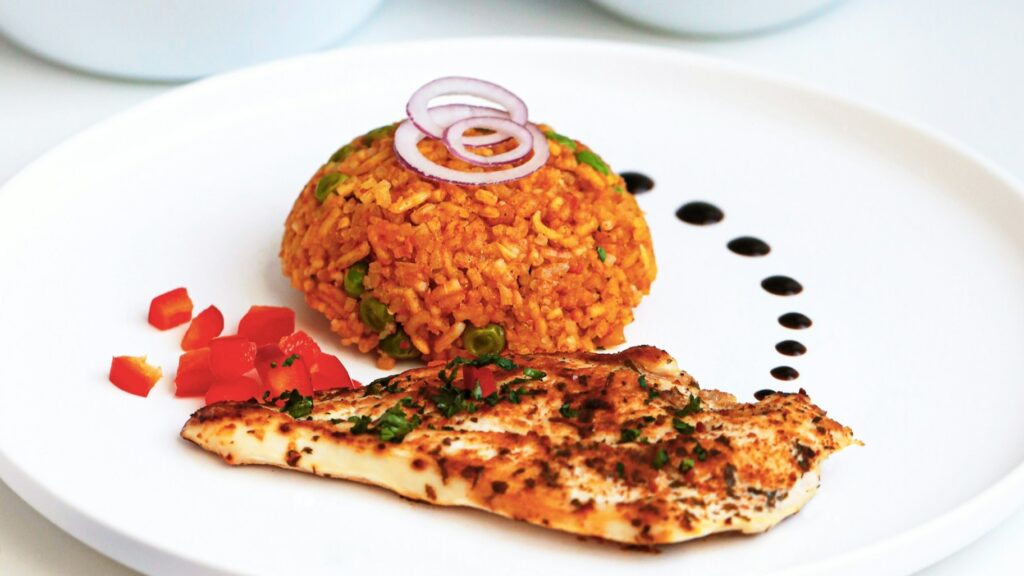
The origin of Jollof rice is closely tied to the Wolof people.
The Wolof people are an ethnic group living in and around Senegal in West Africa.
They once built a nation known as the Jolof Empire.
The staple foods at that time were rice and millet dishes made with locally grown ingredients, and tomatoes and spices were not yet common.
However, from this period onwards, a culture of single-dish meals using seafood and spices began to take shape.
Following that, trade with Europe began, bringing tomatoes, spices, and other goods.
This led to the establishment of a cooking method that incorporates tomato soup into traditional takikomi gohan.
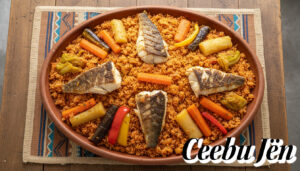
There is also a story that it is derived from Senegal's national dish, Ceebujen.
Ceebujen is a dish made by simmering fish and vegetables in tomato sauce and then cooking it with rice.
It is similar to Jollof Rice with fish, but it is believed that Jollof Rice was created by replacing the fish in Chebjen with meat to simplify the dish.
During the colonial era, it became widely known in West Africa through railways and ports.
Nowadays, unique regional variations have emerged, allowing you to savor distinct flavors unique to each area.
Jollof Rice Variations
Jollof Rice has been adapted to suit the tastes of different regions. Here are some of those variations.
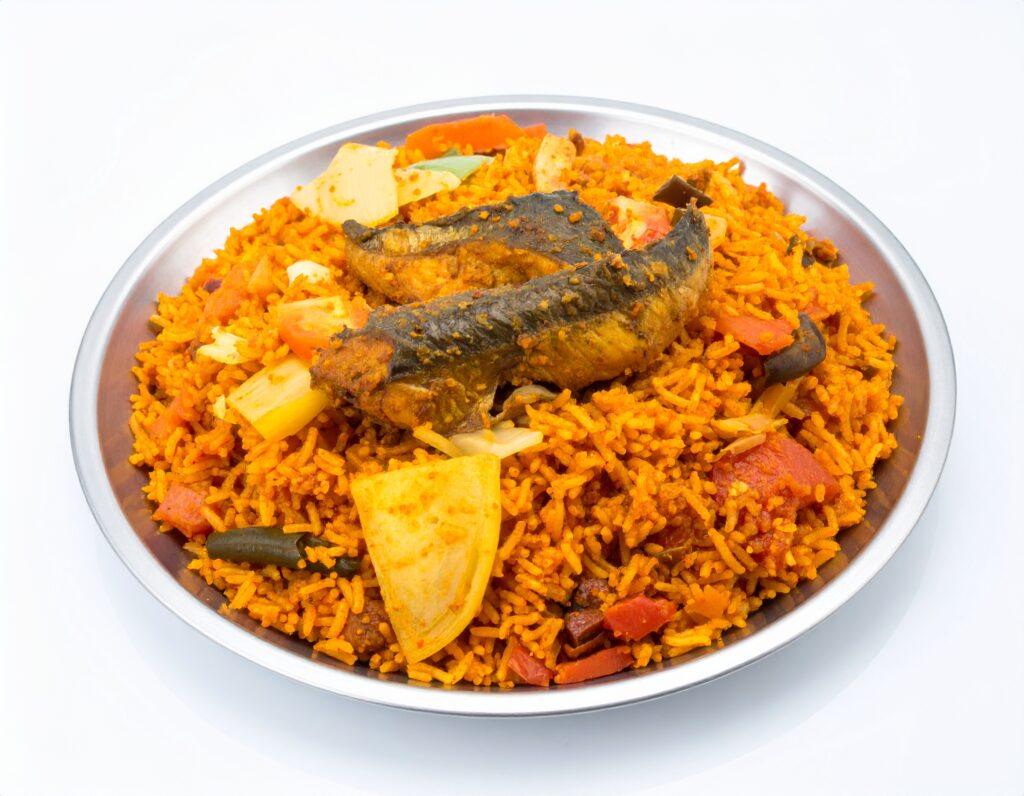
1. Senegalese style (original)
That's the Ceebujen I mentioned earlier. Its defining feature is using fish like mackerel and sea bream as the main ingredient.
Another characteristic is that vegetables are cut into larger pieces and broken rice is used.
Although the seasoning is relatively mild, this dish allows you to enjoy the delicious flavor of the fish.
Additionally, Chebjen is said to be registered as a UNESCO Intangible Cultural Heritage.
2. Nigerian style
This dish is rich in appearance and flavor, made with plenty of tomato sauce and chili peppers.
The menu mainly consists of meat dishes such as chicken, beef, and goat meat.
The spices used are aromatic, such as thyme, curry powder, and bay leaves, and the basic method is to cook the rice in the sauce.
Characterized by a spicy and aromatic flavor.
It is also enjoyed as a celebratory dish that is always served at parties and weddings.
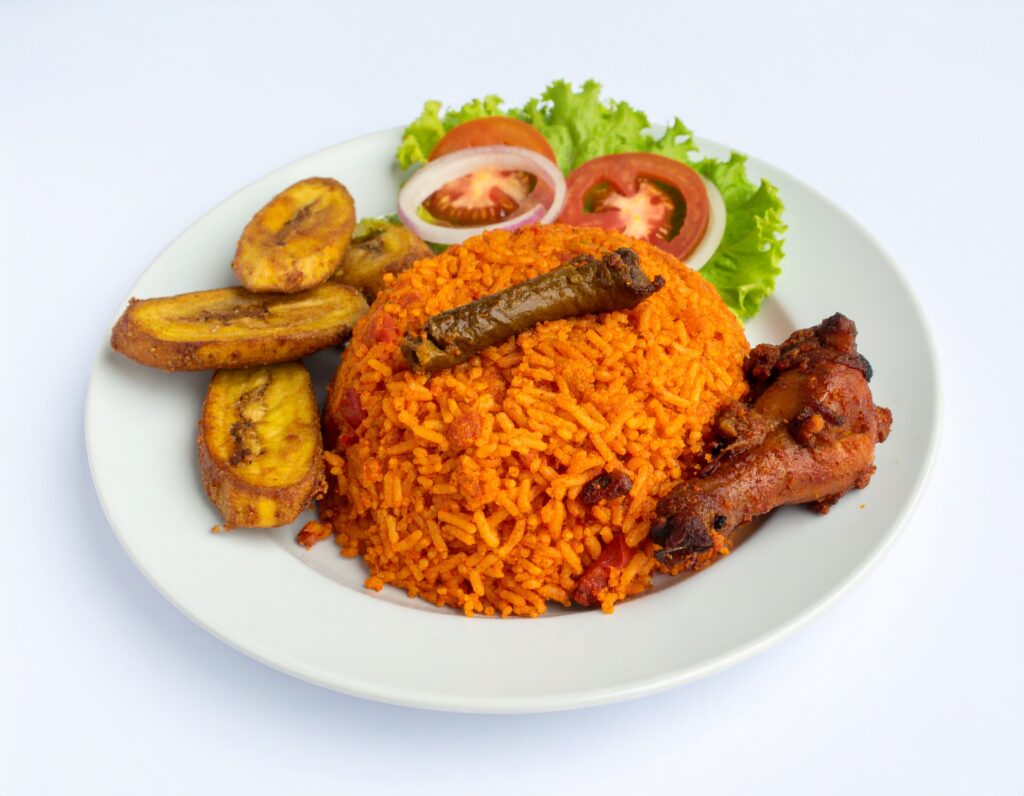
3. Ghana style
Onions and tomatoes are slowly sautéed to draw out their natural sweetness.
Rice is often partially cooked beforehand, then combined with the sauce and steamed, resulting in a milder flavor with less oil.
It also features ingredients like meat, fish, and occasionally sausage.
Alongside the Nigerian style, it is considered a leading contender for the title of “orthodox,” offering a well-balanced dish that appeals to everyone.
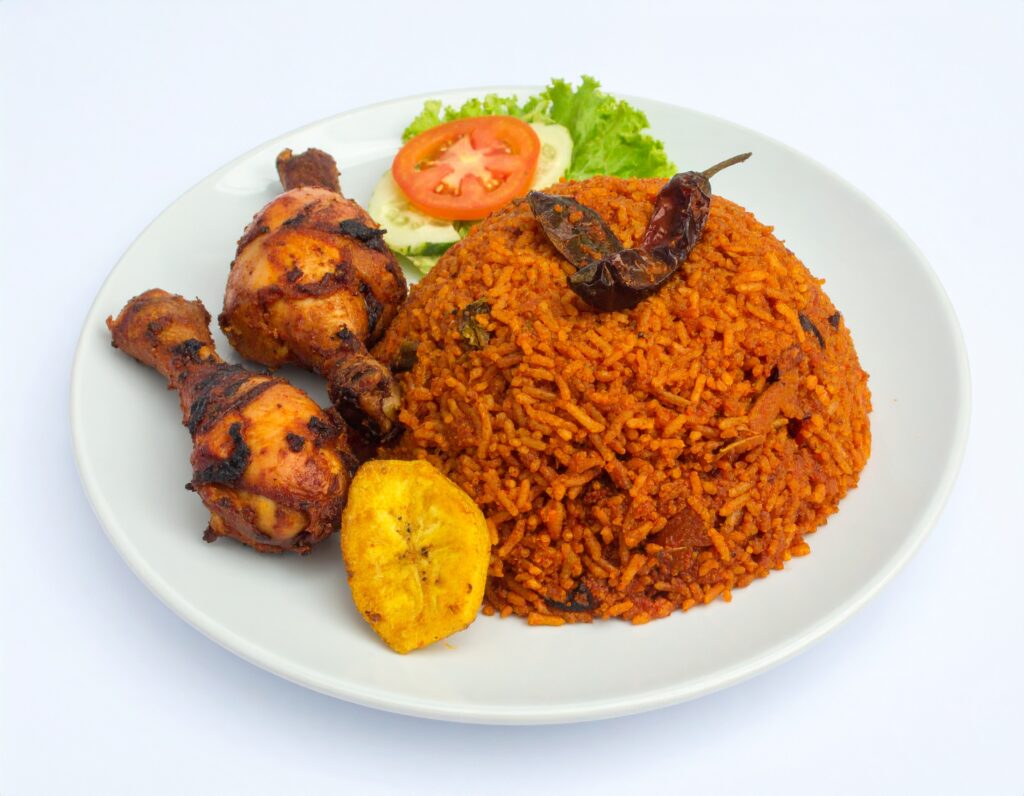
4. Sierra Leone/Liberia style
This dish is made by adding coconut milk to a base of sautéed onions, tomato sauce, and chili peppers.
The ingredients include fish, shrimp, and other seafood, giving it a soft aroma and mild flavor.
Located on the coast, this dish features seafood and coconut milk, showcasing the unique characteristics of the region.
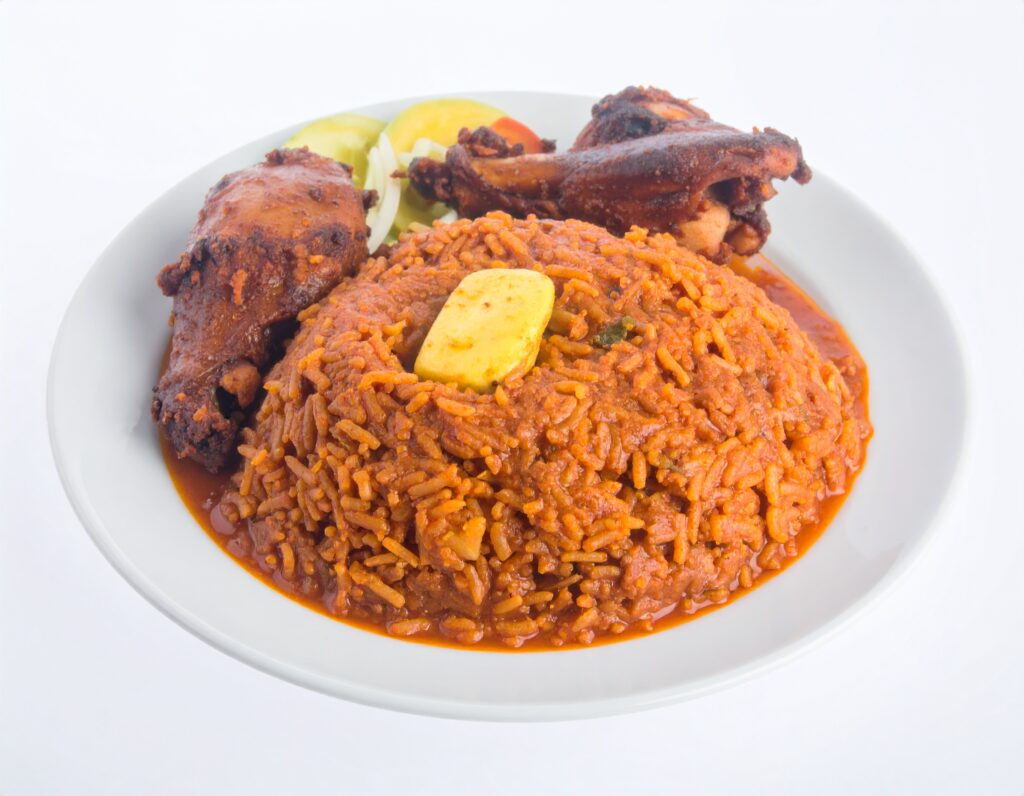
5. The Diaspora Edition (European, American, and Caribbean immigrant communities)
Based on the original, it features a multicultural fusion style.
Its background lies in being introduced to Western and Caribbean regions by African immigrants.
Combining local vegetables and spices to create unique arrangements, or adding vegan options, cheese, or bacon for “creative variations”—these options offer even more distinctive and diverse choices.
A short story about Jollof Rice
Jollof Wars
This is a tradition where Nigeria and Ghana stubbornly insist that “their own Jollof rice is the world's tastiest,” arguing it out on social media and at events.
It spread starting from food comparison videos and joke videos on social media.
There is a famous episode involving Facebook founder Mark Zuckerberg during his visit to Nigeria. He ate Nigerian-style Jollof Rice and commented, “It's delicious!” This caused a huge uproar on social media in Ghana.
Jollof Rice is cooked differently depending on the region. It is understandable that people prefer the familiar local taste. I think this is proof of how much Jollof Rice is loved.
The degree of “redness” varies from country to country
Jollof Rice, which varies in character depending on the region, appears to change color depending on the amount of tomatoes and chili peppers used and the cooking time.
The Nigerian style is bright red to reddish brown, while the Ghanaian style is orange to reddish in color.
It is often thought that the redder the color, the stronger the flavor, but the Ghanaian style is surprisingly sweet.
World Jollof Rice Day
In Nigeria, some people celebrate August 22nd as “World Jollof Rice Day”. On social media, people post their recipes and photos on this day, using the hashtag #WorldJollofRiceDay to get excited about it.
It all started with a comment on social media in 2015. Brand companies picked up on it, and it became standard practice.
Nowadays, international interest is growing along with the spread of West African cuisine.
Summary
How did you like it? This time, we introduced Jollof Rice, a South African dish.
We hope you will enjoy the rich variety and spicy flavors of this dish.
As I researched it, I felt myself becoming drawn to its charm.
It seems that African cuisine can be enjoyed at specialty restaurants in Japan, but there are not many such restaurants yet.
When that happens, please try making it at home and enjoy it.



Comments