

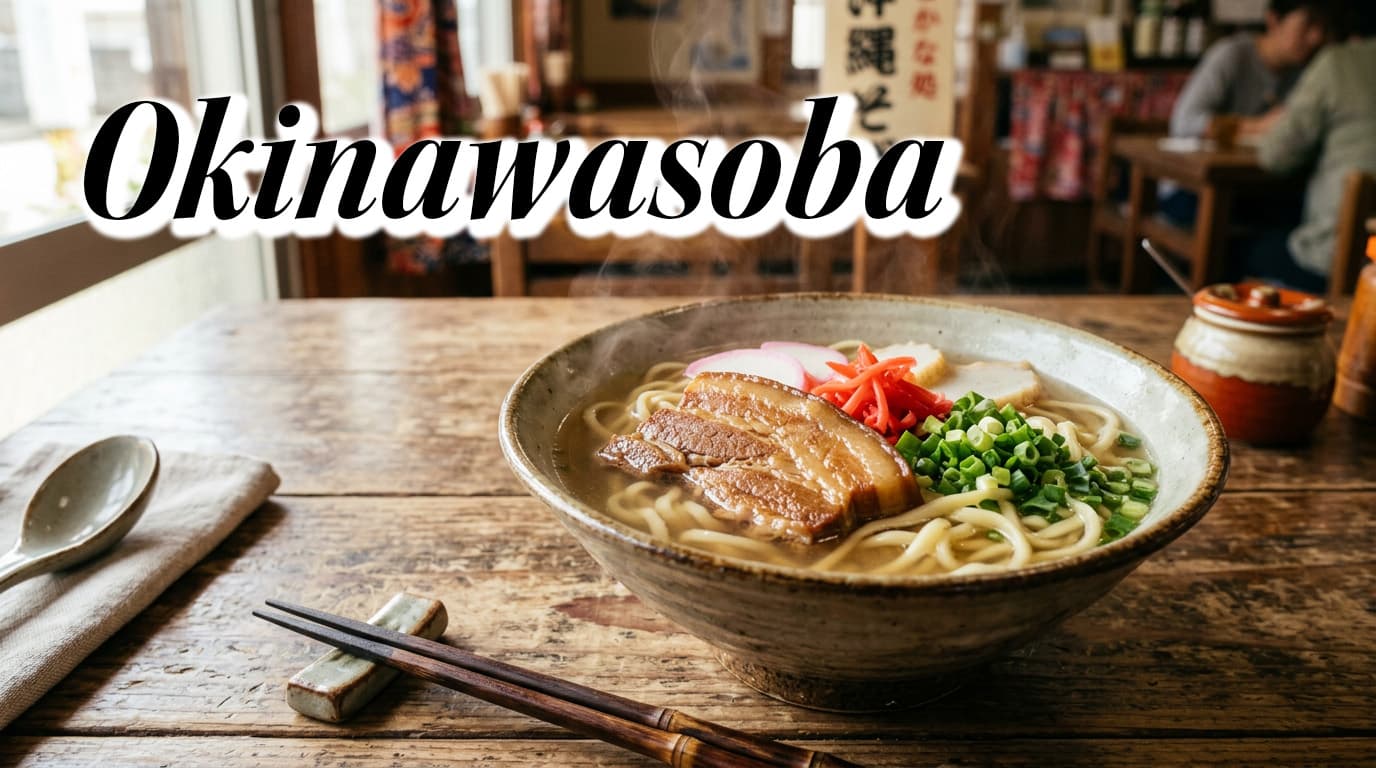
Have any of you ever tried Okinawa soba?
As the name suggests, Okinawa soba is one of the dishes that symbolizes the culture of Okinawa Prefecture in Japan.
Although this dish is now beloved as a local specialty, it has a history of helping the people of the prefecture weather the hardships of war.
From its origins to its history, and what exactly is this dish?
We’ll cover all of this in this article, so please be sure to read it all the way through.
For instructions on how to make it, please visit the URL below.
~Notice~
This site introduces cuisines from around the world and also features songs that express those dishes.
You can also listen on YouTube and various subscription services, so please give it a listen!
We've also started accepting requests for music production!
Perfect for personal use or in-store background music!
We offer a wide range of services, from existing dishes to original creations, so feel free to place your order anytime!
Click here for our guide page!
What is Okinawa soba?
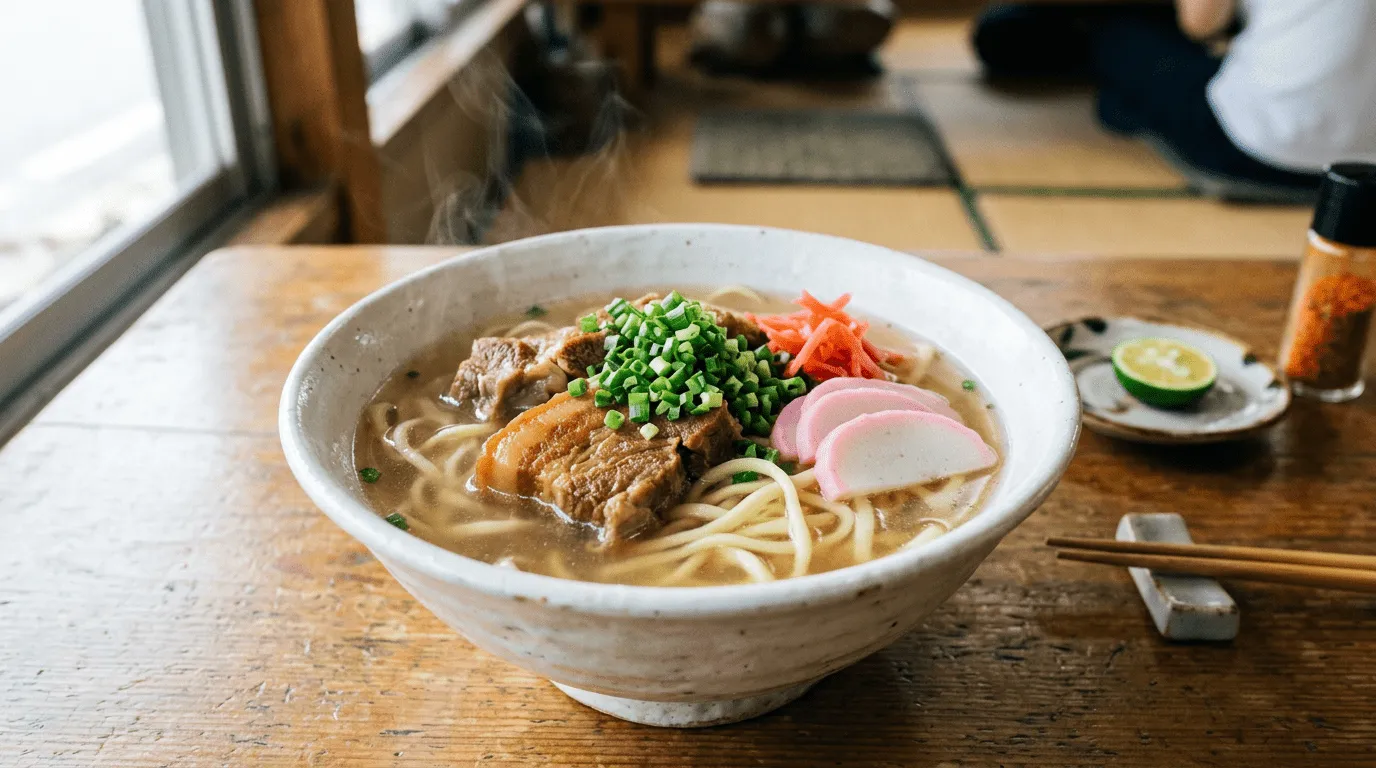
Okinawa soba is a regional dish representative of Okinawa Prefecture in Japan.
Although the name includes the word “soba,” a distinctive feature of this dish is that the noodles are made using wheat flour and alkaline water instead of buckwheat flour.
“Kansui” refers to the alkaline solution used in making Chinese noodles.
For this reason, Okinawa soba can be classified as being closer to Chinese noodles than to traditional soba.
In addition, before the use of brine, wood ash was used, and this is considered the traditional method.
Wood ash is, quite literally, the powdered ash produced by burning wood, and it was mixed into flour to make noodles.
While it offers a unique flavor and firm texture, it is considered a rarity today because it is labor-intensive to make.
The flavor of Okinawa soba
The distinctive feature of Okinawa soba lies in its broth.
The base is made from pork bones and bonito flakes.
Add the kelp, chicken, and shiitake mushrooms to the pot.
This brings out a rich yet light flavor in the broth.
This unique soup, which perfectly balances richness and lightness, is a flavor that could only have been created in Okinawa.
The noodles are slightly flat, thick, and have a firm texture.
As mentioned earlier, a key characteristic of this dish is that, unlike the soba found on the main island, it does not use buckwheat flour.
The classic ingredients to add are pork belly, fish cake, green onions, and ginger.
Sanmai-niku is pork belly simmered in a sweet and savory sauce.
It is characterized by its melt-in-your-mouth tenderness and rich, savory flavor.
We use white and pink Okinawan-style kamaboko.
It pairs perfectly with a light broth.
Red pickled ginger serves to add a flavorful accent and cut through the richness.
It enhances the rich flavor of the pork, but be careful not to add too much.
Regional Variations of Okinawa Soba
Okinawa soba can be found throughout Okinawa Prefecture, but it is also known for its strong regional variations.
Main Island
The most standard type of Okinawa soba is the most popular.
As I mentioned earlier, the appeal lies in the slightly thick, flat noodles and the well-balanced broth made with pork and bonito flakes.
Yaeyama Islands
The Yaeyama Islands are a group of 23 islands, large and small, located approximately 400 to 500 kilometers southwest of the main island of Okinawa.
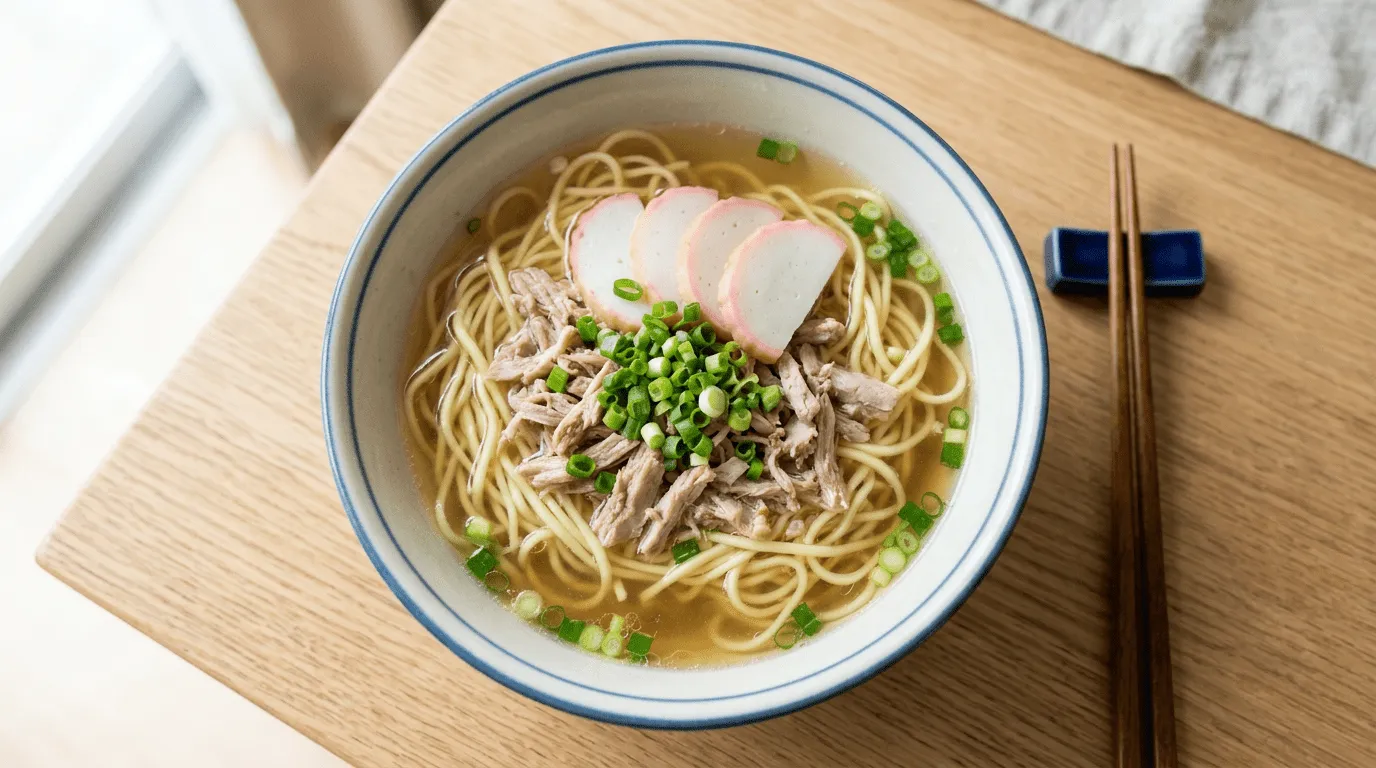
Here, instead of the standard variety, people eat “Yaeyama Soba.”
Yaeyama soba is known for its thin, straight noodles, thinly sliced meat, and lighter broth.
This version is lighter, simpler, and easier to eat than the one from the main island.
Miyako Island
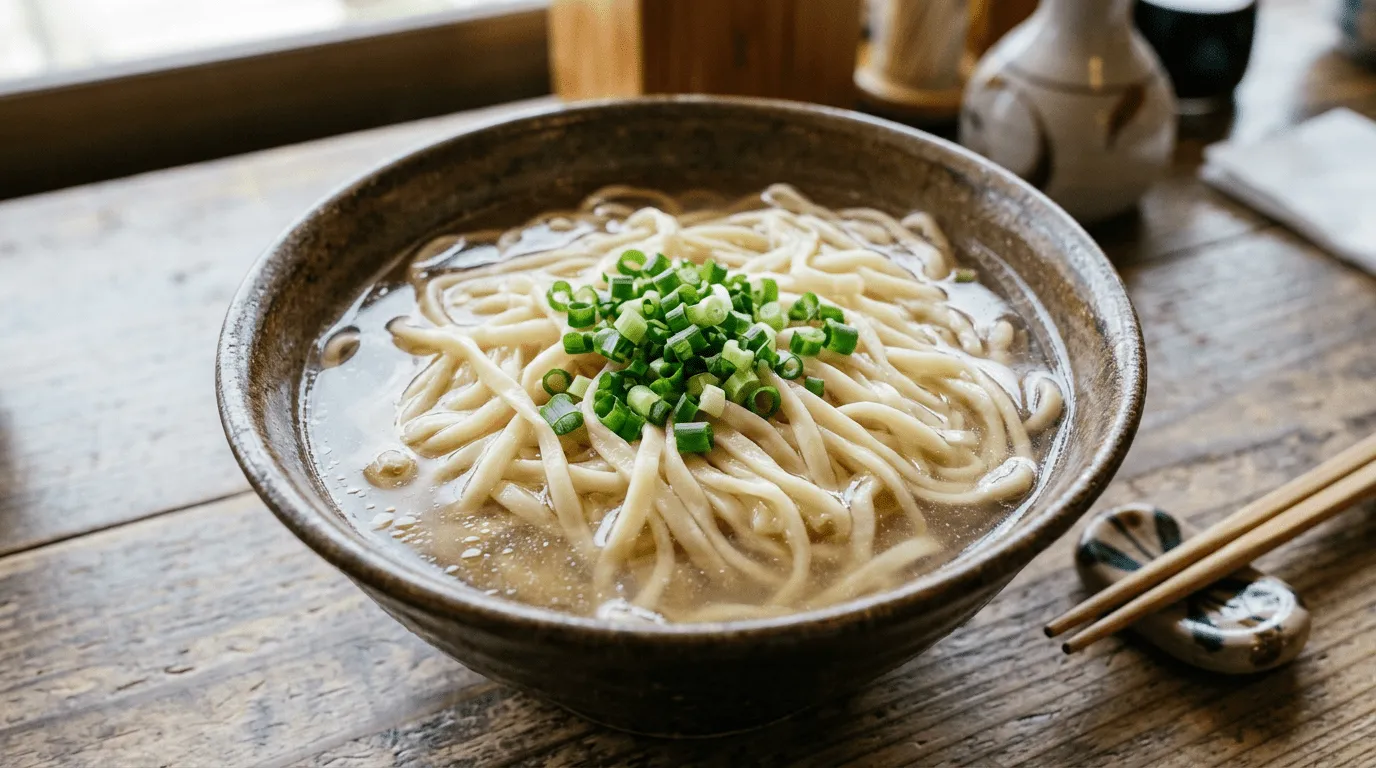
Located about 300 km southwest of Okinawa Island, Miyako Island is famous for “Miyako Soba”.
Like Yaeyama soba, it features thin, straight noodles and_ a light broth.
However, the most notable feature is the way the toppings are hidden beneath the noodles.
This includes,
- Hiding the ingredients to make the dish appear simple reflects a culture of consideration and modesty toward others
- To differentiate ourselves through the quantity and seasoning of our ingredients, and to compete on substance rather than appearance
- By placing the ingredients at the bottom, they stay moist and retain their warmth, so
It is believed that there are reasons such as these.
Variations of Okinawa Soba
In addition to regional variations of Okinawa soba, there are derivative varieties that emerged alongside the dish as it spread.
Soki Soba
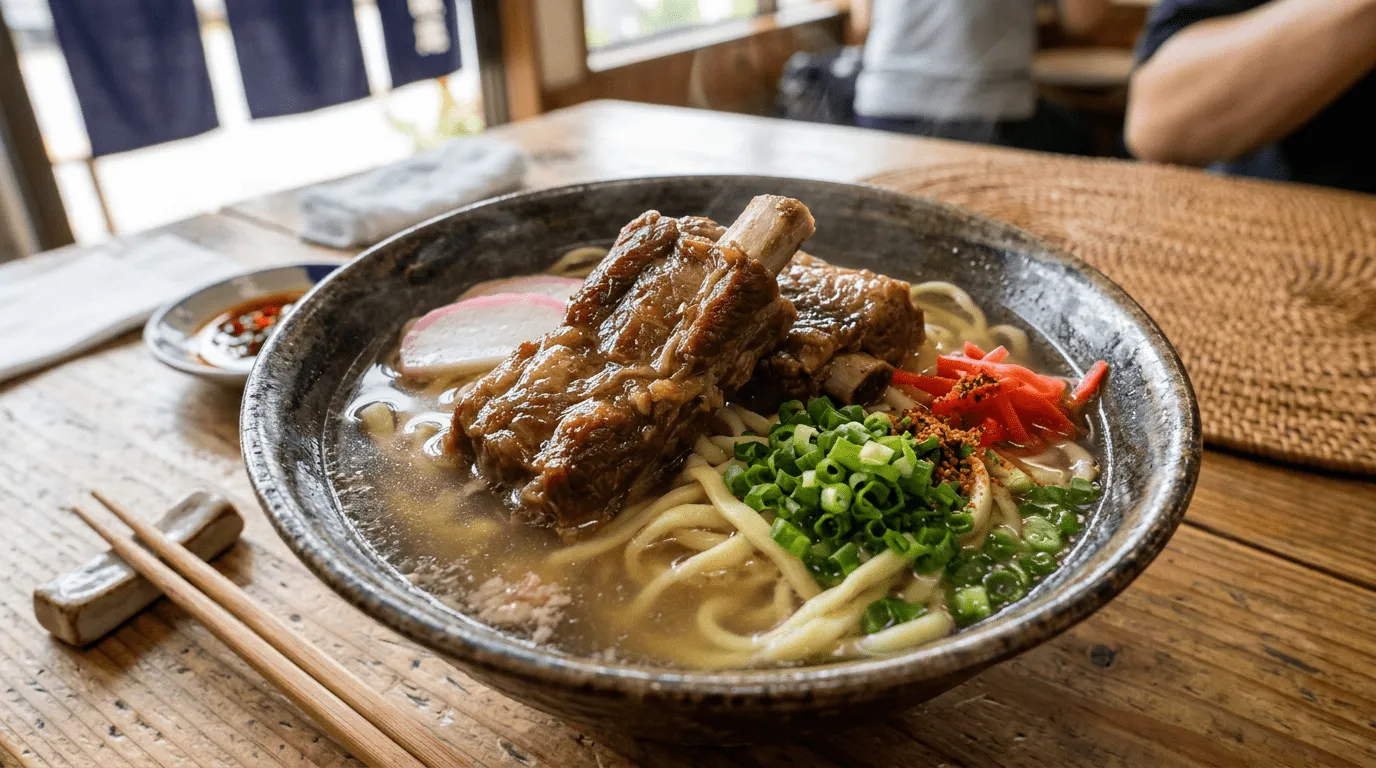
Soki soba is a variation made with spare ribs (soki) that include cartilage.
It’s just as popular as Okinawa soba, and it’s especially filling.
The meat is tender and the cartilage is edible, and it is characterized by a rich, sweet-and-salty braised flavor.
Tebichi Soba
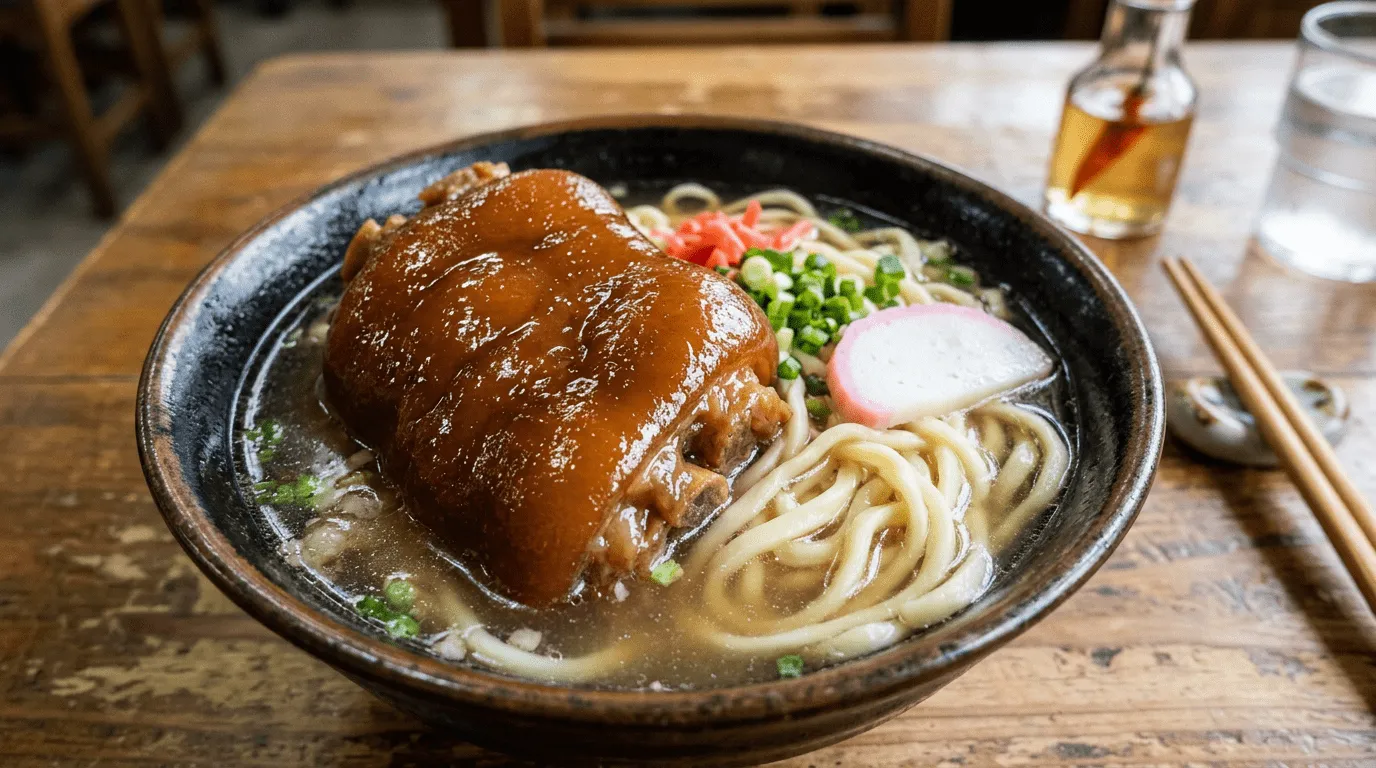
Tebichi soba is a variation made with tender, gelatinous, and melt-in-your-mouth tebichi (pork trotters).
Slow-cooked to perfection, it boasts a rich yet mild flavor.
It is also rich in collagen.
Vegetable Soba
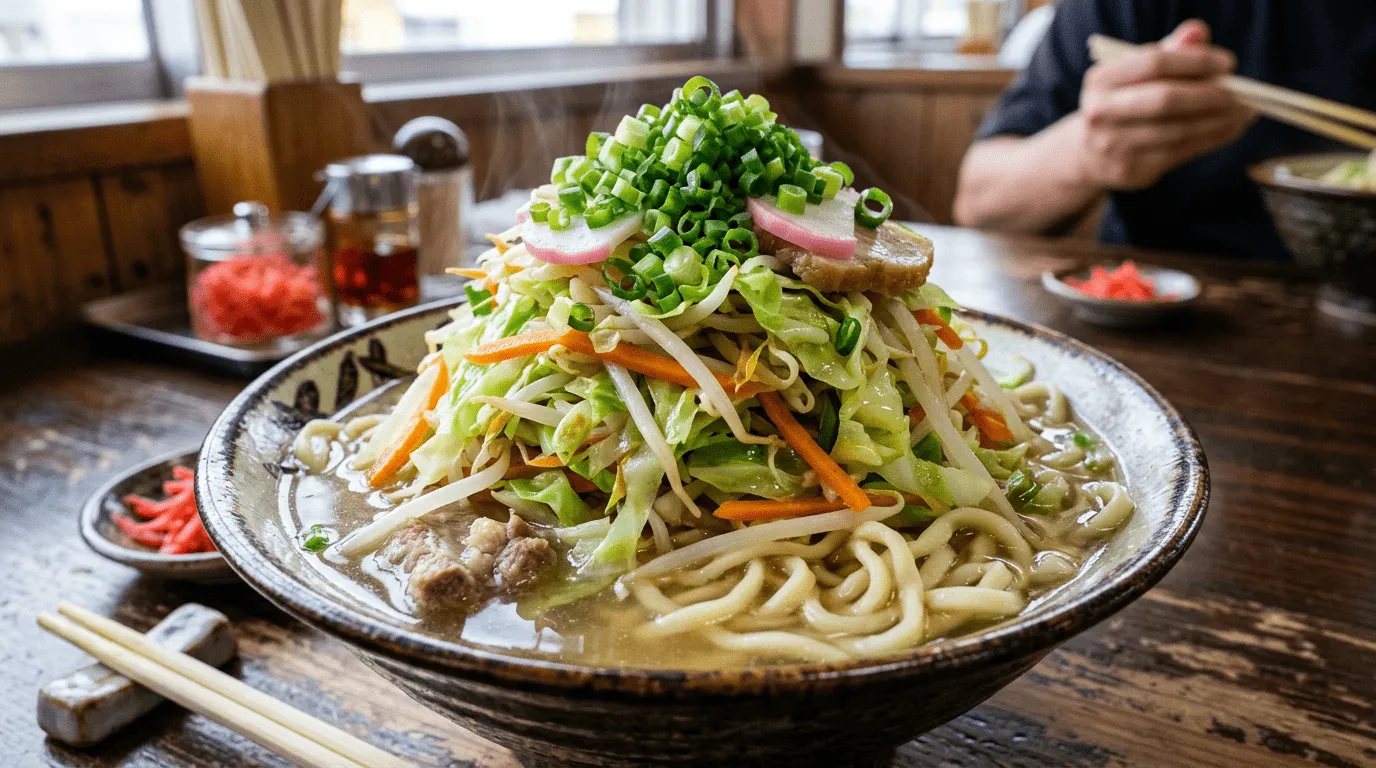
Vegetable soba is made by stir-frying ingredients such as cabbage, bean sprouts, and carrots.
This variation is packed with vegetables, making it hearty and very satisfying.
It has a relatively light and refreshing flavor, allowing you to enjoy the light broth and the natural sweetness of the vegetables.
The History of Okinawa Soba
Ryukyu and Noodle Dishes
The origins of Okinawa soba date back to the Ryukyu Kingdom era, around the 14th to 16th centuries.
There is a record indicating that Chinese noodle dishes were served at a memorial service for the king in 1534.
At that time, it existed as a type of court cuisine enjoyed by royalty and_ the nobility.
For that reason, it had not yet become widespread among the general public and was still merely a Chinese-style noodle dish rather than Okinawa soba.
However, this dish is believed to have been the origin of what later became Okinawa soba.
Sina Soba and Okinawan Soba
In the late 19th century, during the Meiji era, the dish that would become the direct precursor to Okinawa soba was introduced by Chinese immigrants.
That dish is a noodle dish called Shina Soba.
Also known as “Tangren Soba,” it is characterized by a light soy sauce-based broth infused with chicken and seafood, served with thin noodles.
It is considered the origin of ramen, and since the postwar period, it has been affectionately known as “Chūka soba.”
Shina soba became popular after Chinese immigrants opened soba restaurants in Naha.
However, since wheat was a scarce commodity at the time, it was considered a delicacy.
The Evolution of Shina Soba
In the first half of the 20th century, from the Taisho era through the early Showa era, Shina soba underwent adaptations unique to Okinawa.
It features the classic Okinawa soba toppings—pork, fish cake, and pickled red ginger—and the broth evolves from a soy sauce base to a lighter broth made from pork and bonito flakes.
Around this time, the “typical Okinawa soba shape” was perfected.
In addition, as the number of soba restaurants increased, this type of soba dish became popular among the general public.
War and Reconstruction
In 1945, during World War II, the Battle of Okinawa broke out, turning the main island of Okinawa and the surrounding islands into a battlefield.
As a result of the intense shelling and air raids, many businesses—including soba restaurants—as well as homes, infrastructure, and cultural assets were lost.
Although many cultural traditions were lost in the postwar period, reconstruction proceeded with the help of food rations from the U.S. military.
The rations included flour, and as a result, more and more people started soba restaurants to rebuild their lives.
As a result of this reconstruction and revival, Okinawa soba established itself as a “prefectural dish” deeply rooted in the daily lives of the common people.
Today, derivative dishes such as Soki Soba have emerged, and the dish is cherished as a symbol of tourism and culture.
Summary
How was it?
In this article, we introduced “Okinawa Soba,” a traditional dish representative of Okinawa Prefecture in Japan.
You’ll almost certainly try it whenever you visit Okinawa, but perhaps some people aren’t aware that, strictly speaking, it’s a different kind of noodle dish from soba.
I tried it myself when I visited Okinawa, and I was particularly struck by the light broth and how the flavor seemed to change depending on which ingredient I ate.
I would be delighted if I could convey even a little of the charm of this dish, which embodies the culture of the people of Okinawa.
When you visit Okinawa, be sure to try not only Okinawa soba but also soki soba and tebichi soba.
I’ve also summarized the instructions on the page below.
Please give it a try.
Thank you for watching until the end.
Comments