

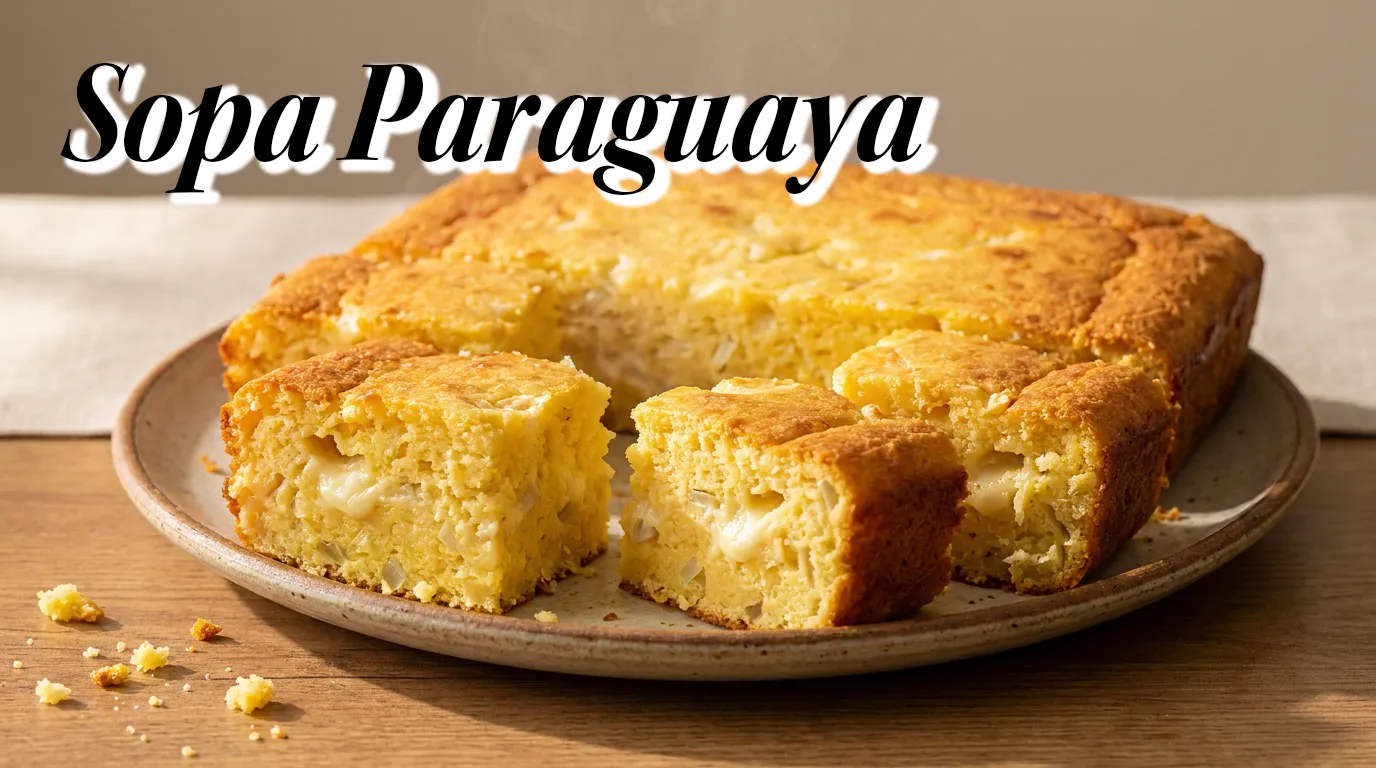
Have you ever heard of a dish called sopa paraguaya?
Sopa Paraguaya is one of Paraguay's most famous dishes.
This is a real treat that lets you enjoy the authentic South American flavor of corn and a moist, bread-like texture!
In this article, we’ll take a closer look at Sopa Paraguaya—covering everything from its appeal and flavor to its history.
Please watch until the very end!
Also, if you'd like to know how to make sopa paraguaya, please check out the article below.
~Notice~
Would you like to experience the charm of food through music?
At TasteTune, we create original music inspired by the taste, aroma, atmosphere, and cultural background of each dish.
Whether it is a memorable dish, a cuisine from a country you love, or a special meal you would like to prepare for someone important, we invite you to take a look at our music creation guide.
What kind of dish is sopa paraguaya?
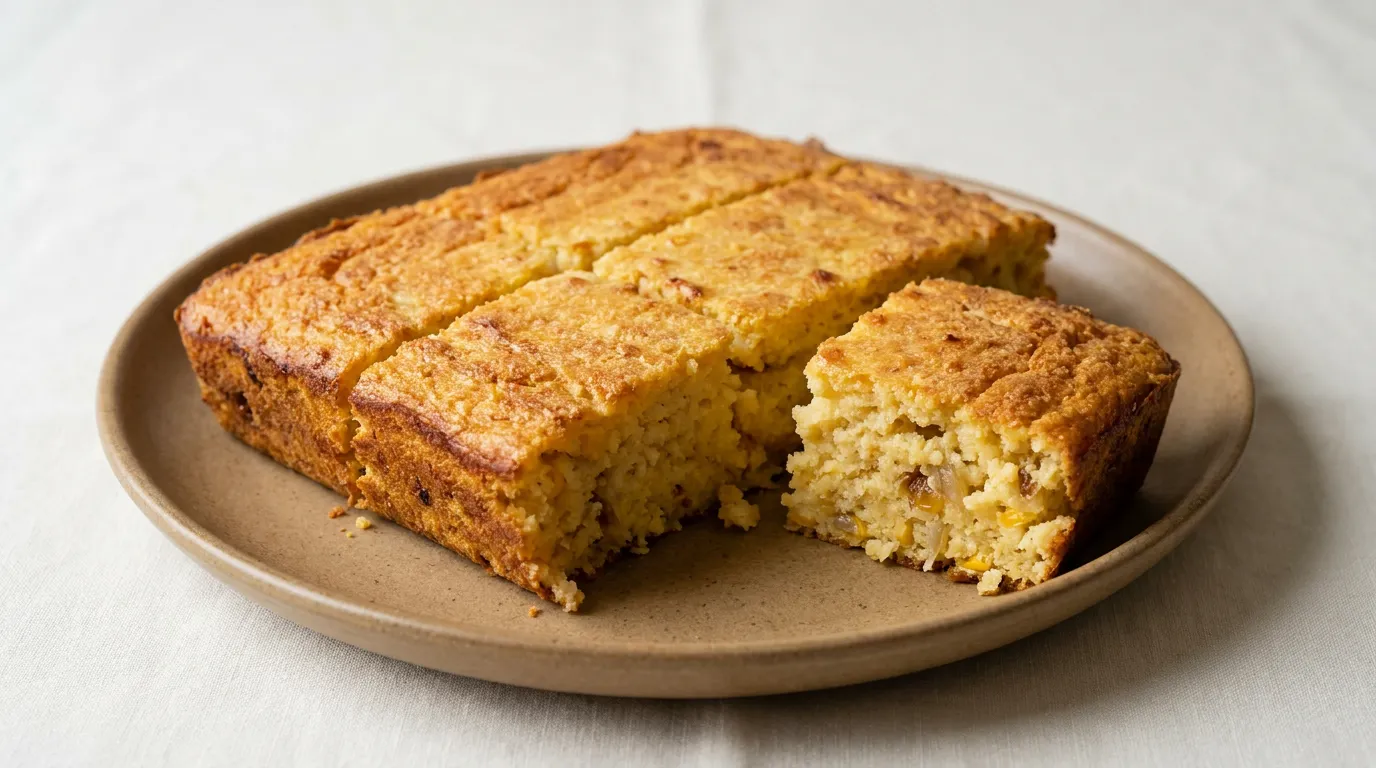
Sopa Paraguaya is a traditional Paraguayan dish made by mixing cornmeal, milk, cheese, and_ other ingredients and_ baking the mixture.
This dish is sure to delight with its light, moist texture and the creaminess of the cheese.
It’s similar to corn cake and cornbread, but it has a much moister and fluffier texture than those.
This dish is served not only at everyday meals but also on special occasions and when the family gets together.
For this reason, it is a very familiar and beloved dish in Paraguay."
Also, since it tastes good whether served warm or cold, it is sometimes served like bread or baked goods.
The Taste and Flavor of Sopa Paraguaya
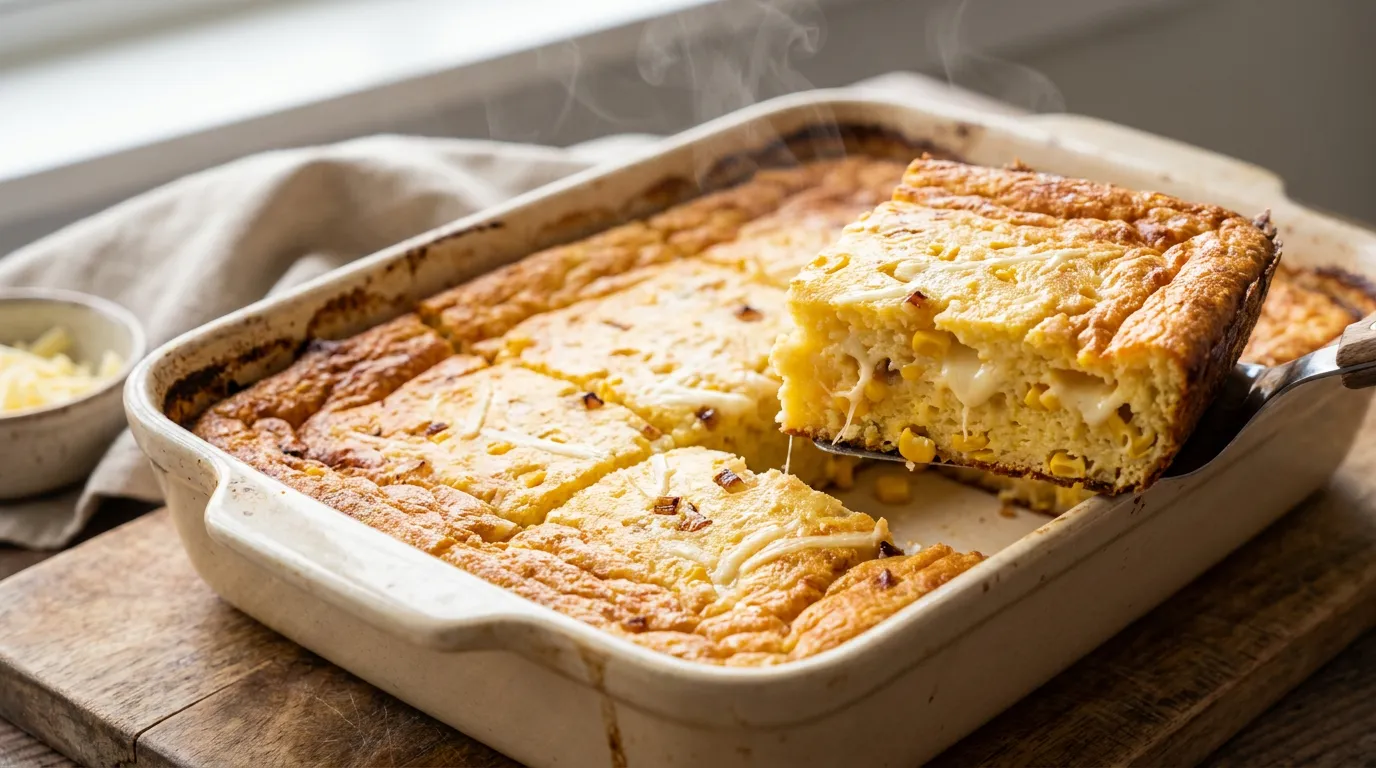
Sopa Paraguaya has a flavor reminiscent of salty cornbread, with distinct notes of cheese and_ onion.
First of all, since corn flour is the main ingredient, it has a simple, nutty corn flavor.
However, unlike typical sweet corn cakes, it is essentially a savory, savory-flavored dish.
Next, the cheese adds saltiness, richness, and that characteristic dairy creaminess.
Baking allows the cheese's flavor to spread throughout, transforming the simple taste of corn into a much richer flavor."
And onions are very important.
The heated onions add sweetness and a toasty aroma.
As a result, this dish lets you enjoy the combination of the nutty aroma of corn, the rich flavor of cheese, and the sweetness of onions all in a single bite.
It's called “Paraguayan Soup,” but it's not actually a soup?
Sopa Paraguaya literally translates to
“Paraguayan Soup”
That's what it means.
However, when you actually look at the dish, it looks more like a solid food than a soup.
So why was it given this name?
There are various legends about the reason for this.
The most well-known legend is the one said to have originated in the 1980s.
Originally, there was a soup-like dish called “Tukuetï ,” made with milk, cheese, eggs, cornmeal, and_ other ingredients.
One time, I added too much cornmeal, which made the dish turn out very thick.
So, the story goes that when they roasted it, it became what we now know as sopa paraguaya.
Although its origin has not been definitively proven, it has been passed down as a well-known legend or anecdote.
The History of Sopa Paraguaya
Sopa Paraguaya is not simply a dish that has been eaten in Paraguay for a long time.
This dish is the result of a fusion between the culinary traditions of the indigenous Guaraní people and those of the Spanish colonizers.
Origin: Guaraní Culture
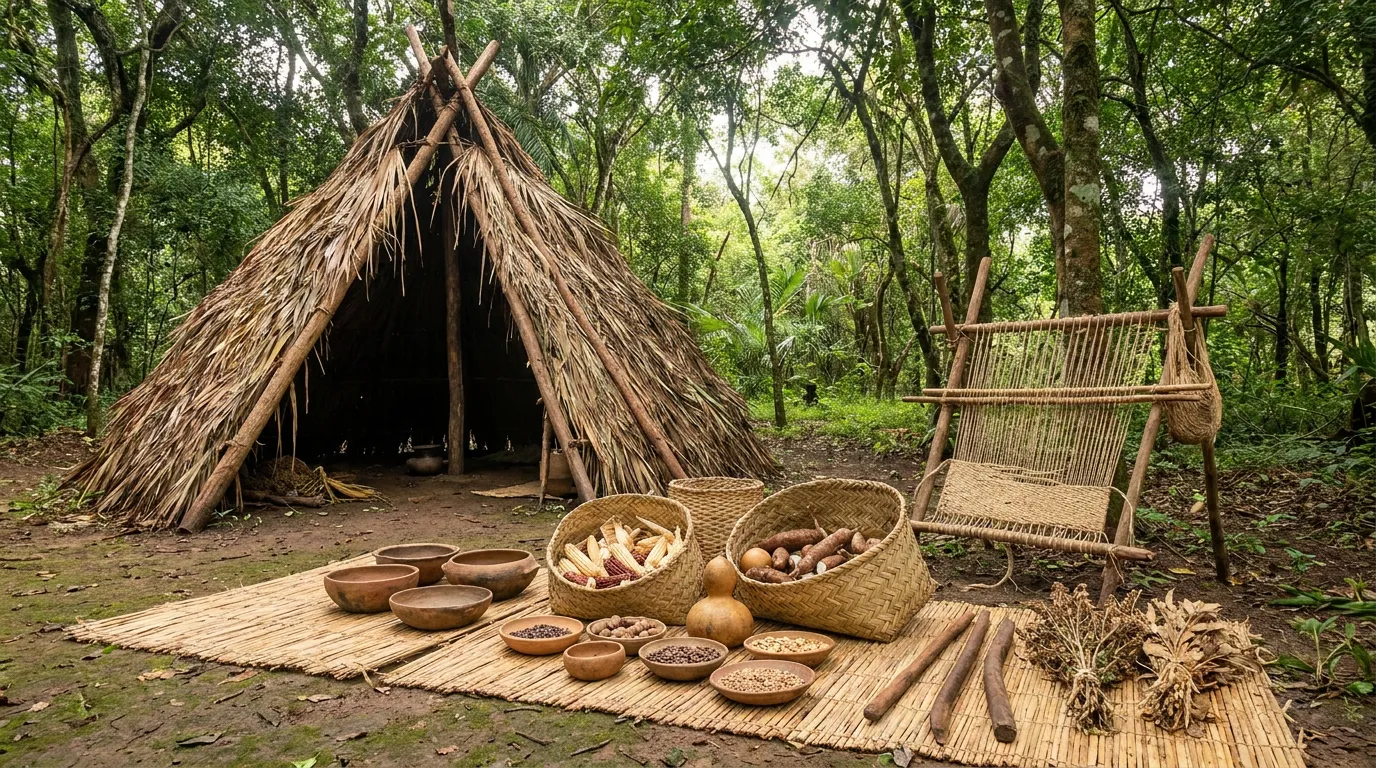
The history of sopa paraguaya is rooted in the culinary traditions of the Guaraní, the indigenous people of Paraguay.
Before the arrival of the Spanish, corn and cassava (manioc) were used as important food staples in this region.
Corn, in particular, was prepared in a variety of ways, such as grinding it into flour, roasting it, or boiling it.
The Guaraní people of that time also made a dish similar to what we now call “pan.”
One of them is called “Mbujape.”
A cooking method was used in which ingredients such as cornmeal and cassava starch were wrapped in leaves and heated in ashes or over a fire.
A Paraguayan culinary expert explains that these Guaraní cooking techniques became the foundation of later Paraguayan cuisine.
The Colonial Era: The Fusion with Spanish Culinary Culture
When the Spanish arrived in what is now Paraguay in the 16th century, it brought about significant changes in the local food culture.
The Spanish brought the following food items with them.
- Milk
- Cheese
- Eggs
- Beef
- Livestock
The appearance of the cow, in particular, marked an important turning point.
When dairy products and eggs brought from Spain were added to the corn that the local Guaraní people had traditionally used, a new type of cuisine emerged."
According to a culinary historian, livestock was introduced around 1553–1556, and dairy products and other items gradually became part of the local food culture.
In addition, the missionary activities of the Franciscans and the Jesuits also played a role in the development of food culture.
It is said that, particularly at Jesuit mission stations, many people lived in communal settings, which fostered the exchange of food ingredients and cooking methods.
The National Institute of Food and Nutrition of Paraguay (INAN) also describes sopa paraguaya as a culinary heritage that originated during the Franciscan era and later developed at the Guaraní Jesuit missions.
In other words, sopa paraguaya is neither a dish that was introduced from Spain nor one that was prepared exclusively by indigenous peoples.
It is believed to be a dish that originated from traditional Guaraní corn-based cuisine, to which ingredients introduced from Europe were added.
The 19th Century: Legends Surrounding the Births of Presidents
The most famous theory regarding its origin is an anecdote involving a 19th-century president of Paraguay.
Carlos Antonio López, who was president at the time, governed the country from 1841 to 1862.
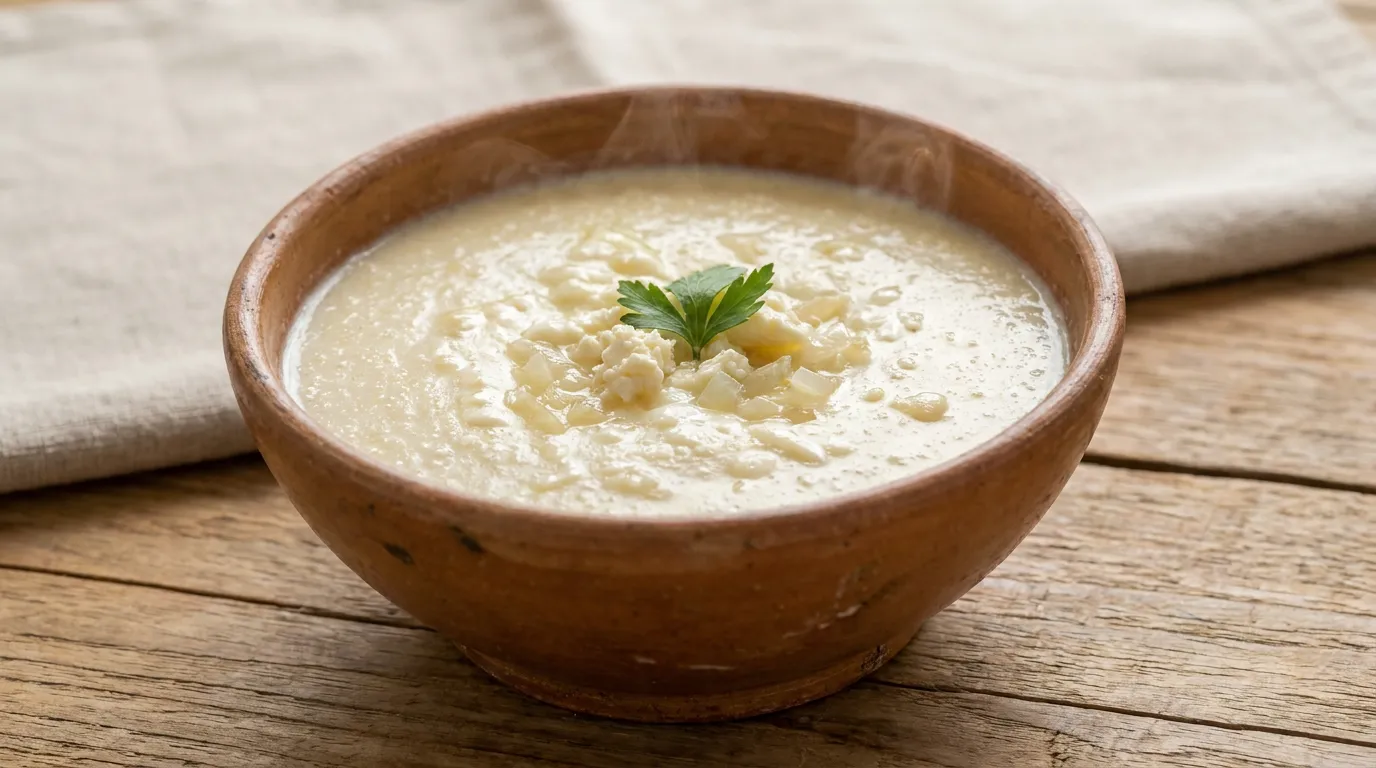
It is said that he was fond of a white soup called Tykuetĩ.
This dish was made with ingredients such as milk, cheese, cornmeal, and eggs.
One day, the cook accidentally added more cornmeal than usual, and the soup turned out very thick.
The chef, who didn't have time to start over, transferred the ingredients to an iron container and baked them in a traditional oven called a Tatakuá.
Suddenly, the soup, which had been liquid, transformed into a solid, baked dish.
It is said that after tasting the finished dish, the president liked the flavor so much that he named it “Sopa Paraguaya.”
This is currently the most widely known legend about his birth.
This anecdote is also featured in an article introducing the National Institute of Food and Nutrition of Paraguay.
However, this is a legend that has been passed down orally from generation to generation.
There are no historical records that have been confirmed to prove that this event actually took place.
Another Theory of Origin: “So’o opa”
According to another theory, the origin of this story lies in an incident that occurred when Spaniards visited a Guaraní settlement.
A meat dish prepared from game that had been hunted to entertain a Spanish visitor to the village was served.
However, we ran out of meat partway through.
So the Guarani people served a dish made from the cornmeal they usually ate.
According to one theory, when they described the fact that the meat had run out in the Guarani language as “So’o opa ,” the Spaniards misheard it, and that’s how the name “Sopa” came to be.
This is another interesting legend, but it has not been proven to be the definitive etymology.
Since the 19th Century: Becoming a Staple of Home Cooking
From then on, sopa paraguaya became deeply rooted in Paraguayan culinary culture.
Since it can be made with relatively common ingredients such as cornmeal, cheese, milk, eggs, and onions, it has become a favorite in homes as well."
In addition, cooking methods evolved in different households and communities, giving rise to a wide variety of variations.
For example, the National Institute of Food and Nutrition of Paraguay lists the following types:
- Traditional Sopa Paraguaya … A traditional dish made with cornmeal, cheese, eggs, milk, and other ingredients
- Sopa Paraguaya Palaciega … A version made with plenty of onions and hard-boiled eggs
- Sopa So’o … The kind with beef filling
- Sopa Ryguasú … The type stuffed with chicken
- Estancia-Style Sopa Paraguaya … A farm- and ranch-style version with a different blend of ingredients
Today: Paraguay's National Dish
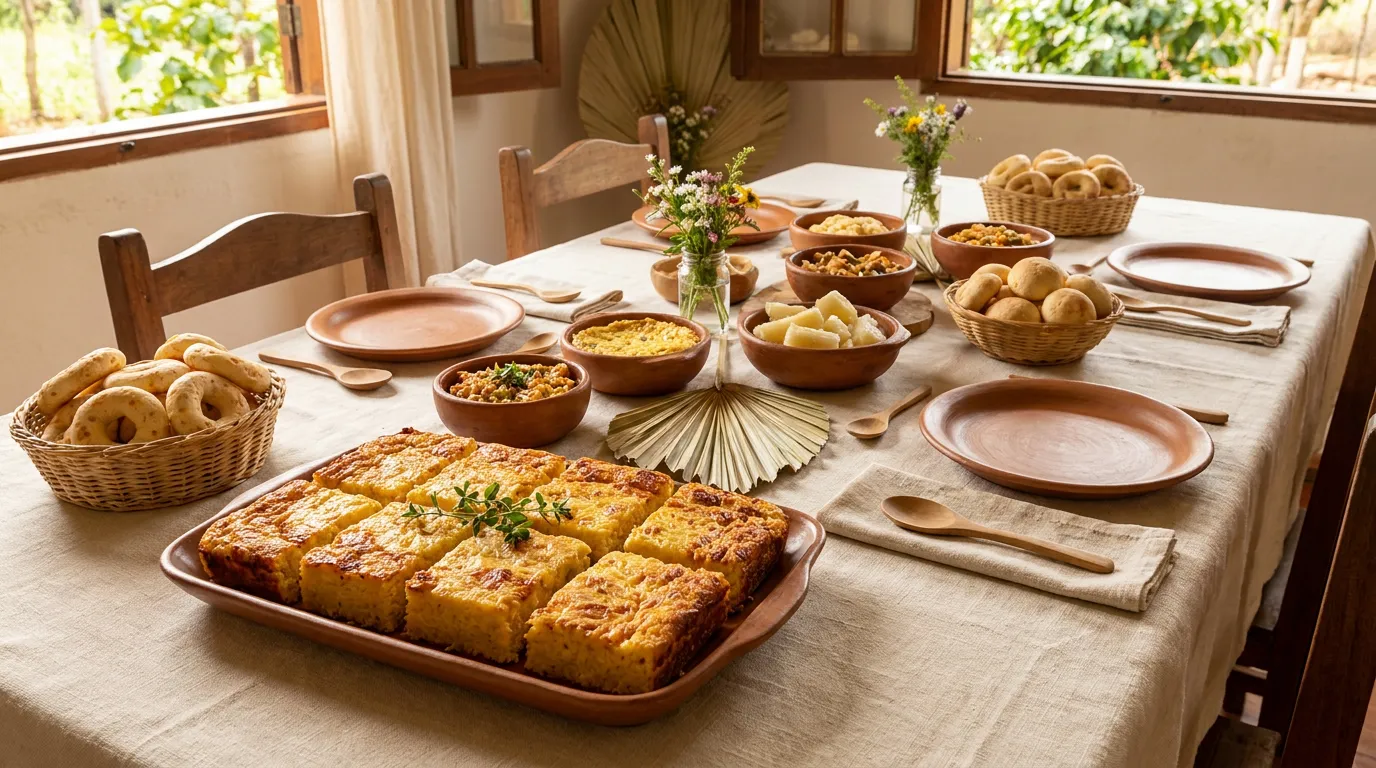
In modern-day Paraguay, sopa paraguaya is widely enjoyed as the country's national dish.
It is eaten not only as part of everyday meals at home but also at family gatherings and celebrations.
In particular, it is known as a side dish for “Asado,” a type of barbecue centered around meat dishes.
It is also one of the dishes eaten during Easter and Holy Week (Semana Santa).
In Paraguay, it is customary for families to gather during Holy Week and prepare traditional dishes.
Among these, sopa paraguaya and chipa are served as staples.
This is the result of the fusion of religious observances and family dining traditions.
2017: Inscription on the Intangible Cultural Heritage List
A significant milestone in the history of Sopa Paraguaya was its inscription on the Intangible Cultural Heritage list on August 29, 2017.
The Paraguayan Ministry of Culture has designated the following four dishes as Intangible Cultural Heritage through a resolution.
- Sopa Paraguaya
- Vorí Vorí
- Locro
- Jopará
Furthermore, this certification is not limited to the food itself.
The goal is to preserve traditional production methods, recipes, knowledge, culinary techniques, and customs passed down through generations.
The Paraguayan Ministry of Culture,
"La gastronomía es un componente fundamental de la identidad cultural de nuestro país."
is how they explain it.
In other words, sopa paraguaya is not merely a regional dish; it is beloved as a symbol of Paraguay's history, culture, and family ties.*
Comments