

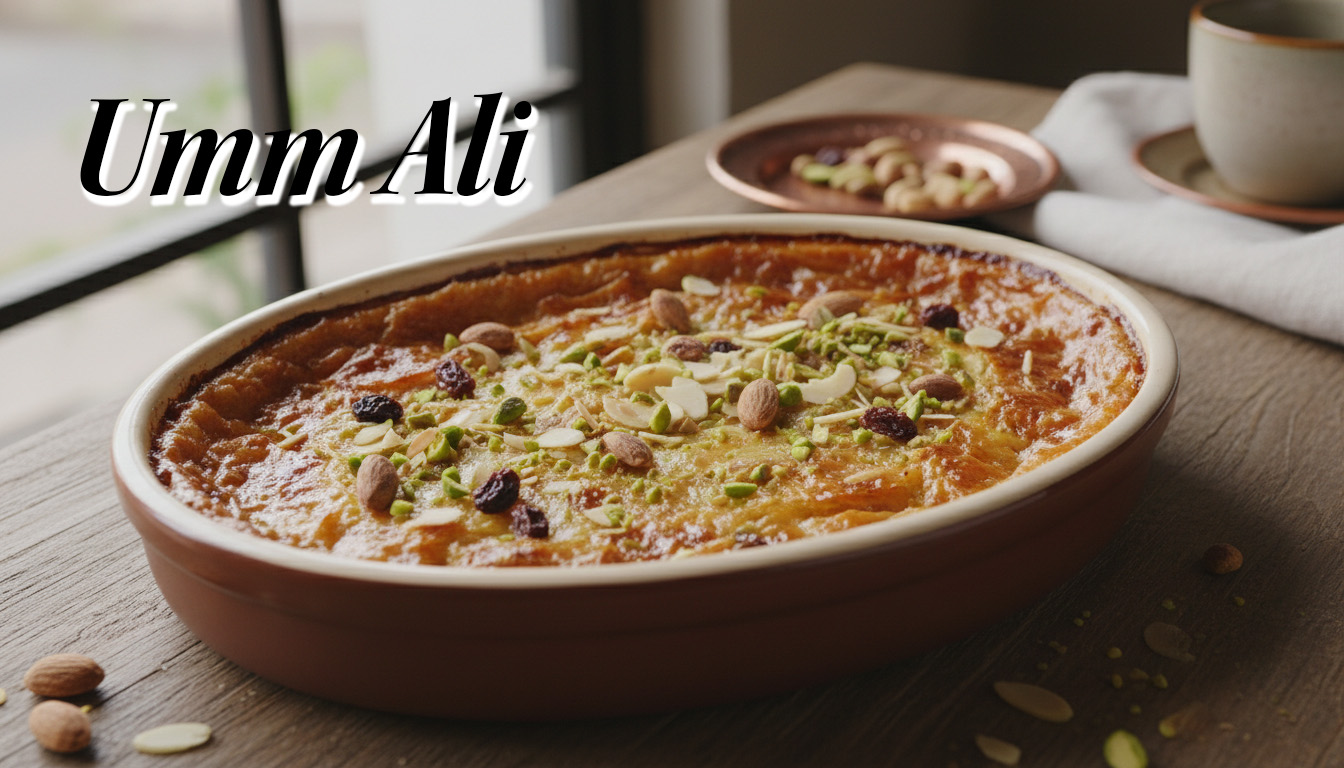
Have you heard of a dessert called Umm Ali?
Originating in Egypt, this dessert has now become widely enjoyed throughout the Middle East for its unique flavor.
It is one of Egypt's classic desserts and an indispensable item during the Islamic fast.
This article explains the history and preparation method of Umm Ali!
Please watch until the very end!
For instructions on how to make it, please see the URL below.
~Notice~
This site introduces cuisines from around the world and also features songs that express those dishes.
You can also listen on YouTube and various subscription services, so please give it a listen!
We've also started accepting requests for music production!
Perfect for personal use or in-store background music!
We offer a wide range of services, from existing dishes to original creations, so feel free to place your order anytime!
Click here for our guide page!
What kind of dish is Umm Ali?
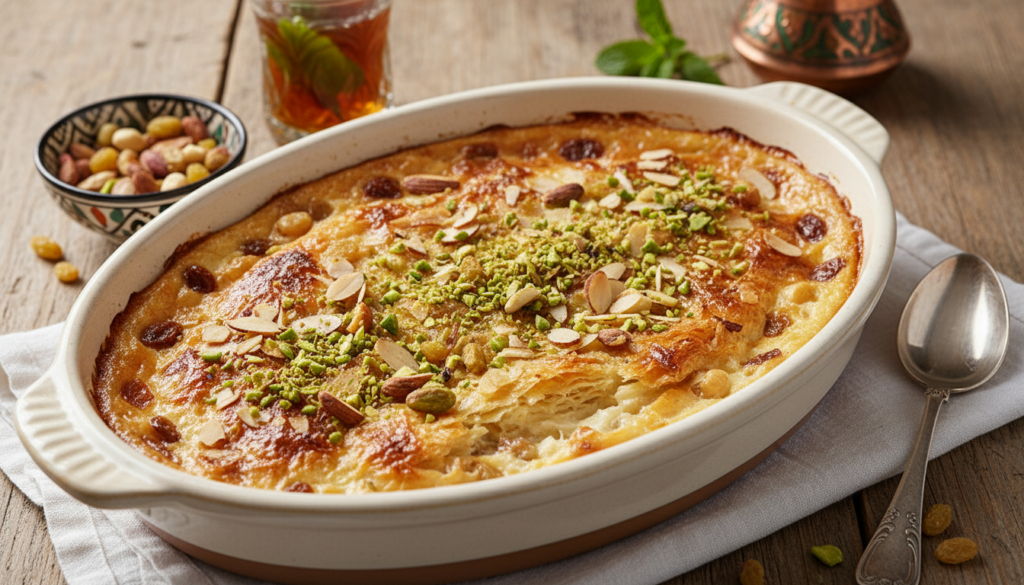
Umm Ali (Om Ali) is a traditional dessert beloved throughout the Middle East.
Small pieces of bread or puff pastry are topped with milk, sugar, cream, raisins, nuts, and other ingredients, then baked.
Such Umm Ali is characterized by its overall sweetness and the rich, creamy flavor of milk.
Bread and puff pastry absorb the milk to become soft, while nuts add a textural accent.
Additionally, ingredients like cinnamon, rose water, vanilla, and cardamom may be added, and the distinctively Middle Eastern flavor profile is another appealing aspect.
A sweet and creamy dessert, it is also said to resemble bread pudding.
The name Umm Ali means “Ali's mother” in Arabic.
Various theories exist regarding its origin, including one that it was named after a woman named “Um Ali,” and a folk tale that Um Ali created this dessert for celebrations, leading to its widespread popularity.
While there is no explicit description, the common point is that it originated in Egypt.
Therefore, Umm Ali was originally a traditional dessert enjoyed in Egypt.
However, it is now widely eaten in the Middle East, including Saudi Arabia and Jordan.
It is also served during Muslim festivals and special occasions.
The History of Umm Ali
There are several origins of Umm Ali, each passed down as a story.
Among them, I will introduce the most famous theory.
Going back to 13th-century Egypt.
During this period, a power struggle unfolded at the Egyptian court involving Izz al-Din Aybak, the first Mamluk ruler of Egypt, and his wives.
Legend has it that Umm Ali, the first wife of Ibak, fought against the second wife and_ emerged victorious.
It is said that they celebrated their joy by making sweet desserts from readily available ingredients such as bread, nuts, and milk, and distributed them widely to the people.
This dish later became known as “Umm Ali,” named after his wife.
However, these stories are told as oral traditions without any written records.
The actual description of Umm Ali is believed to be from a recipe dating back to around the 19th century.
After that, Umm Ali became widely loved throughout Egypt and eventually spread to other regions of the Middle East.
Variations with regional adaptations exist, particularly in Gulf countries, Jordan, and Iraq.
For example, Jordan and Iraq also have a similar dessert called “Khumaiaa”.
Muslims and Umm Ali
Additionally, there is a connection to religion.
Muslims observe “sawm” (fasting) during the month of Ramadan from sunrise to sunset.
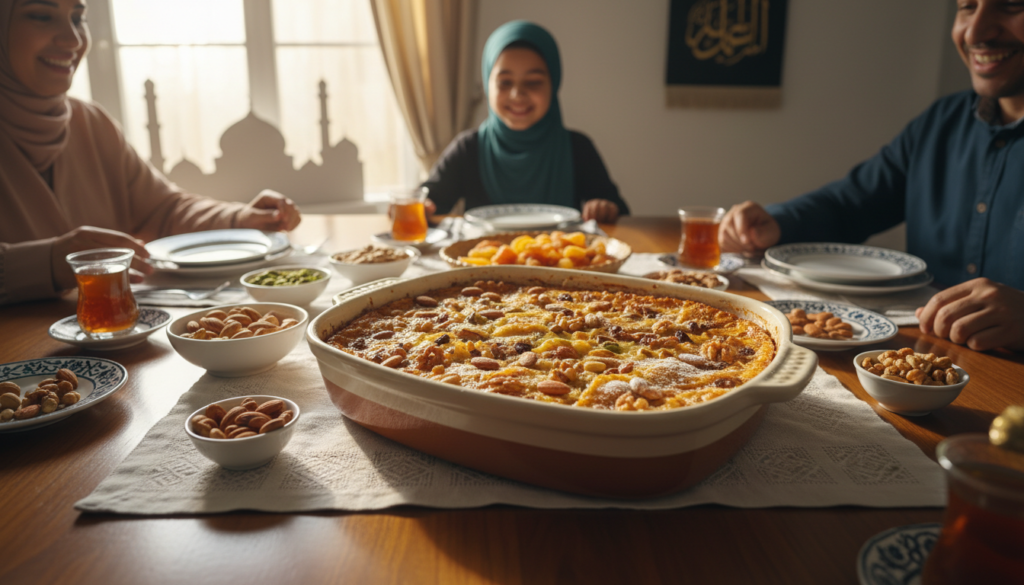
The first meal eaten after Sawm is called Iftar, a meal shared with family and friends to celebrate a sense of accomplishment and unity.
Umm Ali is served as a dessert during Iftar.
It is also favored at celebratory occasions such as weddings and festivals, where its sweetness and rich texture have become established as a “symbol of festive gatherings”.
Umm Ali's Trivia & Fun Facts
① Relationship with “Bread Pudding”
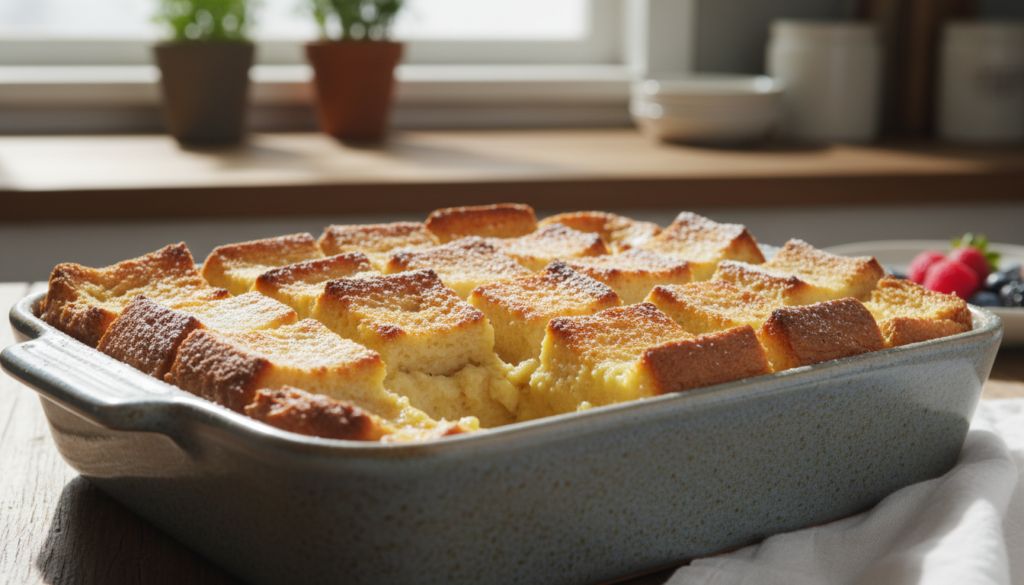
Similar to Western “bread pudding,” Umm Ali is characterized by its use of pastry dough or_ filo dough (thin pastry dough) instead of eggs.
Therefore, it is recognized not merely as a “Middle Eastern version of bread pudding,” but as a dessert with its own unique texture.
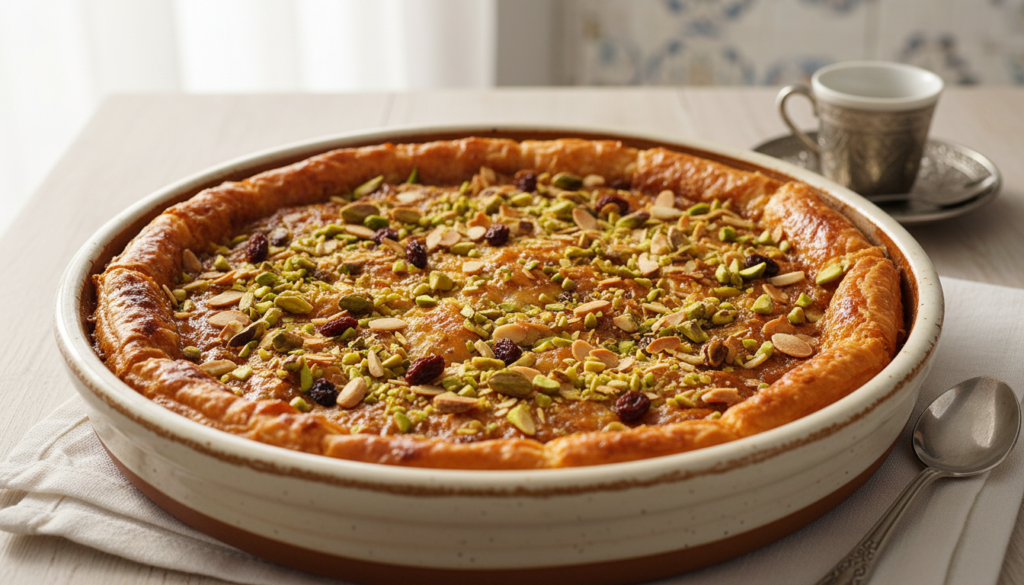
Additionally, traditional Umm Ali uses puff pastry or bread dough, allowing you to enjoy a dual texture of a crispy top and_ a creamy bottom.
That's why its “effortless yet complex flavor”—something not found in classic Western bread puddings—is also one reason for its popularity.
② World Record Challenge for Giant Umm Ali!
In 2013, a giant Umm Ali measuring over 15 meters in length and weighing over 7 tons was cooked as part of an Egyptian tourism promotion event.
Over 450 chefs participated, creating a massive Umm Ali using thousands of liters of milk and hundreds of kilograms of nuts.
Although it was not officially recognized by Guinness World Records, the completed giant Umm Ali was distributed for charity, making it a event that aimed for Guinness World Record certification and_ garnered significant attention.
③ Cultural and contemporary arrangements
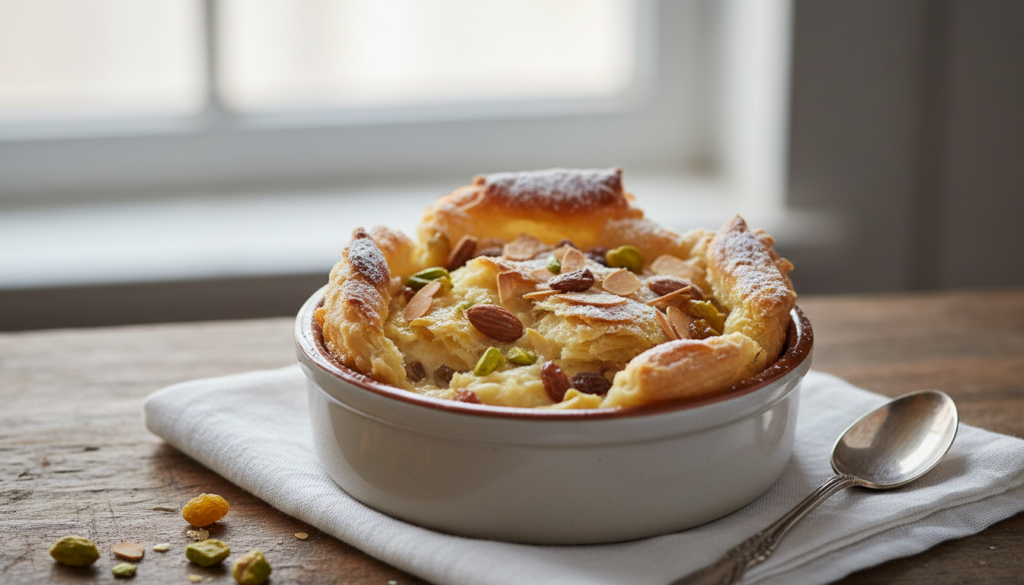
Traditional um ali contains nuts and raisins, but modern restaurants have created various adaptations.
In modern cafes in the Middle East, you might find creative desserts like “Umm Ali” or_ “Ali Nafso” served as “brother-sister desserts” from Umm Ali.
These can be enjoyed as a unique style that follows the base of Um Ali while incorporating flavors like halawa (sesame candy) and_ karak tea (a sweet, rich spiced milk tea unique to the Middle East).
Other versions exist where ice cream or whipped cream is added as a topping at restaurants and_ similar establishments.
④ Why Umm Ali is Beloved
There are several reasons why Umm Ali is beloved, and it can be said that these reasons fit together perfectly.
This section will explain the reasons for each in turn.
1. Materials are “readily available anywhere.”
The basic ingredients for Umm Ali are very universal.
It has long been available everywhere, from Egypt and the Levant to the Arabian Peninsula.
Especially nuts, dairy products, and wheat were common ingredients throughout the Middle Eastern trade network, making it a dessert that could be easily recreated even when moving to new lands.
2. No eggs used
A major feature of Umm Ali is that it is an egg-free baked dessert.
The reason this spread is that,
- Even in times when eggs were precious and expensive, it could be made.
- Gentle on the stomach even in situations with dietary restrictions (such as after fasting).
- No explanation is required from a halal perspective (as animal-derived gelatin and similar ingredients are not used).
These are some examples.
Especially during Ramadan iftar,
- Sweetly
- Warmly
- Relatively easy to digest
This feature proved invaluable.
3. The narrative of “celebratory cuisine”
Regardless of whether it's historical fact or not,
- Victory at Court
- Share joy with others
- Served at a celebration
A tale called “The Dessert of the Celebration Banquet” has been passed down through the generations.
Furthermore, in Middle Eastern culture, sweets strongly symbolize joy and celebration, while sharing food represents virtue and good deeds.
Therefore, it became popular as a dish that is easy to serve at weddings, celebrations, and_ when entertaining guests.
Summary
How was it?
This article introduced Umm Ali, a popular traditional dessert in the Middle East!
This dessert has become intertwined with religion and modern culture over time.
And now it has become widely popular throughout the Middle East, extending beyond Egypt.
While this dish has multiple theories about its origins and remains somewhat mysterious, its unique appeal—crispy, creamy, and richly sweet—is truly unmatched.
Please savor this dish along with its cultural background!
Thank you for watching until the very end!
Feel free to check out our other articles too!

Comments