

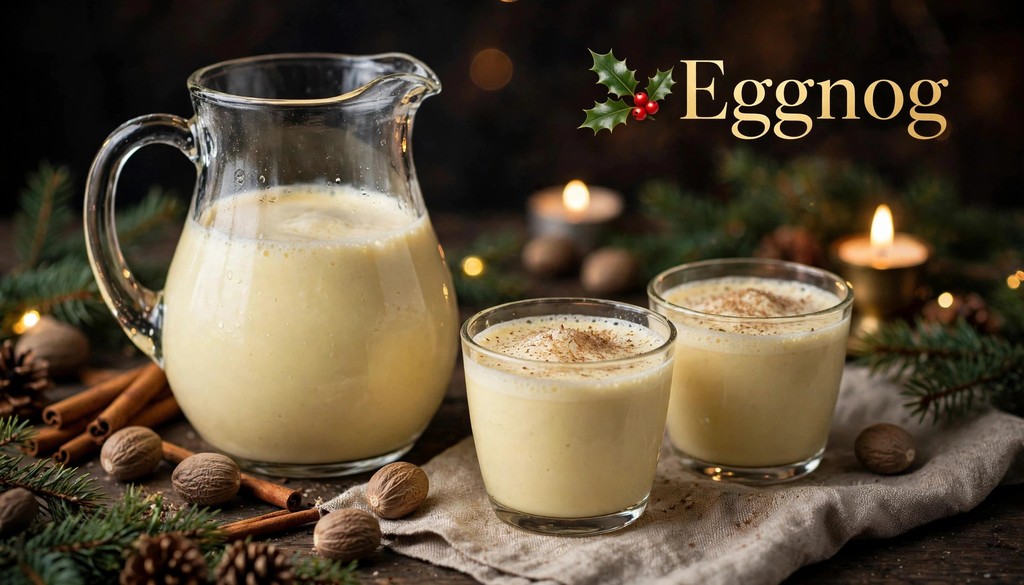
A small cup of something pale, creamy and dusted with nutmeg — eggnog is North America’s holiday custard drink, made with eggs, milk, sugar and spice. It also has a reputation problem: many traditional recipes rely on raw eggs, which puts home cooks off. The good news first: if you heat the egg-and-milk mixture to 160°F (71°C) and check it with a thermometer, you can make eggnog at home with no raw egg served at all. This article explains what eggnog is, where it came from, how it became a Christmas tradition, and how to make a cooked, non-alcoholic version safely.
What Is Eggnog?
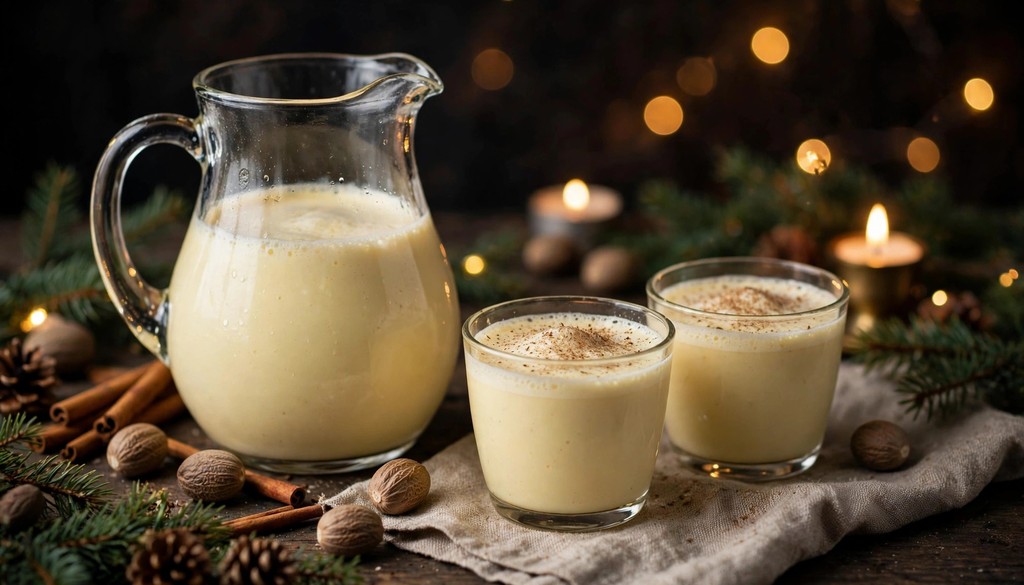
Eggnog is a rich, custard-like drink made from eggs, sugar, milk and cream, flavoured with spices — above all nutmeg, grated over the top just before serving. Think of it as a drinkable custard: thick, smooth and gently sweet. It belongs to the holiday season, from Christmas through New Year, and is most closely associated with the United States and Canada.
Traditional recipes often include spirits such as rum or bourbon, but alcohol is not essential to the drink. Without it, the richness of egg and dairy and the warmth of the spices still make eggnog unmistakably itself.
One point surprises many first-time drinkers: modern eggnog is served cold. Its ancestor was a hot drink, but eggnog today is chilled thoroughly and poured into small cups or glasses. The recipe below follows that pattern — cooked first, then chilled fast and refrigerated until it is properly cold.
From Posset to Eggnog: Origins and History
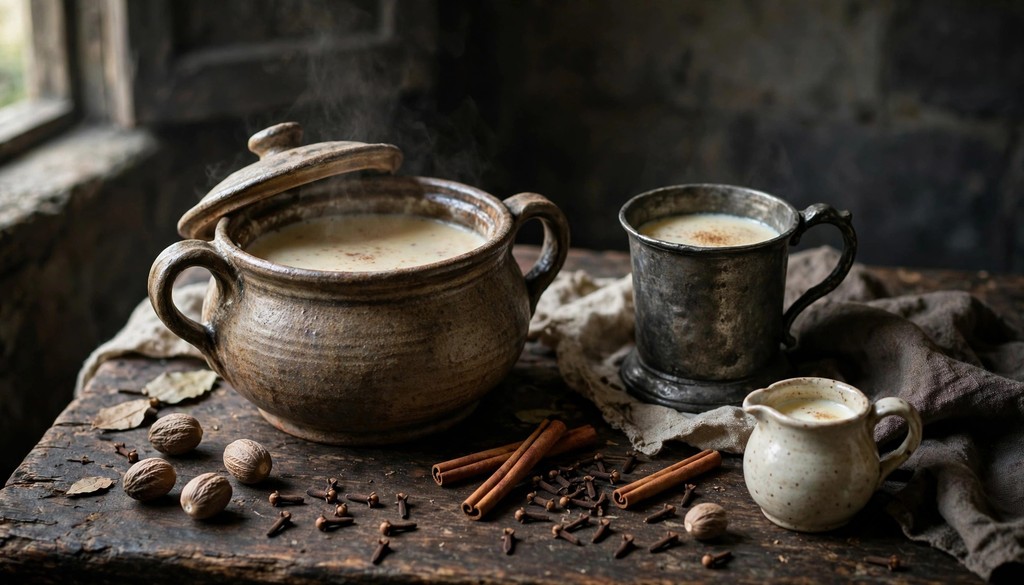
When food historians trace eggnog’s ancestry, posset is considered its most likely ancestor. Posset was a medieval English drink of hot milk curdled with wine or ale and flavoured with spices. It was served in cold weather and was also talked about as a comforting remedy when people felt unwell.
What the evidence does not show is a single moment when posset turned into eggnog. The honest version is gradual: a drink in the posset family grew richer over time as eggs, sugar and cream entered the picture.
Even the name refuses to settle. The word “eggnog” appears in American sources in the 1770s, but the origin of the name remains unsettled. One explanation combines “egg” with “nog,” an old word for strong ale. Another points to the “noggin,” a small wooden mug used in taverns. A third links it to “grog,” the sailors’ ration. Several competing explanations survive, and none has been proven.
In Britain, eggs, sherry and cream were expensive, so early eggnog belonged mainly to wealthier tables. Crossing the Atlantic changed its fortunes. In colonial America, rum arriving through Caribbean trade was cheaper than spirits shipped from Britain, and eggnog took rum into itself. In the South, bourbon and whiskey versions appeared, and regional styles multiplied. As the ingredients became easier to obtain, eggnog grew into a broadly shared American holiday drink.
Its story has quieter chapters, too. In the 19th century, some doctors considered eggnog suitable as a liquid food and as nourishment during recovery, and it appeared in hospital and nursing settings. A hospital scrapbook from 1918 preserves a scene of a person being welcomed with a cup of eggnog. By the early 20th century, writers were also describing non-alcoholic eggnog made for children who disliked eggs. Eggnog was never only a party drink; it also showed up wherever someone was being welcomed or cared for.
A word of caution about a famous story: a recipe for eggnog is often attributed to George Washington, said to have been served to guests at Mount Vernon. The attribution and the serving itself are not securely documented, so it is best enjoyed as a popular legend rather than established history.
A Christmas Tradition of Offering a Cup
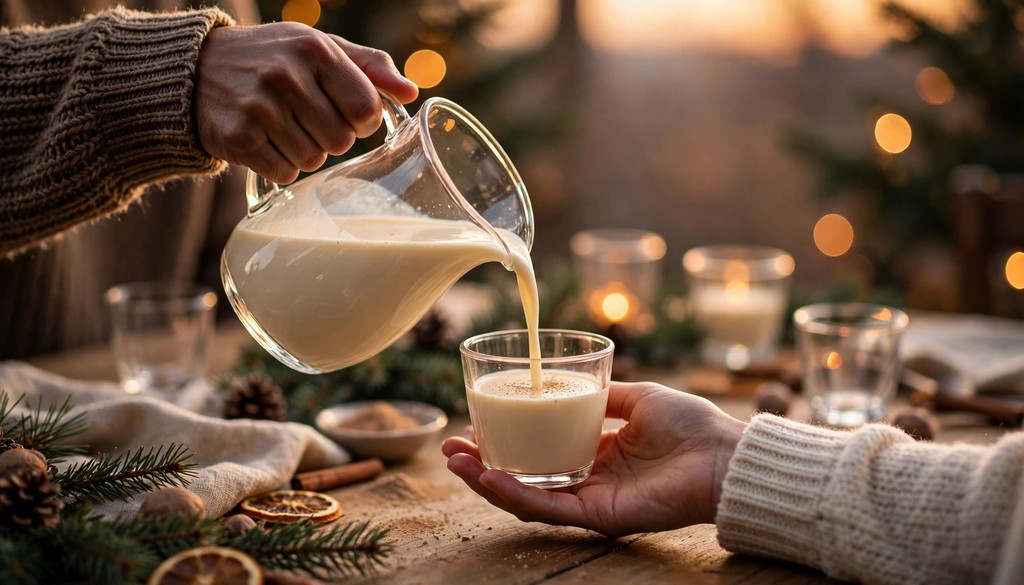
Eggnog’s season is the stretch of holidays around Christmas. It is prepared in a pitcher or bowl and poured, a little at a time, into the cups of everyone gathered. An account from 1815, passed down as an anecdote, names eggnog among the drinks offered to friends at Christmas — hospitality seems to have been part of its character early on.
The warmth of this drink is not about temperature. Eggnog is served cold. Its warmth lives in the scent of nutmeg, the softness of custard, and above all in the act of preparing a cup for someone and offering it to them.
Warmth is not decided by the temperature of a drink alone. There is a quiet warmth, too, in preparing a cup for someone — in the intention to welcome them in.
That welcome is easy to extend today. Serve the non-alcoholic batch to children and anyone who does not drink, and, if you like, a separately spiked version for adults. Everyone at the table holds a cup of the same drink, made their own way. That, too, is part of eggnog’s richness.
How to Make Eggnog Safely
The central question in homemade eggnog is how the raw eggs are handled. Even clean, uncracked, refrigerated eggs can carry a small risk of salmonella, so this recipe is built on five principles.
- Cook it. Heat the egg-and-milk mixture to 160°F (71°C), confirmed with a food thermometer. Do not judge doneness by thickness alone.
- Skip the raw egg whites. Some traditional recipes fold in beaten raw whites, but hot custard poured over them does not guarantee the whites stay at a temperature that kills bacteria. This recipe gets its lightness from whipped cream instead.
- Chill it fast. As soon as the mixture reaches 160°F (71°C), take it off the heat and cool it in an ice bath for about 10 minutes, stirring. This also protects the texture: overshooting the temperature can curdle the eggs.
- Refrigerate properly. Store the finished eggnog at 40°F (4°C) or below and use it within 2 to 4 days. Do not freeze it. Leave it at room temperature for no more than 2 hours — and no more than 1 hour when the room is above 90°F (32°C).
- Remember that alcohol is not a safety step. The amount of spirits in a typical recipe cannot be relied on to kill bacteria. If you add alcohol, cook the base first, chill it, and only then stir the spirits in.
Take extra care when serving young children, older adults, pregnant people and anyone with a weakened immune system. This recipe is fully cooked, but anyone who is pregnant or has health concerns should feel free to choose a commercially pasteurised eggnog instead, or to follow the advice of a medical professional.
Never let the mixture boil. Stir constantly and check with a food thermometer until it reaches 160°F (71°C), then take it off the heat at once and chill it in an ice bath for about 10 minutes. Remember: alcohol is not a safety step.
The Recipe: Cooked, Non-Alcoholic Eggnog
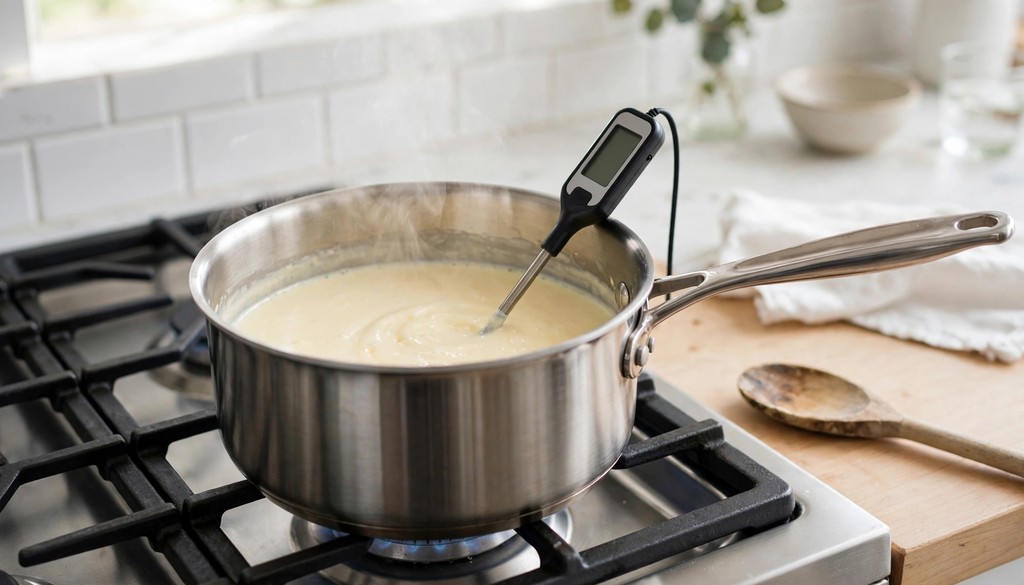
This is a yolk-based, cooked eggnog with no alcohol and no raw egg whites. Whipped cream folded in at the end keeps it light. It makes about 900 ml (roughly 4 cups) — six small cups. The method is straightforward, but a food thermometer is essential equipment. Allow about 30 minutes of hands-on time, plus at least 4 hours of chilling.
Ingredients (about 900 ml / 6 small cups)
- Egg yolks 6 (medium to large eggs)
- Granulated sugar 80 g (about 6½ tablespoons)
- Milk 600 ml (2½ cups)
- Heavy cream 200 ml (about 7 fl oz), divided: 100 ml for cooking, 100 ml for finishing
- A pinch of salt
- Vanilla extract 1 teaspoon
- Ground nutmeg ½ teaspoon, plus more for serving
- Ground cinnamon ⅛ teaspoon (optional)
Method
- Make the egg base. In a bowl, whisk the egg yolks, sugar, salt and the 100 ml of cream for cooking until well combined.
- Warm the milk. Pour the milk into a saucepan and heat it until it is just short of boiling. Do not let it boil.
- Temper the eggs. Pour the hot milk into the egg mixture in a thin stream, whisking constantly. This gradual warming is called tempering, and it keeps the eggs from curdling in the next step.
- Cook to 160°F (71°C). Return everything to the pan and heat over low to medium-low heat, stirring constantly. When a food thermometer reads 160°F (71°C) in the mixture, remove the pan from the heat immediately. Never let it boil — the eggs will scramble.
- Strain and chill fast. Strain through a fine sieve into a clean container. Stir in the vanilla, nutmeg and the cinnamon, if using. Set the container in an ice bath and stir for about 10 minutes to cool it down.
- Refrigerate. Cover and chill for at least 4 hours, or overnight.
- Fold in the cream. Whip the remaining 100 ml of cream to soft peaks and fold it gently into the cold base.
- Serve. Pour into small cups or glasses and finish with a grating of nutmeg.
Store the eggnog in a clean, covered container in the refrigerator and use it within 2 to 4 days. Once the whipped cream is folded in, the flavour is at its best within a day. When serving, do not leave the pitcher standing at room temperature — return what is left to the refrigerator.
For Adults: A Spiked Variation
If you would like a spirited version, divide the fully chilled base and add rum, bourbon or brandy to the adults’ portion only — roughly 60 to 120 ml (2 to 4 fl oz) for the full batch, added a little at a time to taste. Keep the plain and spiked batches in separate, clearly marked containers. Adding spirits does not extend the storage life, and it never replaces cooking: the order is always cook, chill, then spike.
Frequently Asked Questions
Q1. Does eggnog have to be made with raw eggs?
No. Eggnog can be made as a cooked drink: heat the egg-and-milk mixture to 160°F (71°C), checking with a thermometer. The recipe above is cooked and uses no raw egg whites.
Q2. Does adding alcohol make eggnog safe?
No. The amount of alcohol in a typical recipe is not a reliable way to kill bacteria. Always cook the egg base first, chill it, and add any spirits afterwards.
Q3. Can eggnog be made without alcohol?
Yes. The main recipe here is non-alcoholic, and alcohol has never been essential to the drink — non-alcoholic versions were already being described for children in the early 20th century.
Q4. How long does homemade eggnog keep?
When it has been cooked properly, chilled promptly and stored in a clean container in the refrigerator, the official guideline is 2 to 4 days. Do not freeze it. Once whipped cream has been folded in, it is best enjoyed by the next day.
Q5. Can children or pregnant people drink it?
Avoid raw or undercooked egg. This recipe is cooked and non-alcoholic, but anyone who is pregnant or has health concerns should choose a commercially pasteurised eggnog or follow a medical professional’s advice.
Q6. Is eggnog served hot or cold?
Its ancestor, posset, was a hot drink, but modern eggnog is generally served chilled, and this recipe is finished cold. Think of eggnog’s “warmth” not as temperature, but as spice, custard and the warmth of preparing a cup for someone.
A Small Welcome in a Cup
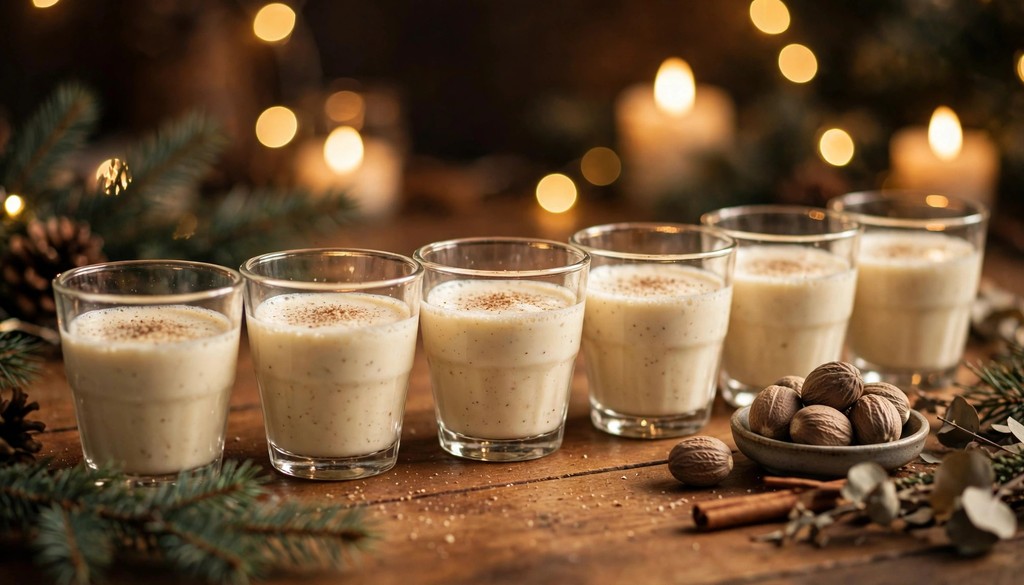
When you quietly offer someone a cold glass, what is handed over may be more than a drink — it may carry the wish to welcome that person in. Perhaps the warmth of Christmas is born from just such an unassuming cup.
It does not need to be a large gathering. A cup prepared for someone you care about, and a cup poured for yourself on a quiet evening alone, are both small acts of welcome. This Christmas, why not let a nutmeg-scented cup welcome the people you love — and yourself as well?
Japanese version: エッグノッグとは?由来・歴史とクリスマスの伝統、安全な作り方
▶ See the Christmas roundup: Christmas Flavours of the World: From Stollen to Eggnog — Six Stories of the Season’s Table
コメント