

Have you ever heard of a dish called “La Bouillie”?
La Bouillie is a dish that has long been enjoyed in the Republic of Chad, located in central Africa.
In this article, we’ll explore the charm of this dish—which is simple yet has its own unique twist in every household!
Please watch until the very end!
Also, if you'd like to learn how to make La Bouillie, please check out the article below.
~Notice~
Would you like to experience the charm of food through music?
At TasteTune, we create original music inspired by the taste, aroma, atmosphere, and cultural background of each dish.
Whether it is a memorable dish, a cuisine from a country you love, or a special meal you would like to prepare for someone important, we invite you to take a look at our music creation guide.
What kind of dish is La Bouillie?
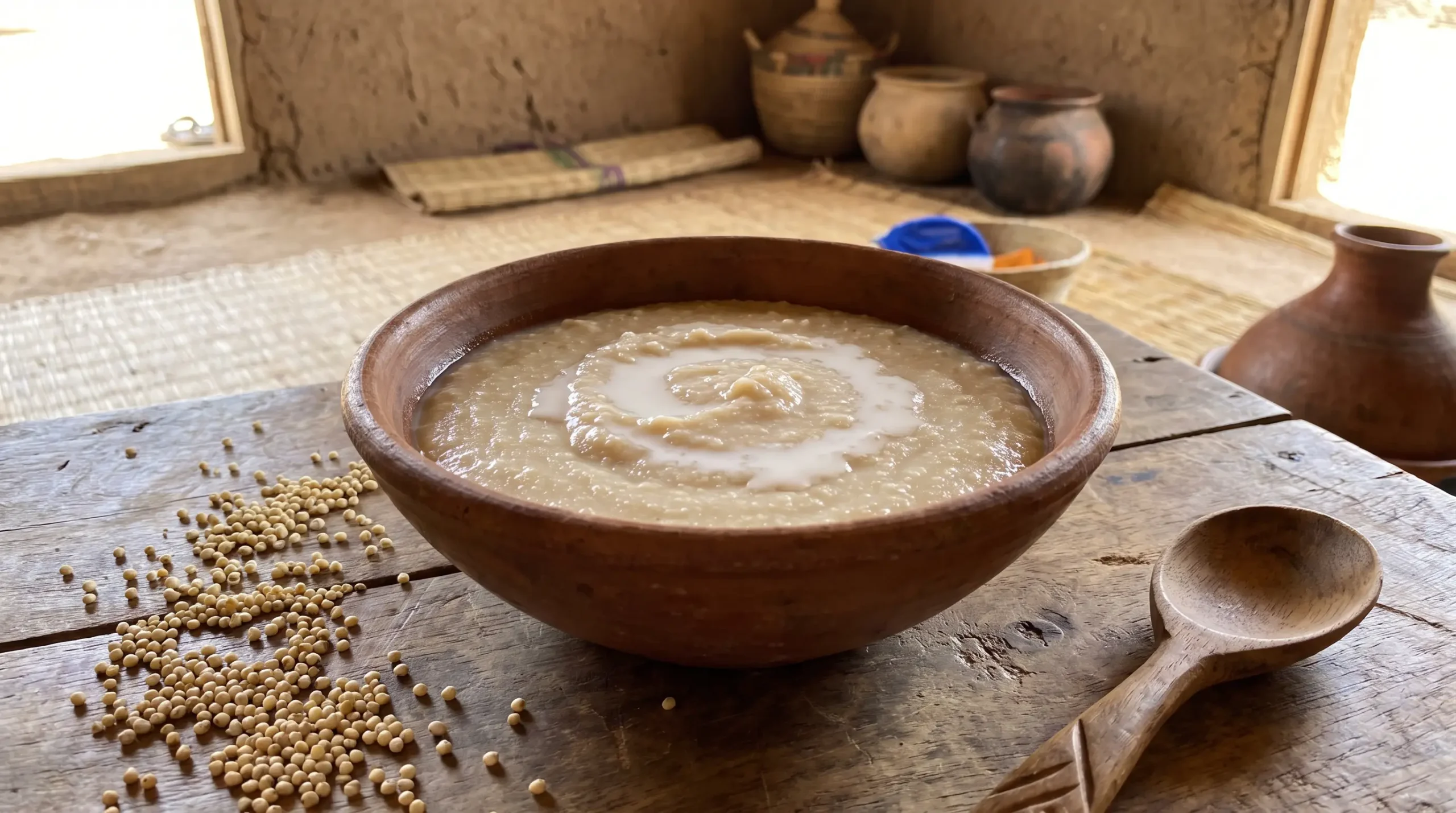
La Bouillie is a porridge dish that has long been a favorite in Chad.
It is similar to Japanese rice porridge or oatmeal and is mainly eaten for breakfast.
In Chad, grains such as sorghum (millet) and rice are considered important staple foods.
For this reason, La Bouillie has also evolved into a cuisine that reflects that grain-based culture.
The defining characteristics of La Bouillie lie in the natural simplicity and subtle sweetness of the ingredients.
La Bouillie is made primarily by simmering rice, wheat, or millet in milk or water, then adding peanut butter and sugar.
The natural aroma of grains and the richness and nutty flavor of peanuts form the foundation of La Bouillie's flavor profile.
Adding ingredients such as sugar, brown sugar, and fruits like bananas also adds sweetness.
These ingredients vary from household to household, and regional differences are another characteristic of this dish.
Even though it's rice porridge, it uses peanuts and has a sweet flavor, so it has a charm that's different from Japanese rice porridge.
Origin of the Name
A literal translation of “La Bouillie” would be “that porridge” or “that cooked porridge.”
“Bouillie” is a French word that refers to a food made by boiling grains or flour until it becomes a paste or porridge.
Chad is a former French colony, and French remains one of its official languages.
That is why the name of this porridge dish, made by boiling grains, has French origins.
Furthermore, “La Bouillie” is not so much a proper noun as it is a name that directly describes the dish’s shape and cooking method.
In Chad, local names such as “madidé” and “byan” are also used.
The Taste and Flavor of La Bouillie
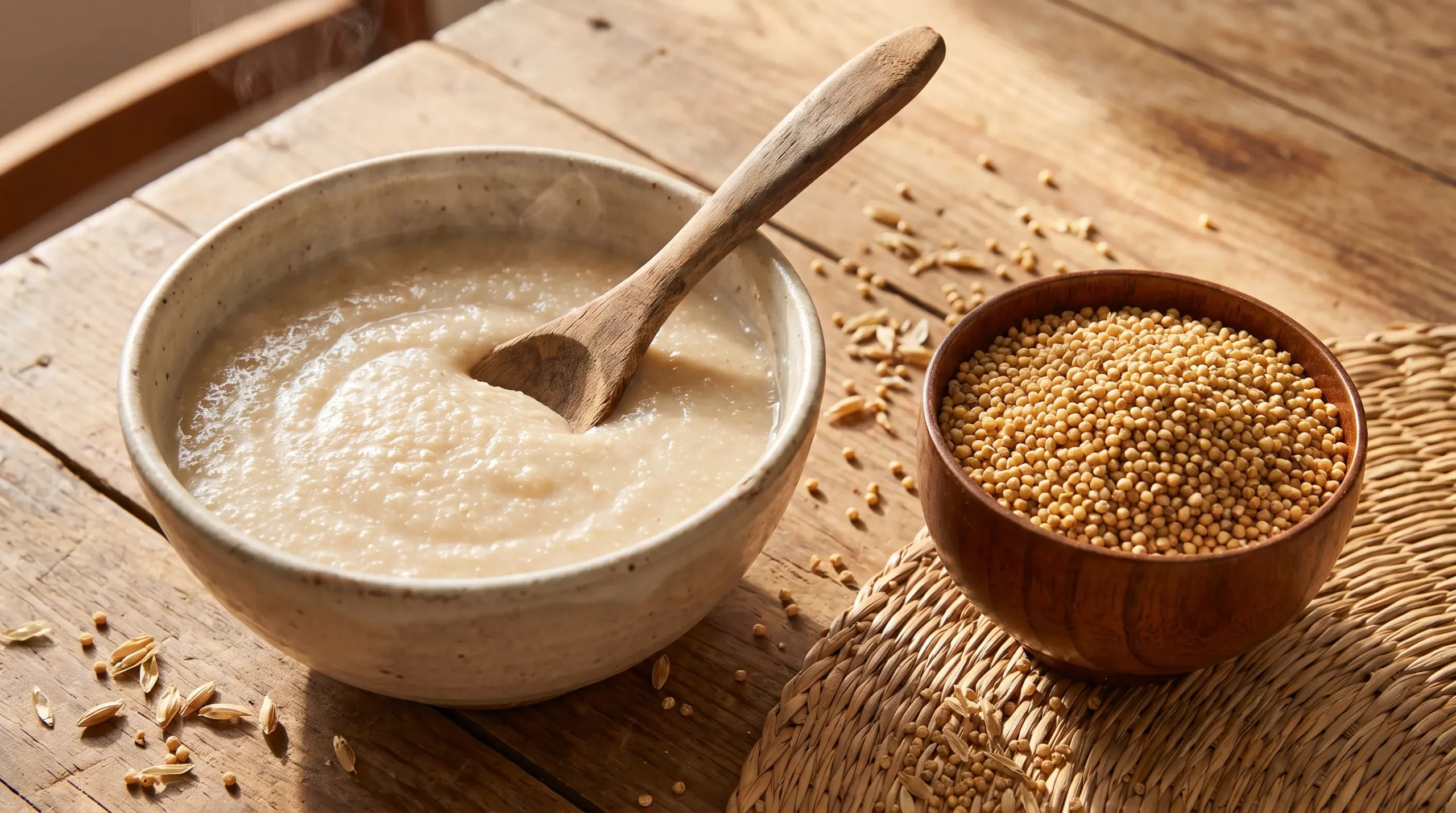
La Bouillie takes on different flavors depending on the ingredients used.
While several types of grains, such as sorghum and rice, are used as the base, millet is an essential ingredient among them.
When you use millet, you can enjoy the nutty, rustic flavor of the grain itself.
Although it is sometimes described as similar to oatmeal, I detect a stronger grain aroma.
I find it unusual to see peanuts in rice porridge, but at La Bouillie, they're a staple.
The combination of the rich, nutty flavor and aroma of peanuts with sweet rice porridge adds depth to the otherwise simple sweet porridge.
According to accounts from people who have actually eaten La Bouillie, it is described as “<SPAN class="swl-marker mark_orange>surprisingly peanutty.”
Milk is used when simmering grains.
Adding milk rounds out the flavor of the grains and gives the dish a creamy, smooth texture.
Furthermore, lemons and fermented milk are characteristic ingredients used in La Bouillie.
Both add acidity to La Bouillie.
Sweetness, nuttiness, and smoothness.
By adding acidity at that point, we create the distinctive flavor of La Bouillie.
The History of La Bouillie
Grain Cultivation in the Sahel Region
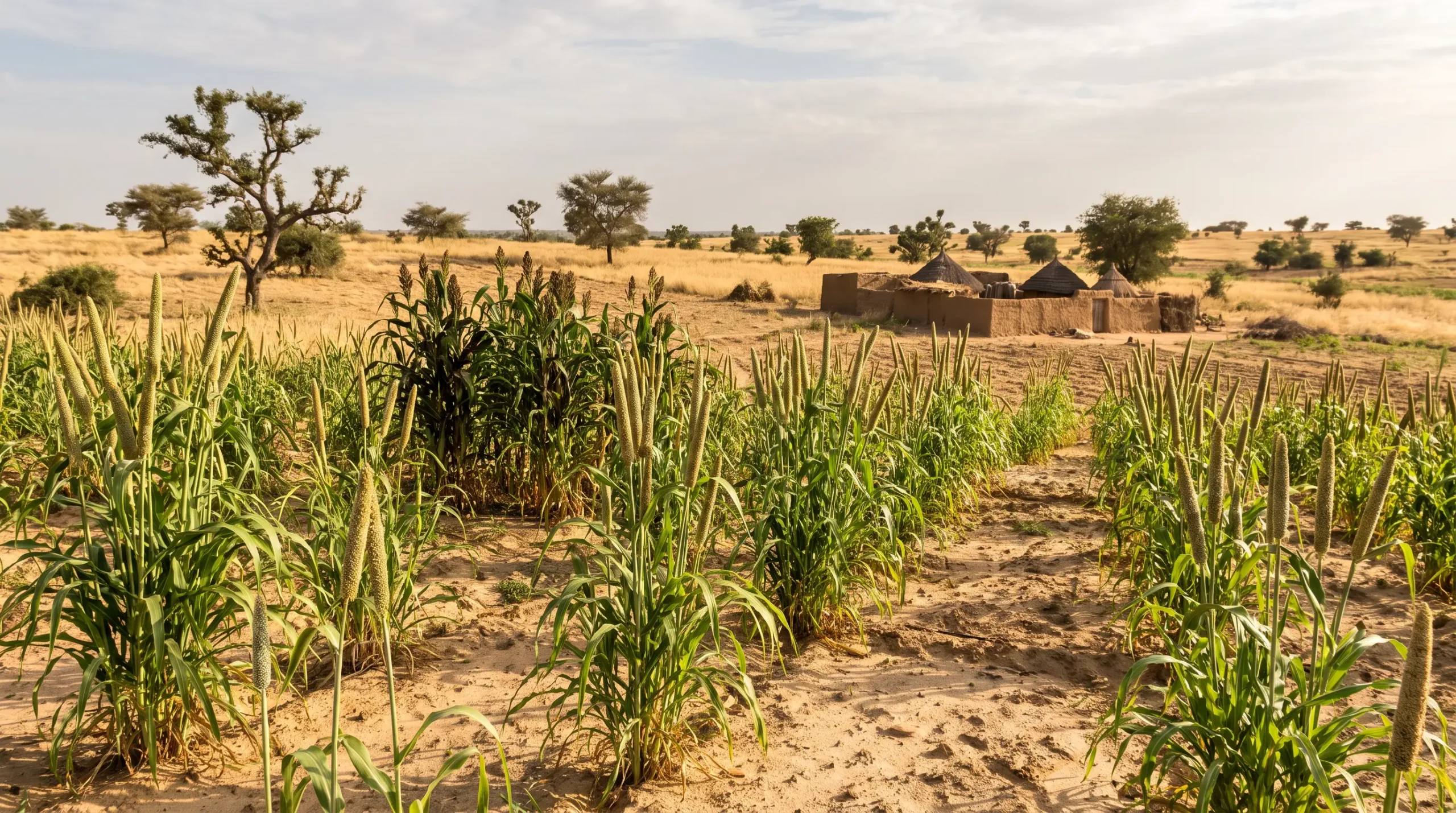
When discussing La Bouillie, grains such as millet and sorghum are essential.
In the Sahel region, which includes present-day Chad, millet has been a staple of the diet since ancient times.
According to the records, the presence of millet has been confirmed at archaeological sites on the Chad Plain dating from around 1500 to 1000 B.C.
Between 1000 BCE and 1000 CE, millet cultivation spread across a wide area of sub-Saharan Africa.
Actually, it is not known for certain whether La Bouillie existed as early as this period, but
“A culture in Chad that cultivates grains such as millet and uses them as food ”
It had a history spanning several thousand years.
The Culture of Making Porridge
Just as important as the history of grains is the culinary tradition of grinding grains into flour, boiling them with water, and making porridge.
The French Institute for Development Research, which has studied the culinary culture around Lake Chad, explains that “bouillie” (porridge) is a grain-based dish that has existed since ancient times in the Lake Chad Basin and throughout much of West Africa.
Researchers have found that, regarding grain-based dishes,
- boule (a dish made from kneaded grains)
- bouillie (porridge)
- bière (grain-based alcoholic beverage)
However, it explains that this was the primary method of processing and cooking grains in the Lake Chad Basin.
Therefore, it is believed that the origins of La Bouillie lie in a very simple grain-based food culture.
Things That Have Been Passed Down to the Present Day
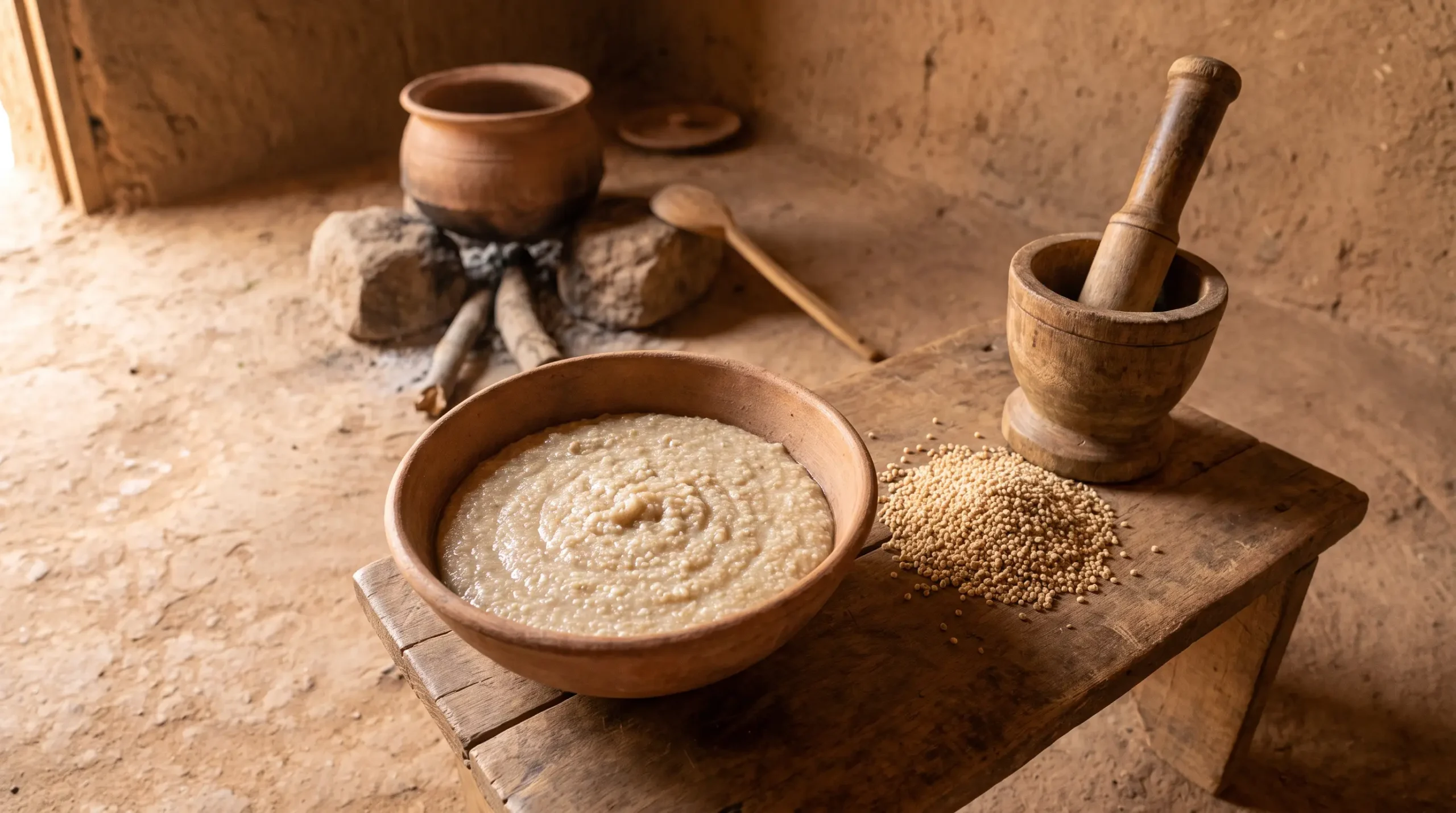
The study points out that even as the types of crops changed, the way people ate grains remained relatively constant.
For example, the types of grains used—such as millet, sorghum, and rice—vary by region.
However, the cooking method of grinding grains into flour and simmering them to make porridge is the only one that has been passed down regardless of the type of grain used.
The researchers explain that the processing of the grain itself was more important than the type of grain used.
For this reason, La Bouillie cannot be described as a dish derived from a single specific grain.
It can be said that “La Bouillie” is one of the culinary traditions that developed within Chad's grain-based culture.
Toward a Contemporary Form
La Bouillie, which used to consist solely of grains cooked into porridge, took on a form closer to what we know today when milk was added.
A pastoral culture had developed in northern Chad and other areas.
They incorporated the milk and fermented milk from cows, camels, and other animals into their diet.
For this reason, it is believed that the practice of adding milk or fermented milk to millet and water porridge developed naturally.
However, this change was a significant development that led to the modern La Bouillie.
As time went on, local ingredients were incorporated, leading to an increase in the variety of La Bouillie dishes.
In modern versions of La Bouillie, a variety of ingredients are used in addition to millet.
For example, sorghum, wheat, peanuts, sugar, and lemons.
Through the fusion of culinary traditions from the region surrounding Chad, the style of adding sweet or sour flavors to porridge—which has become a hallmark of La Bouillie—was established.
La Bouillie and France
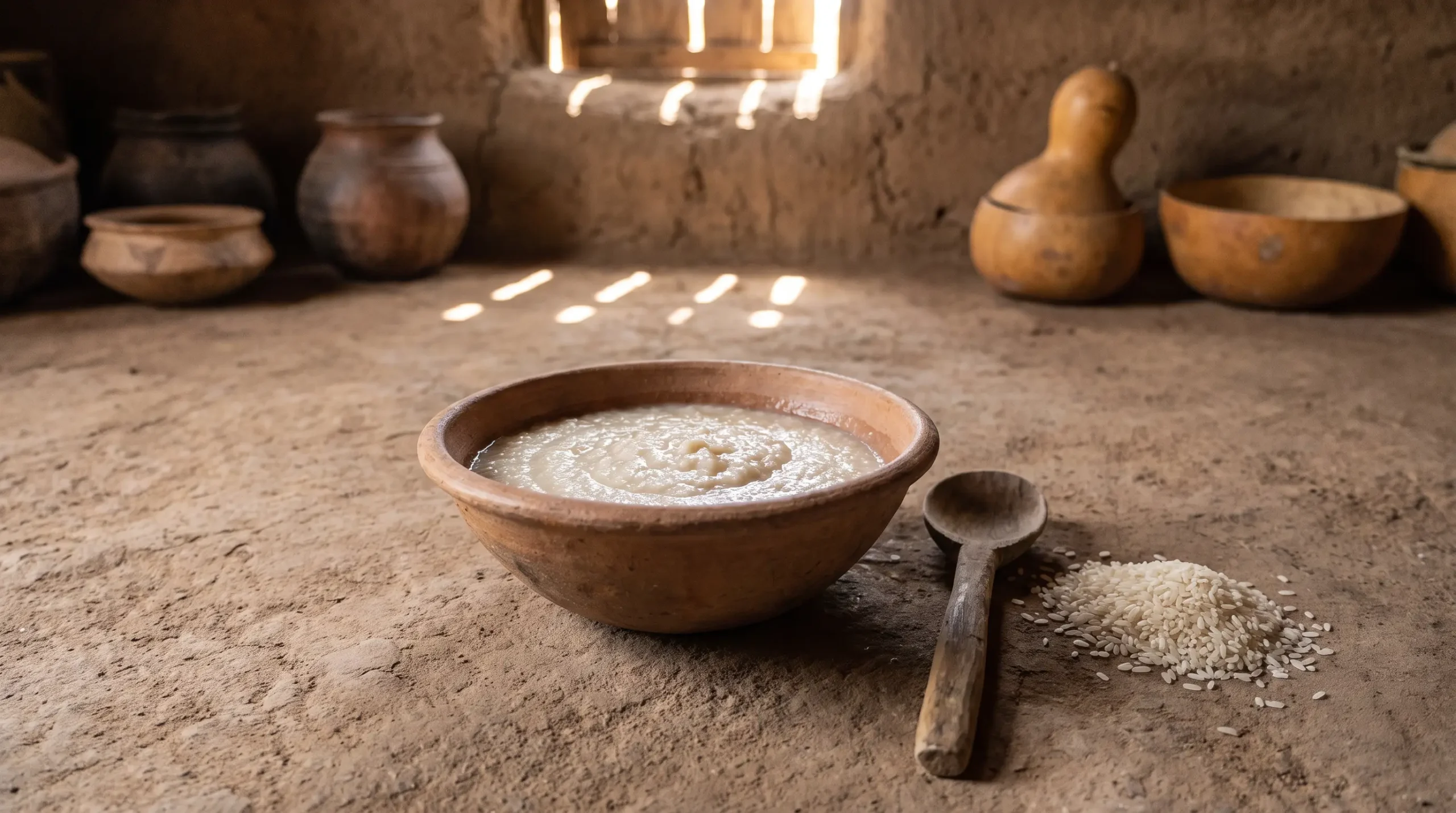
La Bouillie uses a variety of grains, such as millet and sorghum, but some of its dishes also include rice.
However, it is believed that rice was not a major grain crop in Chad.
According to a 2025 study on traditional foods in Chad, rice is said to have been introduced after the French colonial period.
Furthermore, the study also explains that rice cultivation was forcibly introduced during World War II.
The rice that was introduced was well received, particularly by the younger generation, and in some regions it began to be used as a substitute for millet and other grains.
In addition, the name “La Bouillie” comes from the French word “bouillie” (porridge).
In other words, La Bouillie has evolved by building on Chad's culinary traditions while incorporating elements of French culture.
La Bouillie Today
Since the 20th century, La Bouillie has been prepared in households across various regions as an everyday porridge dish.
However, Chad is a very large country, and the environment and culinary culture differ greatly between the desert and Sahel regions in the north and the savanna in the south.
For that reason, La Bouillie was not eaten throughout all of Chad.
For example, even in La Bouillie, Chad—which is currently well-documented—there is quite a wide variety, ranging from versions made solely with millet flour to those made with millet and milk.
This diversity is likely one of the reasons why La Bouillie has been passed down as a home-cooked dish for so long.
Comments