

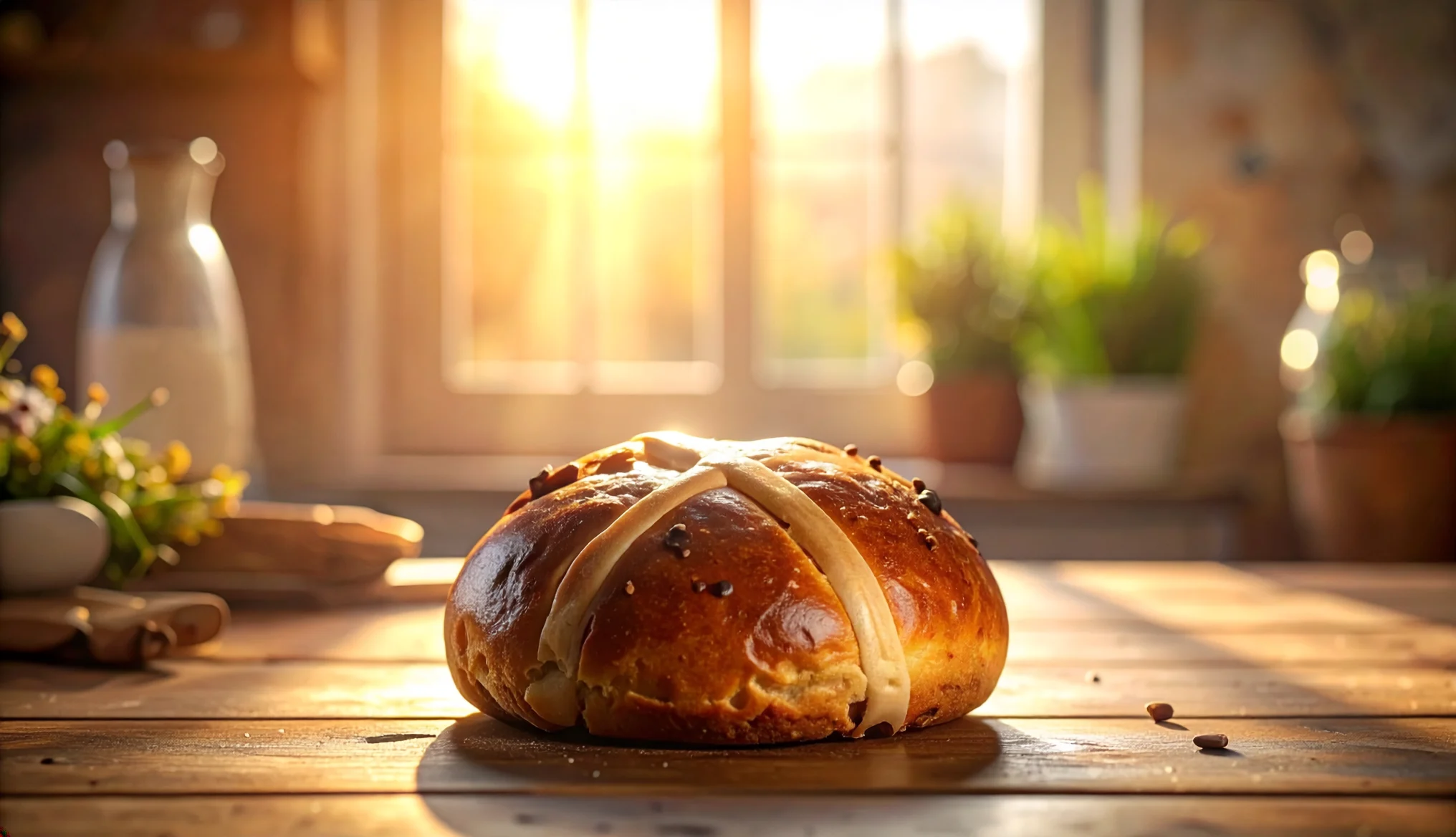
As winter loosens its hold, the mood of the season changes. The air feels lighter, and the days open more gently. In many places, that shift is marked by food as much as by weather. A familiar spring bread often carries that role. Hot cross buns do more than signal Easter on the calendar. They gather memory, faith, and the feeling of renewal into one warm, fragrant bite.
In short: hot cross buns are eaten at Easter, traditionally on Good Friday. The cross on top recalls the crucifixion of Jesus, and the rich, spiced dough marks the end of the Lenten fast. Behind that simple answer sits a longer story, one that runs from a 14th-century monastery kitchen to the bakery windows of modern Britain.
A Scent of Spring: The Sensory Prelude to Easter
When Easter Is First Felt
Spring often arrives through the senses before it arrives in words. The light grows softer. The air loses its hard winter edge. In kitchens, another sign appears. The smell of spice and yeast begins to fill the room.
Why the Season Feels Close
For many households, that aroma is part of the Easter season. Cinnamon, nutmeg, and dried fruit create a mood that feels both festive and calm, and the bun itself is simple enough to seem familiar. However, its timing gives it emotional force. It appears just when people are ready to leave winter behind.
That is why the hot cross bun works as more than a seasonal treat. It acts as a small ritual object. The first batch of the season can feel like a threshold. Therefore, the bread prepares the table for spring before the feast even begins.
Origins of the Spiced Bun: Where Faith Meets the Seasons
The history of hot cross buns sits between religion and daily life. People have long used special foods to mark sacred time, and they have used bread to express comfort, restraint, and celebration. Also, the hot cross bun brings those threads together in a form that is easy to share.
From Lent to Easter
In medieval Christian life, Lent reshaped the rhythm of eating. The forty days before Easter called for restraint and reflection. Rich ingredients were limited, and the table became plainer. As a result, the end of Lent felt vivid and dramatic.
When Easter arrived, spices and sweetness returned to the table with new meaning. Dried fruit, enriched dough, and warm fragrance no longer felt ordinary. Instead, they marked release after discipline. The bun stood for movement from fasting to feasting.
The best-known origin story comes from St Albans in Hertfordshire. In 1361, Brother Thomas Rocliffe, a monk at St Albans Abbey, is said to have baked small spiced buns marked with a cross. He gave them to the poor who came to the abbey door on Good Friday. His “Alban Buns” pleased people so much that bakers across the country tried to imitate them, while the original recipe stayed within the abbey walls. The Alban Bun is still baked for St Albans Cathedral today, and its recipe remains a closely guarded secret.
The British Tradition of Return
That background still matters today. Even when modern eaters do not observe Lent strictly, the bun keeps the memory of that older pattern. It carries the idea that celebration means more after a season of waiting. Therefore, the bread still feels tied to Easter rather than to spring in general.
Spiced breads exist in many places. Even so, the hot cross bun is strongly linked to Britain. In the United Kingdom, it appears in bakeries, supermarkets, and home kitchens as Easter approaches. As a result, people do not need to ask what time of year it is. The bun answers for them.
The buns were once taken very seriously indeed. In 1592, under Elizabeth I, their sale was restricted to Good Friday, Christmas, and funerals, because they were considered too sacred for everyday eating. By the 18th century, street sellers in London were crying “Hot cross buns! One a penny, two a penny” on Good Friday mornings — the cry that survives in the nursery rhyme still sung today.
From Bakery Window to Family Memory
British food history also helps explain its staying power. Imported spices once carried rarity and status. Over time, they became part of a broader domestic tradition. The bun preserved that older sense of ceremony while becoming a familiar household food. In that way, it joins comfort with ritual.
For example, a tray in a bakery window can recall earlier Easters at once. Toasting and buttering one at home can do the same. Meanwhile, the pattern repeats across generations. Grandparents, parents, and children meet the same season through the same scent.
The Meaning of the Cross: More Than Just a Decoration
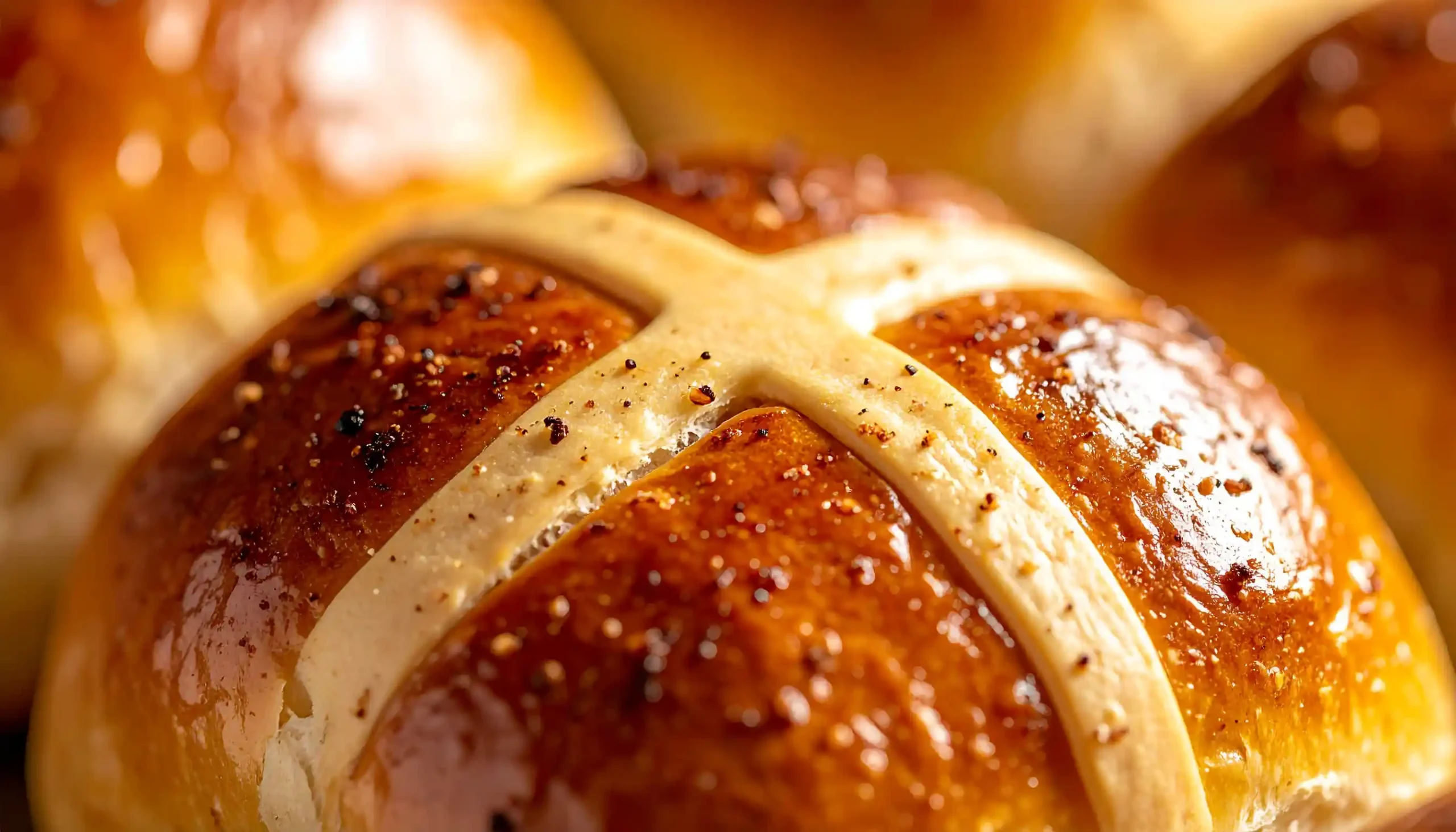
The mark on top is what turns this bread into a symbol. Without the cross, it would still be a good spiced bun. With the cross, it becomes culturally specific. The decoration tells the eater that this bread belongs to a season of meaning.
The Cross, Grief, and Hope
For Christian readers, the cross points directly to the crucifixion of Jesus Christ. That association is immediate and central. The bun becomes an edible reminder of sacrifice, grief, and redemption. Because of that link, eating it can feel reflective as well as celebratory.
Some traditions also connect the spice blend to burial spices. Whether taken literally or not, that reading deepens the symbolic frame of the bread. The sweetness does not erase solemnity. Instead, it lives beside it. The bun holds sorrow and hope in the same form.
Renewal Beyond the Surface
The cross is also physically persistent. It remains visible after proofing and baking. That matters because the sign is not hidden inside the loaf. It stays on the surface, where the eye meets it first. As a result, the eater is invited to think before tasting.
The symbol can also be read more broadly. Spring is a season of return, growth, and emergence. In that context, the cross can suggest a turning point. It marks the place where winter ends and new life begins, and many cultures use intersecting lines to express order, balance, or contact between worlds.
That broader reading helps explain the bun’s reach. It is religious in origin, but it also speaks through atmosphere and timing. The bread arrives when gardens stir, daylight expands, and people reopen their social calendars. In that setting, the cross becomes a sign of renewal made visible.
On the earliest buns, the cross was not piped on at all. It was cut into the surface of the dough with a knife before baking, which is why the mark on an Alban Bun divides the top into four quarters.
Folklore gathered around the buns, too. A bun baked on Good Friday was believed to stay fresh for a whole year. Some households hung one in the kitchen for luck and protection. Sharing a bun with a friend was said to keep the friendship strong for the year ahead — a custom hot cross buns share with other British festival bakes, such as the soul cakes of Allhallowtide.
The Ritual of Sensation: Spices, Texture, and Shared Moments
The hot cross bun matters because it appeals to the body as well as the mind. Its symbolism may draw attention first. Yet its texture and aroma are what make the tradition repeatable. People return to it because it feels good to eat.
Spice, Fruit, and Texture
A good hot cross bun is soft, lightly springy, and gently rich. Milk, butter, and sugar round out the dough. Cinnamon usually leads the aroma. Meanwhile, nutmeg, allspice, or clove can add depth behind it.
Dried fruit changes the rhythm of each bite. Raisins, currants, or sultanas bring sweetness in small bursts. They also add chew, so the crumb does not feel flat, and the fruit makes the bread feel festive without making it heavy. The bun stays comforting, but it never becomes dull.
That balance explains its lasting appeal. The bread is sweet, though not overly sweet. It is spiced, though not aggressive. Consequently, it can move easily between ritual and everyday life.
Bread for Sharing
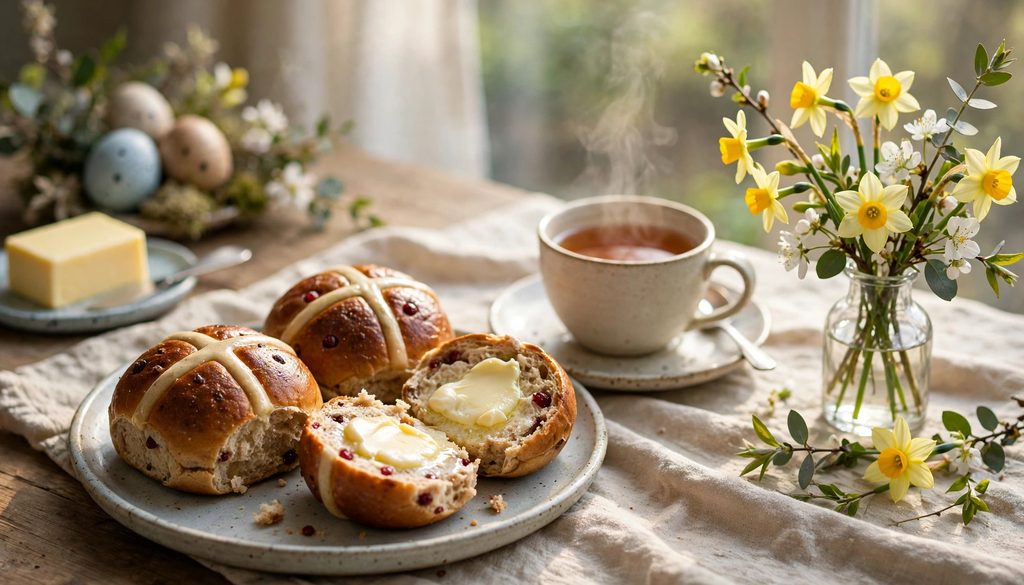
The bun is rarely only a private pleasure. It is small, portioned, and easy to pass around. That makes it ideal for shared tables. One person toasts it, another adds butter, and the room begins to slow down.
Because it is associated with Easter, it often enters moments that already carry family meaning. A morning gathering, a weekend brunch, or a visit from relatives can all give it context. Then the bread does quiet social work. Also, it makes conversation easier and the table feel settled.
Food traditions survive through repetition, but they also survive through affection. The hot cross bun offers both. It is practical enough to keep making. It is symbolic enough to keep remembering. For that reason, it remains one of the clearest edible signs of Easter hospitality.
Designing the Atmosphere: Sound, Emotion, and Memory
Why Aroma Becomes Memory
Seasonal foods do not exist in isolation. They shape the atmosphere around them. The hot cross bun belongs to a wider spring scene. It fits brighter mornings, open windows, and slower holiday breakfasts. When it appears on the table, it changes the emotional tone of the room.
The smell of warm spice can trigger memory with surprising force. It may recall a childhood kitchen. It may recall a bakery stop on a cold morning that was just beginning to soften into spring. In either case, the bread becomes more than nourishment. Indeed, it becomes a cue for emotional return.
The TasteTune Perspective
That is where the TasteTune perspective naturally enters. A meaningful meal is never only about flavor. It is also about pacing, setting, warmth, and the feeling people carry away from the table. Thus, the hot cross bun fits that idea beautifully. It turns a simple act of eating into a seasonal experience.
Traditional Easter Hot Cross Buns
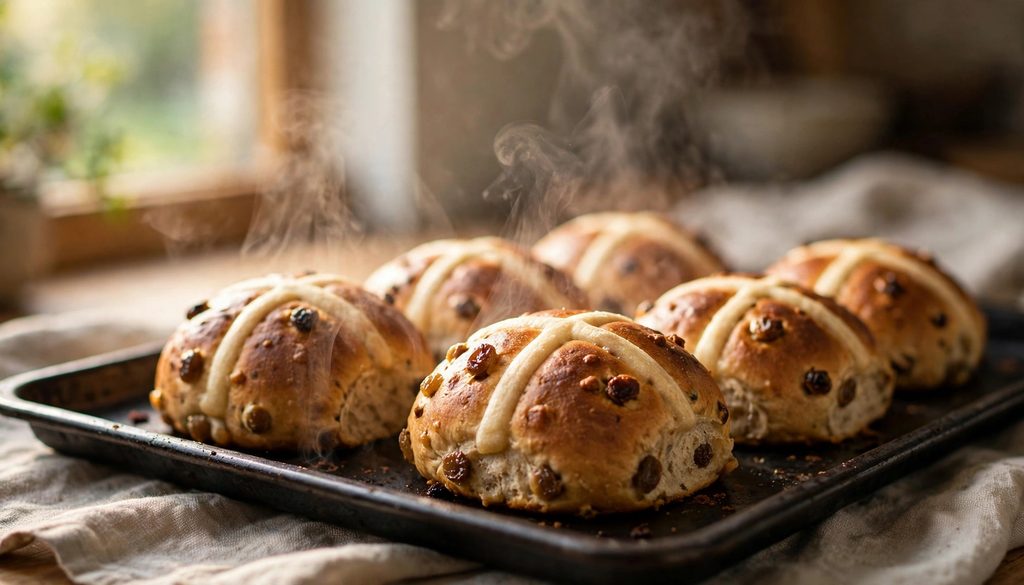
Ingredients
- Bread flour: 250g
- Granulated sugar: 40g
- Salt: 3g (about 1/2 tsp)
- Instant yeast: 4g
- Warm milk: 120ml
Not too hot - Egg: 1, beaten
- Unsalted butter: 30g
Melted - Ground cinnamon: 1 tsp
- Mixed spice: 1 tsp
- Raisins: 50g
- Flour: 30g, for the crosses
Mixed with 2-3 tbsp water into a thick paste - Apricot jam: 1 tbsp, for the glaze
Warmed
Steps
- Mix the warm milk, sugar, and yeast in a bowl; let it sit for about 10 minutes, until foamy.
- In a large bowl, combine the flour, salt, cinnamon, and mixed spice.
- Add the yeast mixture, the beaten egg, and the melted butter; knead for 8-10 minutes, until the dough is smooth and elastic.
- Knead in the raisins. Cover and let the dough rise in a warm place for 45-60 minutes, until roughly doubled in size.
- Divide the dough into 8 pieces, shape each into a round bun, and place them on a lined baking tray. Cover and let them rise again for about 30 minutes.
- Pipe a cross on each bun with the flour paste.
- Bake in a preheated oven at 180°C (350°F) for about 20 minutes, until golden.
- Brush the warm buns with warmed apricot jam for a gentle shine. Serve warm, ideally toasted and buttered.
Ensure the milk is lukewarm to activate the yeast properly without killing it.
※Substitutions:You can use dried cranberries instead of raisins for a different flavor.
Frequently Asked Questions
Why are hot cross buns eaten at Easter?
Hot cross buns are traditionally eaten on Good Friday, the Friday before Easter Sunday. The cross on top represents the crucifixion of Jesus, and the rich, spiced dough marked the end of the Lenten fast, when such ingredients had been given up.
What does the cross on a hot cross bun mean?
The cross symbolises the cross on which Jesus died. On the earliest buns it was cut into the dough with a knife; today it is usually piped on with a simple flour paste before baking.
When are hot cross buns eaten today?
Traditionally on Good Friday, but today bakeries in Britain and in countries such as Australia, New Zealand, and Canada sell them throughout Lent and the spring season.
How long do hot cross buns keep?
They are best eaten fresh or toasted on the day of baking. Kept in an airtight container, they stay pleasant for two to three days, and they freeze well for up to three months.
Can I make hot cross buns at home?
Yes. The recipe in this article uses ordinary ingredients and a single bowl of dough. The crosses are piped with flour paste, and a brush of warm jam at the end gives the buns their gentle shine.
A Taste That Lingers in the Soul
In the end, the hot cross bun lasts because it gathers many meanings at once. It speaks to Easter faith. It reflects British seasonal custom. It offers spice, softness, and comfort in a form that is easy to share.
More importantly, it gives spring a taste and a symbol. The cross on top points toward memory, renewal, and the passage from restraint into celebration. Meanwhile, the bread itself keeps those ideas close to everyday life. Therefore, hot cross buns still matter. Finally, they let people taste the season as well as understand it.
This article is also available in Japanese: ホットクロスバンズの十字の意味とは?イースターに食べる由来・歴史
コメント