

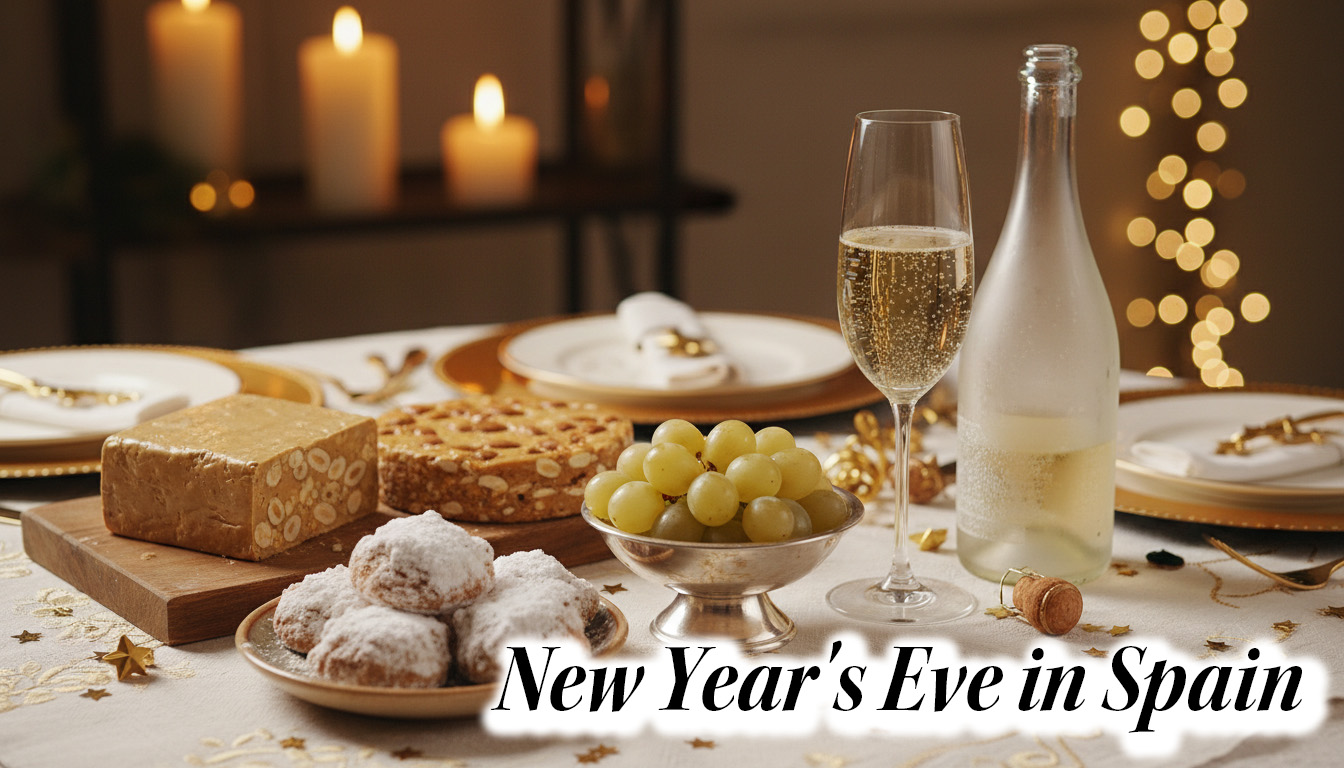
What kind of New Year's Eve dishes do you all eat?
Before we know it, this year will be over in less than a week.
This time, as we approach the end of the year, I'd like to introduce some New Year's traditions from around the world.
This article will introduce you to New Year's Eve in Spain!
Please be sure to watch until the very end.
~Notice~
This site introduces cuisines from around the world and also features songs that express those dishes.
You can also listen on YouTube and various subscription services, so please give it a listen!
We've also started accepting requests for music production!
Perfect for personal use or in-store background music!
We offer a wide range of services, from existing dishes to original creations, so feel free to place your order anytime!
New Year's Eve in Spain
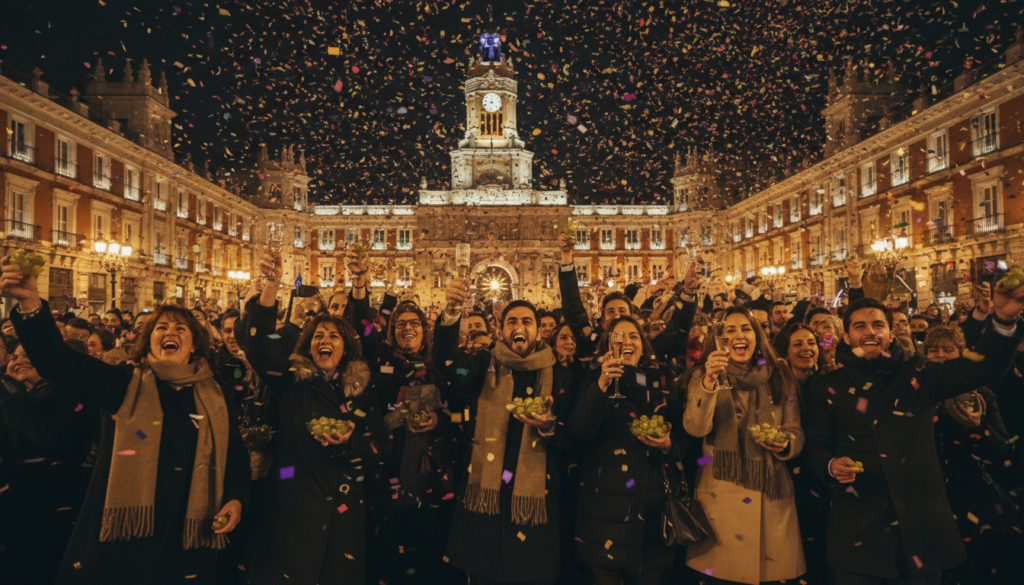
The atmosphere of the Spanish New Year's season can be summed up in one phrase: “lively, warm, and staying up late is the norm.”
Rather than quietly reflecting on the year, the atmosphere is one of “gathering together, eating, talking, laughing, and_ seeing out the year.”
Looking at the flow leading up to the end of the year, first comes Christmas.
Christmas in Spain seems to have a calm atmosphere.
Illuminations bring a touch of glamour to everyday life, drawing crowds to churches and squares.
Not too boisterous, not too solemn—though it is a cold season, we spend time warming each other's hearts.
Christmas in Spain is generally celebrated late at night.
Starting between 9 and 10 PM, the dinner table is not a ritual but a place for conversation.
It is said that being together is more important than formality.
As New Year's Eve (December 31) approaches, the town gradually begins to buzz with excitement.
Young people are swept up in excitement, while adults feel a familiar yet somehow thrilling sense of anticipation.
We gather at home or go out, each enjoying ourselves in our own way.
As New Year's Eve approaches, people gather everywhere—in front of TVs, at bars, in public squares, and so on.
At the stroke of midnight, we share the excitement after a moment of intense focus.
Some hugged and kissed, while others shouted, “¡Feliz Año! (Happy New Year!)”
Fireworks, car horns, and laughter create a festive atmosphere that lacks solemnity, yet this celebratory vibe is characteristic of New Year's Eve in Spain.
Spain: New Year's Eve Table
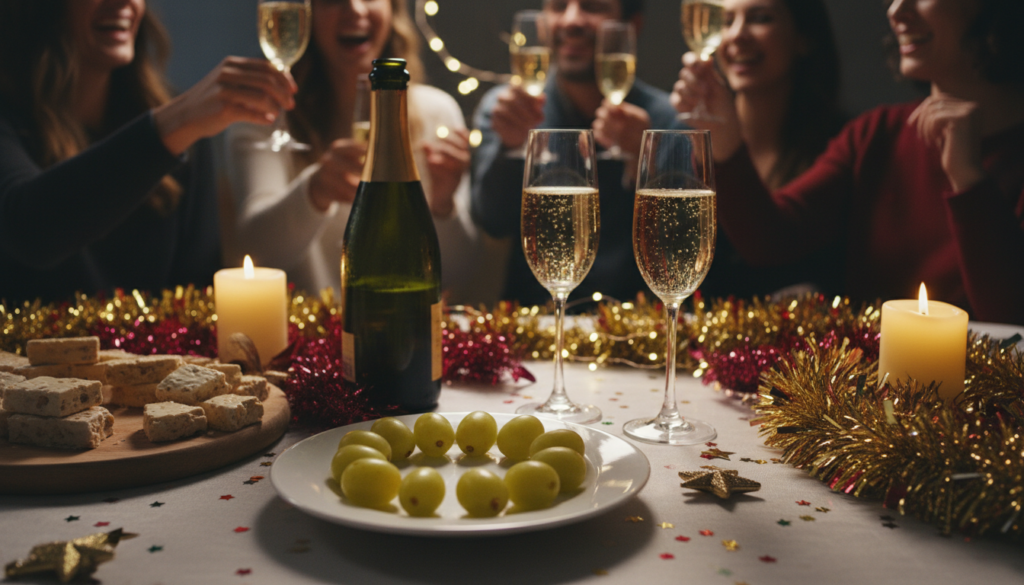
In the previous section, we introduced how Spain celebrates New Year's Eve. So, what about the food?
In Spain, there are dishes that, like Japanese osechi cuisine, each have their own role and_ meaning.
However, unlike osechi cuisine, the dishes themselves are not the main focus; rather, they serve as a mere opportunity or medium for spending New Year's Eve with someone.
In other words, during Spain's New Year's celebrations, food is “a means to share the moment of transition into the new year.”
It might sound a bit harsh, but you could also say that cooking is essential for everyone to share the same moment.
There's no doubt that the dishes we're about to introduce are an inseparable part of Spanish New Year's celebrations.
Now let me introduce you to the dishes we offer!
Uvas de la Suerte (Grapes of Fortune)
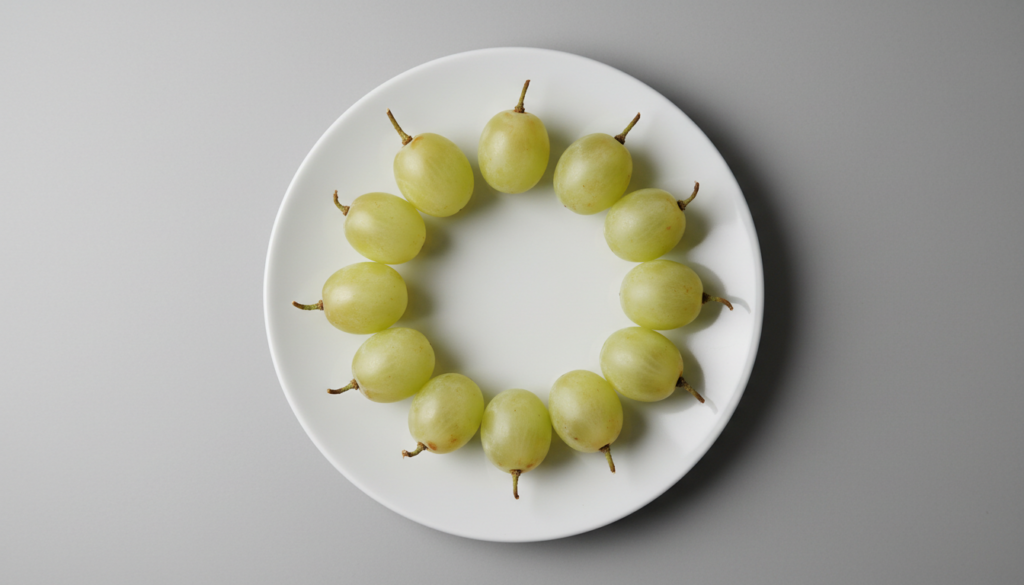
It would not be an exaggeration to say that the most important element of Spanish New Year's celebrations is the Uvas de la Suerte (Grapes of Fortune).
This dish consists of twelve peeled white grapes.
Although it's very simple, the key to this dish lies in how you eat it.
This dish is eaten by consuming one grain at a time to the sound of the bell, representing twelve grains for twelve months, wishing for a year of happiness and_ good health.
The chimes refer to the bell tolls (campanadas) from clock towers used in Spain to mark the exact time during New Year's Eve celebrations.
The chimes of Madrid's Puerta del Sol, treated as a particular symbol, are broadcast live to the entire nation.
It is believed that eating twelve grapes without choking, in time with the chimes of the bell, will bring a year's worth of good fortune.
The white grapes used at this time are common varieties, but seedless ones with peels suitable for eating are preferred for their practicality.
What began as a measure to address the abundant grape harvests of the early 20th century has now become a uniquely Spanish custom performed at the start of the New Year.
Cava
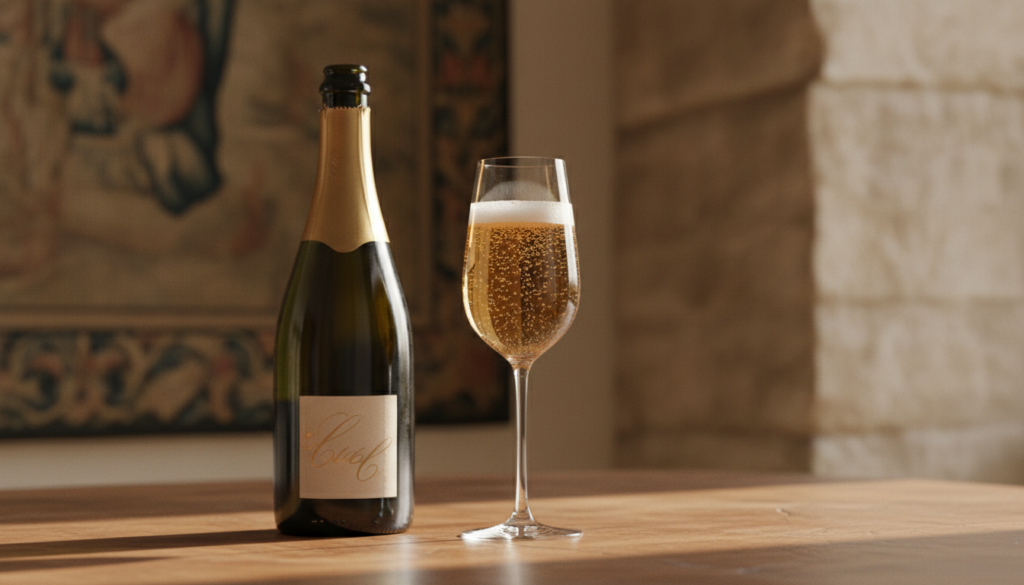
Following Uvas de la Suerte, another essential dish for Spanish New Year's celebrations is Cava.
To be precise, it refers not to the dish itself, but to Spanish sparkling wine.
Cava is “celebratory sake”
Among all the alcoholic beverages, this Kaba is the one most fitting for the moment of ringing in the New Year.
The custom of associating celebrations with bubbles is considered fundamentally European.
Since ancient times, sparkling wine has been used at significant events such as royal coronations, weddings, and the start of the new year.
Bubbles have
- Rise up
- Sound is coming out
- Visually striking
It had aspects that symbolized “beginning,” “exhilaration,” and “blessing.”
Moreover, while champagne is the sparkling wine typically associated with celebrations, there is a clear reason why we opt for Spanish cava instead.
It is produced domestically and accessible to everyone.
And because it has a lightness that makes it perfectly acceptable to drink late at night.
Therefore, while other alcoholic beverages besides cava can be consumed during New Year's celebrations in Spain, cava is beloved nationwide for these reasons.
Turrón
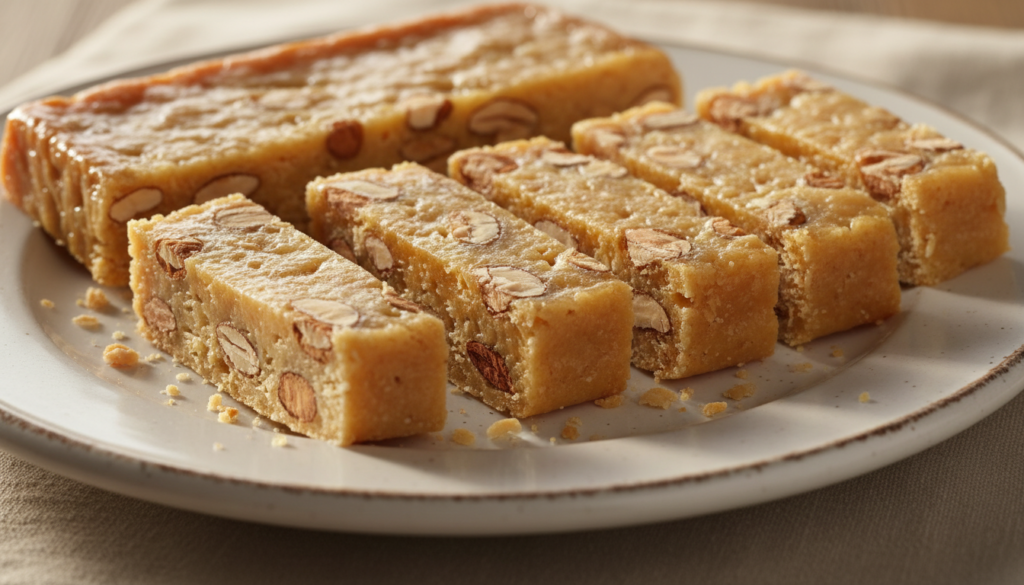
Turrón is a traditional confection made from almonds, honey, and egg whites.
It has become an absolute staple for New Year's Eve in Spain.
The reason is that it's a snack with a long shelf life that families can share.
The two points are that it is sometimes regarded as a symbol of “abundance” and “a sweet year.”
The taste and flavor of turrón are divided into two types depending on the variety.
There are two types: a hard type with a strong nutty flavor and a soft type with a nougat-like sweetness.
Both share the characteristic of a pronounced almond flavor and a honey-derived sweetness distinct from sugar.
How to Make Turrón Quickly
- Roast almonds
- Gently warm the honey over low heat.
- Gradually fold in the egg whites.
- Pour into molds and chill until set
※The full version is labor-intensive, so commercially available versions are the norm.
Polvorón
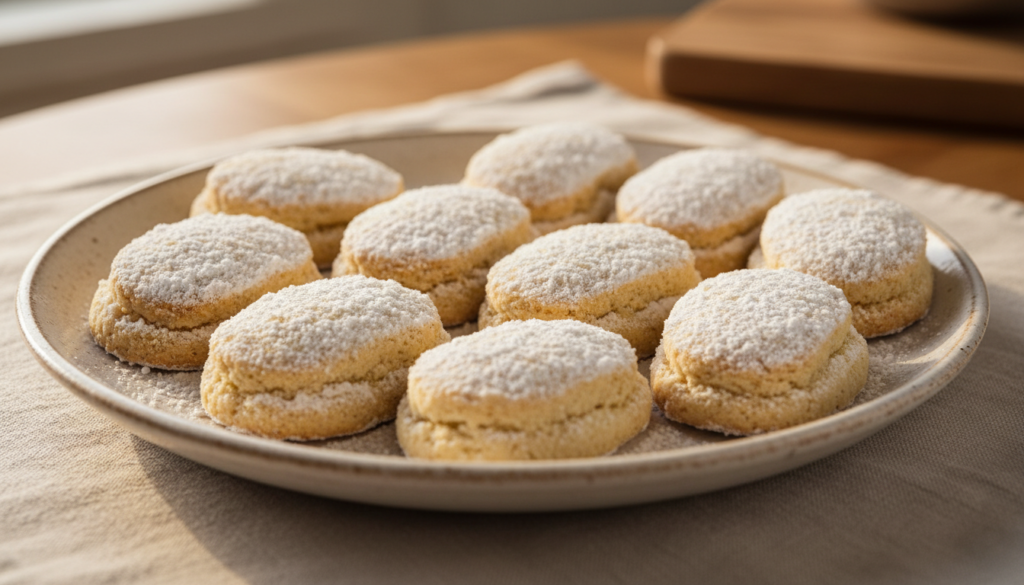
Polvorón is a baked confection made with flour, lard, and sugar.
It has the unique characteristic of crumbling away when placed in the mouth.
It has become a staple treat for family gatherings over tea, and it could be said to occupy a place of relaxation during the year-end and New Year holidays.
The taste and flavor are similar to butter cookies, characterized by a subtle hint of cinnamon and lemon.
How to Make Polvorones
- Dry-roast the flour in a frying pan
- Mix sugar and lard
- Shape and bake in the oven
Light meal
Instead of hearty dishes like prosciutto, cheese, or_ seafood, light appetizer-style dishes are preferred.
This reflects a characteristic unique to Spanish New Year's celebrations, where they value auspicious traditions and time spent with family more than feeling full.
Overall, many dishes emphasize the natural flavors of the ingredients, with a hint of saltiness that pairs exceptionally well with alcohol.
Summary
How was it?
This time, we've compiled information about Spanish New Year's Eve cuisine.
In Spain, New Year's Eve cuisine itself is never the main attraction, but it serves as a device for spending precious time with family and friends.
I'd be delighted if you could learn about a New Year's culture different from Japan's!
Also, the dishes briefly introduced this time will be covered in more detail in future articles.
For those who wish to know more, I hope you'll be patient and wait until then.
Finally, this article took longer than expected, so the post ended up being delayed.
Today is December 31st, New Year's Eve. How is everyone spending it?
I hope you all have a peaceful end to the year, and I look forward to seeing you again next year.
We look forward to your continued support of TasteTune next year.
Well then, have a great New Year!
Comments