

Happy New Year!
Finally, 2026 has begun!
Let's keep up the good work this year too!
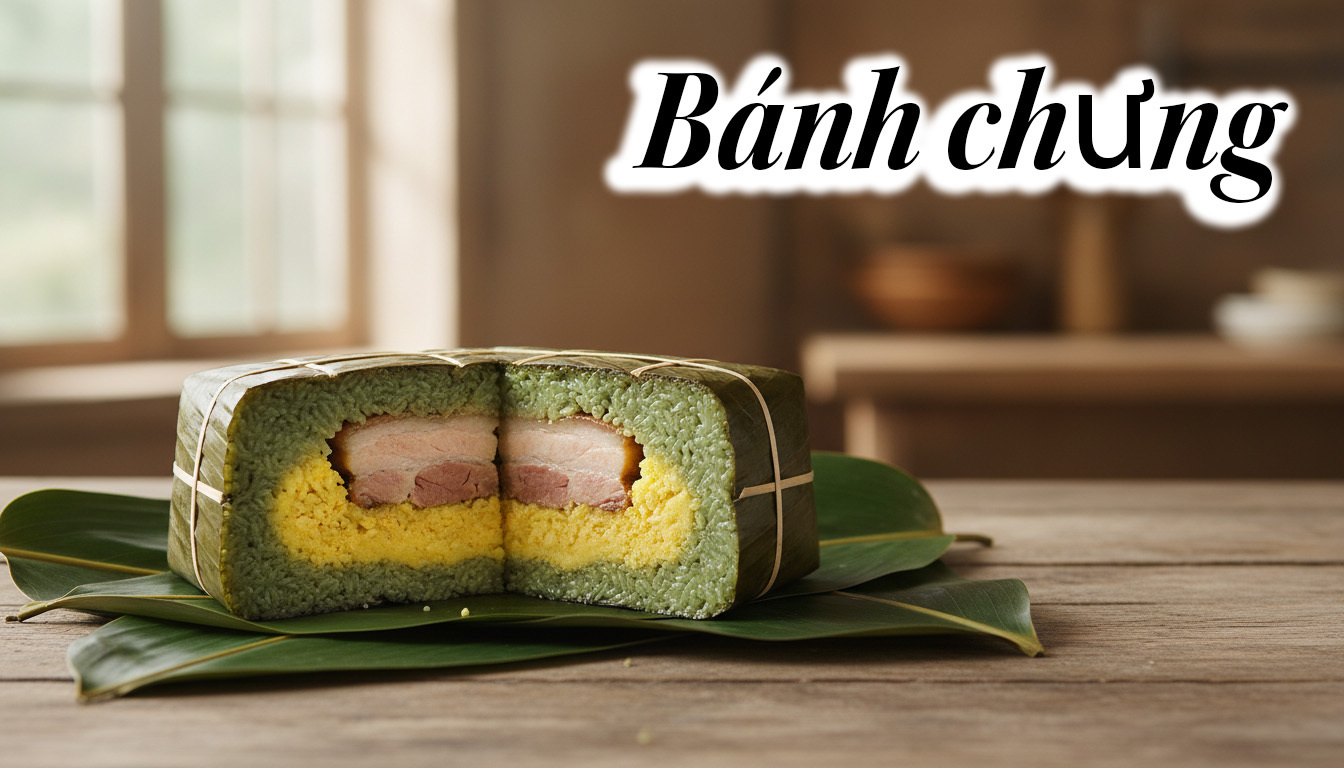
Now, the first dish I'll introduce this New Year is Bánh chưng.
This dish is a beloved Vietnamese dish that I think is perfect for the New Year.
Please watch until the very end!
~Notice~
This site introduces cuisines from around the world and also features songs that express those dishes.
You can also listen on YouTube and various subscription services, so please give it a listen!
We've also started accepting requests for music production!
Perfect for personal use or in-store background music!
We offer a wide range of services, from existing dishes to original creations, so feel free to place your order anytime!
What kind of dish is Bánh chưng?

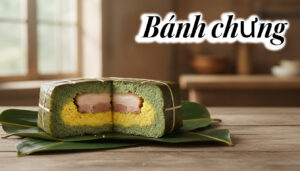
Bánh chưng is a traditional celebratory dish representing Vietnam.
It is an indispensable part of the Lunar New Year (Tet) and is beloved throughout Vietnam.
Such Bánh chưng is a rice cake dish made primarily from glutinous rice, mung beans, and_ pork.
The traditional method involves steaming or boiling, taking several hours to half a day to simmer thoroughly.
Bainchong is characterized by its square shape and green appearance.
The exterior is wrapped in don leaves (a banana-like leaf) and_ has a green appearance.
Its distinctive appearance also symbolizes the earth, expressing gratitude toward nature and_ ancestors.
The flavor is overall gentle and simple, with a charm that lies in its unpretentious goodness.
The natural sweetness derived from glutinous rice and_ mung beans is harmonized by the richness and_ saltiness of the pork fat.
Additionally, wrapping it in don leaves and boiling it infuses it with the refreshing aroma of green leaves, enhancing its simple sweetness.
It's delicious on its own, but it's often eaten with fish sauce, black pepper, and pickles.
The Origin of Bánh chưng
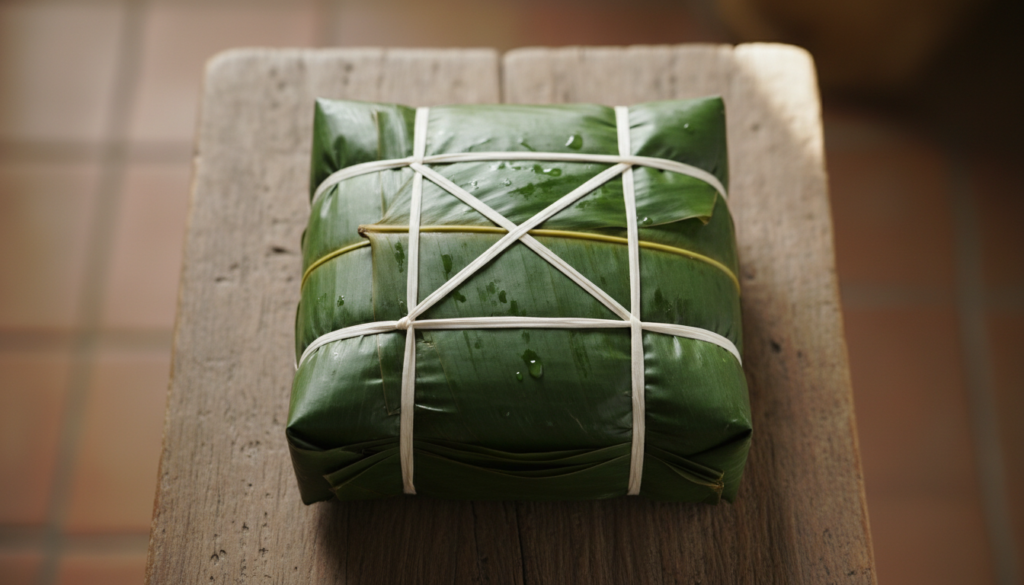
The closest extant source to the origins of Bánh chưng is the 14th-century collection of tales and legends, Lĩnh Nam chích quái (Lingnan Zhi Guai).
This is a collection of Vietnamese folklore and strange tales, and_ is currently considered one of the oldest extant literary sources on Bánh chưng.
This work preserves traditions and_ folklore in the form of narrative literature rather than as a historical text; therefore, it is not a source that conveys historical facts (such as contemporary archaeological evidence) indicating the actual “period of production, cooking methods, or_ regions of dissemination.”
However, this literature reveals that Bánh chưng's cultural roots and_ symbolism were widely recognized.
And the story told as the origin of Bánh chưng is the Tale of Prince Lang Liêu.
The Tale of Prince Lang Liêu
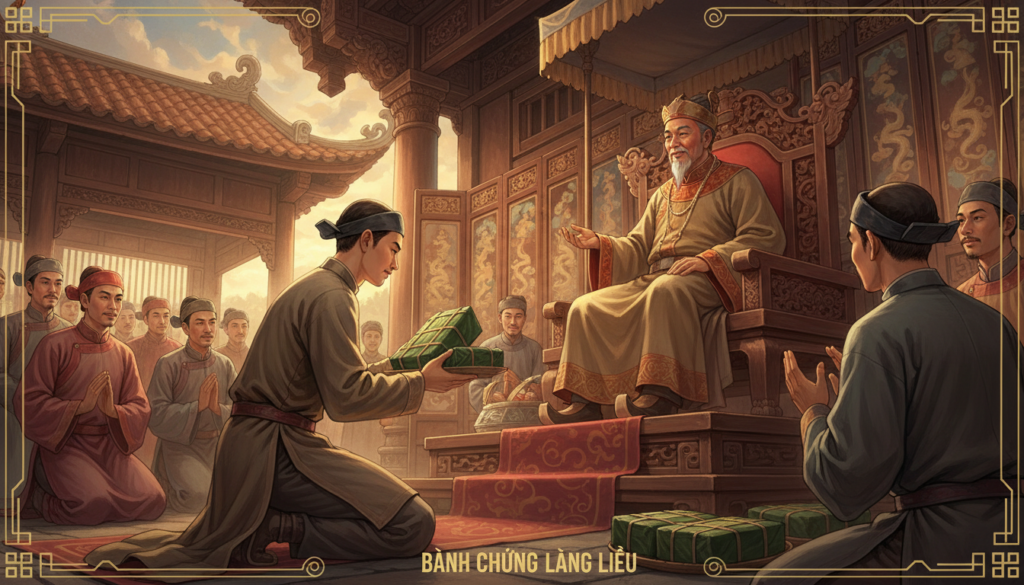
This story is set in ancient Vietnam around 1712–1632 BC.
The story begins with King Hùng Vương of the legendary dynasty “Hùng Vương” holding a culinary contest to select his successor.
Here, twenty-one sons compete to secure delicacies in order to become the successor.
Among them, the eighteenth prince, Lang Liêu, had only common materials.
Lang Liêu was troubled, but in a dream she received a revelation from heaven.
And the result was Bánh chưng and Banh Xeo.
The king was deeply impressed by these two dishes, created as the symbol of the earth, Bánh chưng, and the symbol of the sky, Binh Zai.
As a result, Lang Liêu was chosen as the successor, and_ these dishes came to be passed down as ceremonial foods centered around Tet (Lunar New Year).
This story is a folk legend, but due to its strong cultural and_ symbolic significance, it is widely introduced in Vietnamese cultural history and_ culinary studies.
Incidentally, unlike Bánh chưng, Bánh giầy is a dish symbolizing the heavens and is made using only glutinous rice.
Since no don leaves are used, it features a very simple and mild flavor.
Bánh chưng is considered the embodiment of the ultimate, and it is only when these two come together that it gains meaning.
Fun Facts and Interesting Stories About Bánh chưng
① Cooking that values character over culinary skill
In the origin legend, Prince Lang Liêu was praised for creating meaningful dishes using readily available ingredients rather than luxurious ones.
Therefore, Bánh chưng also symbolizes moral education that emphasizes gratitude and_ sincerity over technology and_ financial resources.
② “All-Night Cooking” as a Family Event
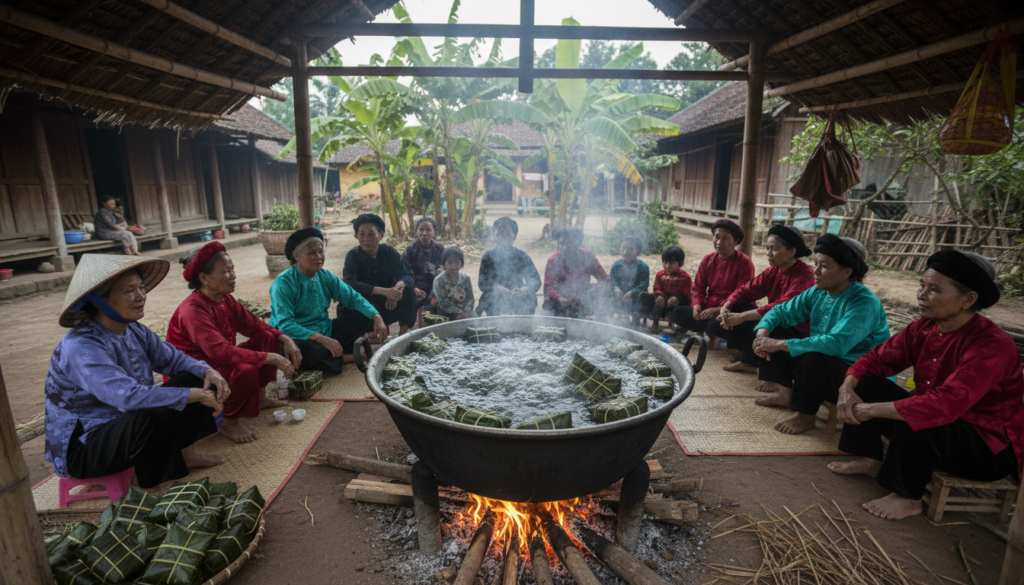
Traditionally, it is not uncommon for the entire family to spend an entire night preparing ingredients, wrapping dumplings, and_ boiling them for 8 to 12 hours or_ more.
Therefore, this time itself has become a place for family gatherings and_ intergenerational bonding.
③ The contents vary slightly depending on the region and household.
The basic ingredients for Bánh chưng are glutinous rice, mung beans, and pork.
However,
- Pork with more fat / less fat
- Whether to puree the mung beans or leave them in chunks
- Add more black pepper
There are as many variations of recipes as there are households, each with its own unique twists on cooking methods and_ ingredients.
④ In fact, it's also excellent as a preserved food.
Bánh chưng is sealed in Dong leaves and heated for an extended period.
Therefore, during winter, reheating it for several days can extend its shelf life even further.
It was a dish that made perfect sense even in an era without refrigerators.
⑤ Southern rival

Bánh chưng is enjoyed throughout Vietnam, but it is especially popular in the north.
Conversely, in the south, the cylindrical Bánh tét is often popular.
Though the forms may differ, the spirit of “eating glutinous rice dishes during Tet” remains the same.
How to Make Bánh chưng
Ingredients (Serves 4)
- Glutinous rice… 1kg
- Mung beans (hulled and split)… 400g
- Pork belly... 400–500g
- Salt... to taste
- Black pepper... to taste
For wrapping
- Dong leaves (or banana leaves if unavailable)… 8–12 leaves
- String (hemp string, fishing line, etc.)
※In Japan
- Frozen banana leaves (Business Supermarket, Asian grocery stores)
- If unavailable, parchment paper + aluminum foil can be used as a substitute (though the aroma will be weaker).
Preparation
① Glutinous rice
- Wash and_ soak overnight (6–8 hours)
- Drain the water and lightly mix in salt.
② Mung beans
- Wash and_ soak for 3 to 4 hours
- Steam or boil until tender
- Add salt and lightly mash (into a paste or leaving some chunks)
③ Pork
- Cut into 5–7 cm squares
- Season with salt and black pepper
(※Many households also add a small amount of fish sauce)
Wrapping Method (Key Points)
- Overlap the leaves in a cross pattern (with the glossy side facing inward).
- Spread the glutinous rice.
- Place mung beans → pork → mung beans in that order.
- Cover with glutinous rice from above.
- Fold into a square.
- Securely tie with string
→ Be careful not to tie too loosely or too tightly, as it will expand when boiled.
※In the traditional method, wooden frames are used to shape it, but hand-shaping is also acceptable.
Heating (The Most Critical Process)
Boil
- Arrange them in a large pot and completely submerge them in water.
- Simmer over low to medium heat for 8 to 12 hours.
- Always add water when it gets low (keep it completely submerged at all times).
Long-term heating causes the glutinous rice to become integrated, allowing the aroma of the leaves to permeate all the way through.
Finishing Touches & How to Eat
- Once cooked, remove and place a weight on top to shape it.
- Let it cool completely before cutting.
Common ways to eat
- Cut and eat as is
- Sprinkle black pepper
- Add a small amount of fish sauce.
- If you have leftovers, slice them into rounds and_ grill them (super classic)
For Japan - Simplified Arrangement
- Pressure cooker usage → Approximately 2 to 3 hours
- Rice cooker (no keep-warm function; cooks 2-3 times)
- Make it in a smaller size (less likely to fail)
※ If you want to get a feel for the atmosphere or experience it for an article, the simplified version is perfectly sufficient.
Summary
How was it?
This time, we introduced Bánh chưng, a traditional dish beloved in Vietnam.
Bánh chưng is a family event in itself, and sometimes the “time spent making it” is valued more than the taste.
This is a very time-consuming dish, but I've also included a simplified version so you can experience its simple, rustic flavor.
Also, to make the new year even better, be sure to give it a try!
This year, TasteTune will continue to deliver the world's cuisines as music to people everywhere.
From familiar dishes to unfamiliar ones.
I hope to create content that whets your appetite!I hope to create content that whets your appetite!
We look forward to your continued support of TasteTune this year!

Comments