

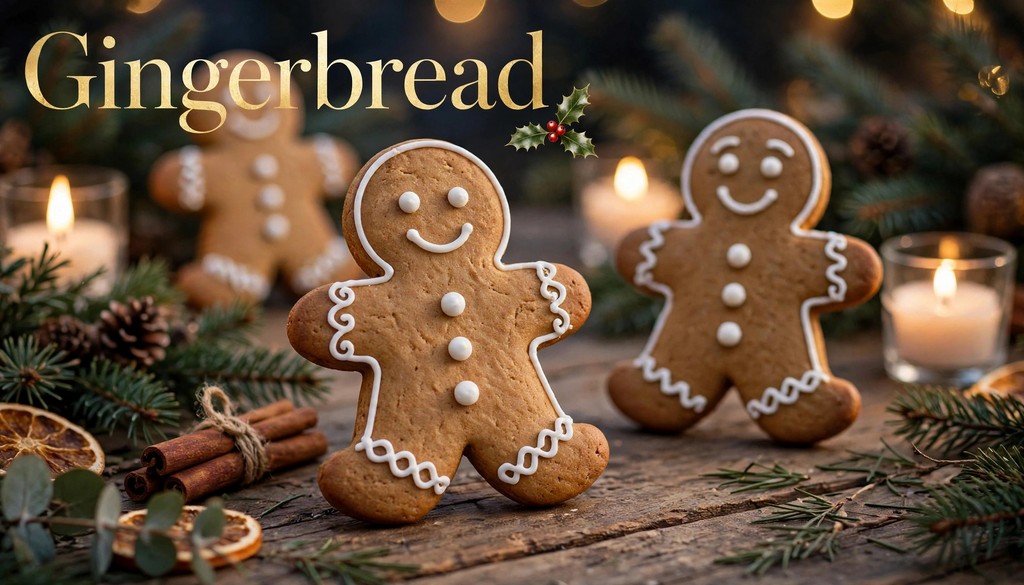
Gingerbread is made at Christmas because it began in Europe as a festive bake of honey and precious spices. The dough keeps well through the cold season, and it can be cut, shaped and decorated — which tied it to the pleasure of preparing for Christmas itself. German Lebkuchen, gingerbread houses, gingerbread men, and the thin crisp cookies of Scandinavia all look different, but they share the same root: the joy of making Christmas with your own hands.
Joy is not something that only arrives from someone else. In the time spent kneading a small piece of dough, shaping it, and decorating it while thinking of someone, we are creating joy with our own hands.
In this article we trace gingerbread’s origins and history — from Lebkuchen and Nuremberg, to the true relationship between the gingerbread house and Hänsel und Gretel, to Sweden’s pepparkakor. At the end you will find a gingerbread man cookie recipe to enjoy at home.
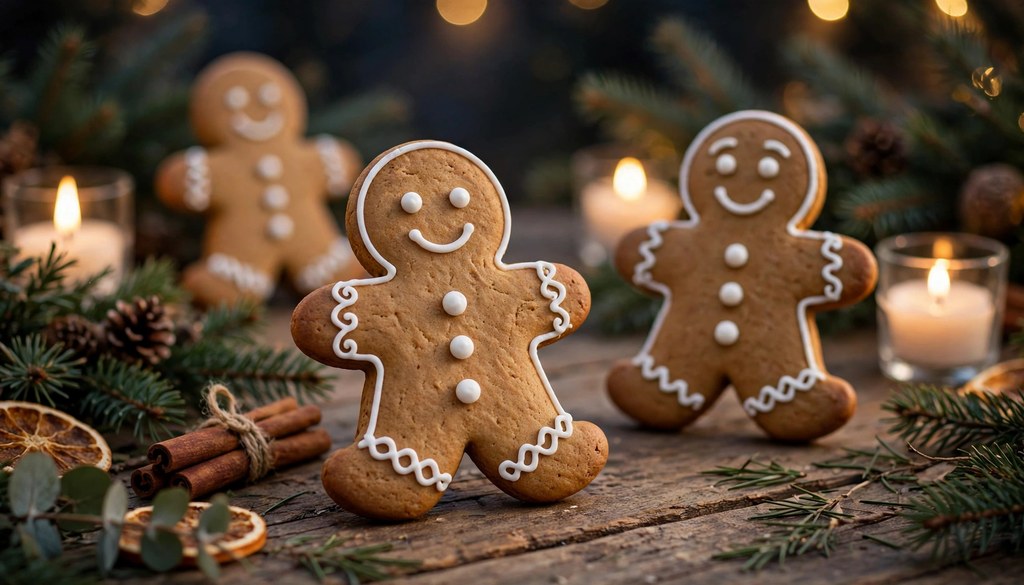
What Is Gingerbread? A Family of Spiced Bakes
Gingerbread is not one single bake. It is a family name for spiced bakes built around ginger, usually with cinnamon and cloves, and sweetened traditionally with honey or molasses. Its shape changes completely from country to country.
In Germany there is Lebkuchen — a honey-and-nut dough baked on a thin wafer. In Britain and America, gingerbread means cut-out cookies or a soft, dark cake. France has pain d’épices, a honey-sweetened spiced loaf. In Scandinavia, the beloved form is a thin, crisp cut-out cookie.
What they share is the perfume of spice, a long keeping life, and the fun of shaping. Two forms in particular — the gingerbread man and the gingerbread house — became Christmas essentials not only because of how they taste, but because of the pleasure of making and decorating them.
How Gingerbread Spread Through Europe: Honey, Spice and Feasts
Ginger was cultivated in China and India for thousands of years, used as medicine as much as flavour, before trade carried it to the Mediterranean world. In medieval Europe, spices were luxury goods and signs of status. Gingerbread’s ancestors were made by kneading honey and breadcrumbs with spices, and were served at the end of feasts as something to settle the stomach. In early England, the word “gingerbread” first meant preserved ginger itself, and some of the oldest recipes contain no ginger at all — saffron, pepper and cinnamon did the work.
Over time, flour doughs replaced breadcrumb pastes, and molasses — a by-product of sugar refining — took over much of honey’s role. Gingerbread moved from courts and monasteries into fairs and family kitchens. Moulded figures of kings, queens and animals were sold at fairs, and eating them was thought to bring luck.
Its bond with Christmas has several roots. Honey and molasses doughs keep well in cold weather. The spices were precious, worthy of a feast. And above all, the unhurried work of cutting out shapes and decorating them fitted the season of preparation perfectly.
Lebkuchen and Nuremberg: The Historical Heart
At the historical heart of gingerbread stands German Lebkuchen, and the city of Nuremberg. Lebkuchen is built on honey, generous spice and nuts, and it grew up in the monasteries of Franconia. The traditional dough was rested and fermented — mixed in November and baked in December, a rhythm bound to the season. Baking it on a thin wafer (an Oblate) is a legacy of monastery baking, where communion wafers were made.
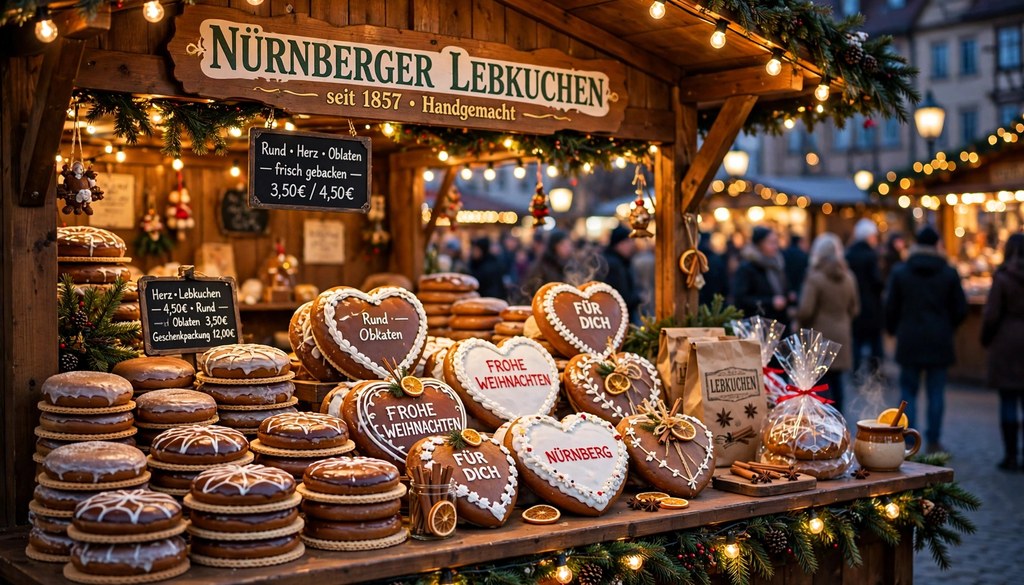
Records of Lebkuchen bakers appear in Ulm in 1296, and in Nuremberg a baker’s name appears in an account book of 1395. Nuremberg’s rise was no accident: a free imperial city at the crossing of trade routes, it drew pepper, ginger, cinnamon and almonds from afar, while honey came from the forests around it. In 1643 the Lebkuchen bakers were formally recognised as a sworn craft, with fourteen founding members; their recipes were guarded secrets, and a baker’s freedom to leave the city was restricted.
In 1487, Emperor Friedrich III, holding an imperial diet in Nuremberg, is said to have given the city’s children Lebkuchen stamped with his own portrait. The “edible portrait” is one of the oldest scenes in gingerbread’s story.
The finest grade is Elisenlebkuchen, documented under that name since 1808. It uses almost no flour: today’s specification requires at least 25% nuts (almonds, hazelnuts, walnuts) and no more than 10% wheat flour, giving a moist, dense richness. A story says a baker created the flourless recipe for his sick daughter Elise — but that belongs to legend, and the name’s true origin is unknown.
Since 1996, the name “Nürnberger Lebkuchen” has been protected as an EU geographical indication (PGI): only Lebkuchen made within the city may carry it. It is, quite literally, the taste of the city’s pride.
The Gingerbread House and Hänsel und Gretel: The True Story
It is often said that the gingerbread house comes from the witch’s house in the Grimms’ Hänsel und Gretel. Here, honesty matters. In the Grimms’ original text — in every edition from 1812 to 1857 — the witch’s house is built of bread, roofed with cake, with windows of clear sugar. The Grimms never call it gingerbread.
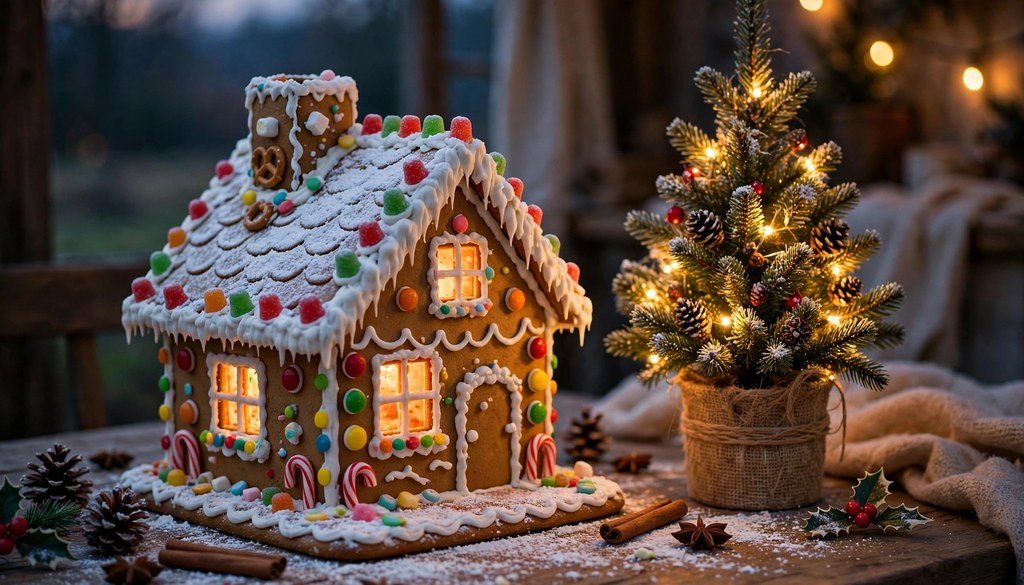
Houses made of gingerbread appear in print at the end of the 18th century — a verse of 1795 mentions one — and by 1864, little gingerbread houses at Christmas markets were familiar enough to be mentioned in a German magazine. What truly fixed the image in people’s hearts was not the tale itself but Humperdinck’s opera Hänsel und Gretel, premiered in 1893, in which the witch lives in a gingerbread house — the “Knusperhäuschen,” the crunchy little house.
So the gingerbread house was not simply “born from a fairy tale.” The idea of building with cake stirred in late-18th-century Germany; stories and the stage carried it far; and Christmas markets and family kitchens gave it a home. That layering is its real origin.
The custom crossed the Atlantic with German immigrants and became an American tradition in its own right. The National Gingerbread House Competition, begun at a hotel in Asheville, North Carolina in 1992, now draws around 200 entries — a story and a bake from the old world, grown into a new way of making Christmas by hand.
The Gingerbread Man: A Cookie in the Shape of a Person
Figure-shaped bakes are old: from the medieval period, dough was pressed into carved wooden moulds to make kings, queens and animals, sold at fairs and given as gifts.
The most famous story attached to the gingerbread man concerns Queen Elizabeth I of England in the 16th century. Tradition credits her with having gingerbread figures made in the likeness of visiting dignitaries, presented to the guests themselves. No court record confirms it, and it should be told as tradition rather than fact — but it shows how naturally the figure-cookie served as a gift “in someone’s image.” Together with Friedrich III’s portrait Lebkuchen of 1487, it reveals gingerbread as a bake made in the shape of a person, for a person.
In 1875, an American magazine, St. Nicholas Magazine, published “The Gingerbread Boy” — the tale of a freshly baked cookie who runs away, crying that no one can catch him. The story fixed the gingerbread man in children’s culture, where he remains today: a cookie carrying both the fun of making and the fun of a story.
Pepparkakor and Gingerbread Around the World
Scandinavia’s gingerbread takes a different shape. Sweden’s pepparkakor are thin, crisp cut-out cookies — hearts, stars, and figures — and large iced hearts, written with names, are hung in windows and on trees. The name means “pepper cookies”: in the North, “pepper” once stood for spice in general. Today the warmth comes from ginger, cinnamon, cloves and cardamom.
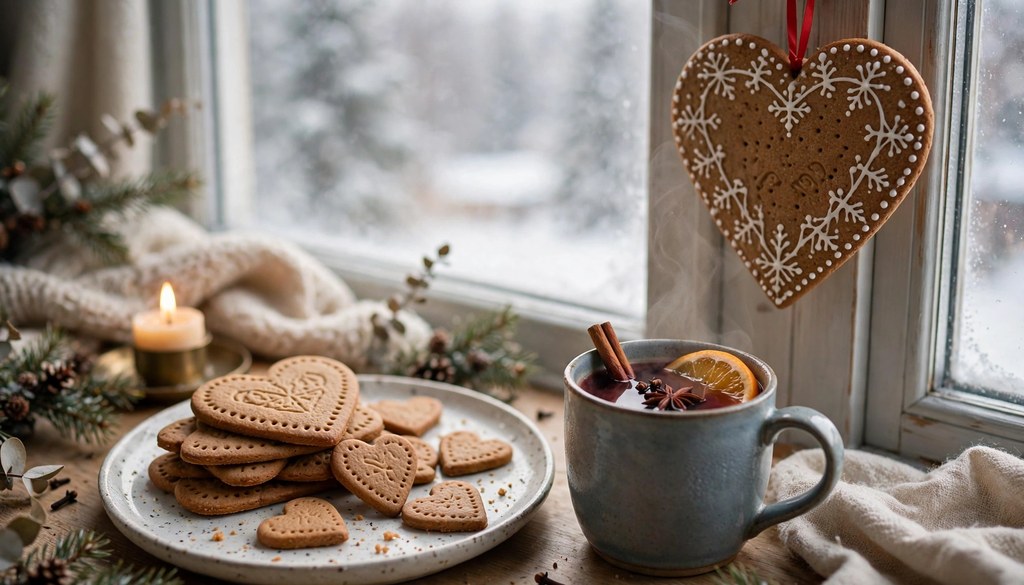
Swedes say that eating pepparkakor makes you snäll — kind. The standing invitation is “Ät en pepparkaka, så blir du snäll!” — “Eat a pepparkaka, and you’ll be nice!” There is also a small custom: press a pepparkaka gently in your palm, and if it breaks into exactly three pieces, you may make a wish. The heart shape and the kind heart belong together in this tradition.
In Bergen, Norway, the people of the city have built an entire miniature town of gingerbread every year since 1991 — Pepperkakebyen, the Gingerbread City, with some 2,000 buildings and more than 100,000 visitors. A family’s kitchen custom, grown to the scale of a city. (Denmark’s pebernødder belong to the same spice family, but they are small round balls rather than cut-outs — a different cookie.)
In Japan, gingerbread has arrived mainly as a Scandinavian Christmas: IKEA’s VINTERSAGA collection, with its build-your-own gingerbread house kits and ginger cookies, is the best-known example. A kit that begins at the assembling and decorating — rather than the baking — has found its place as a hands-on Christmas activity for parents and children.
Gingerbread Man Cookies to Make at Home
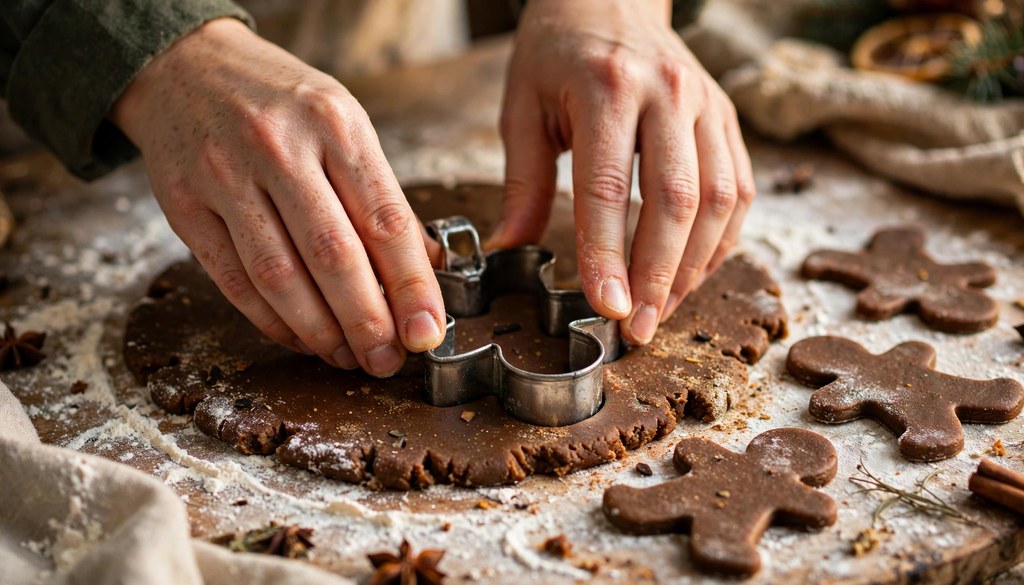
This is a home-friendly cut-out cookie, made with a gingerbread man cutter. The secret is to chill the dough well: cold dough holds the cutter’s outline, so the little men bake up crisp-edged and clear. The same dough works for stars and hearts.
Chilling is the secret: rest the dough at least 2 hours, ideally overnight, and chill the cut-out shapes for 10 minutes before baking for the cleanest outlines.
Ingredients (about 20 gingerbread men)
All-purpose flour: 350 g (about 3 cups), plus extra for rolling
Baking soda: 1 tsp
Ground ginger: 1 Tbsp
Ground cinnamon: 2 tsp
Ground cloves: 1/4 tsp
Salt: a pinch
Unsalted butter: 100 g (7 Tbsp), at room temperature
Brown sugar: 100 g (1/2 cup, packed)
Molasses: 150 g (about 1/2 cup; not blackstrap. Honey, 120 g, can be substituted — the colour and flavour will be gentler)
Egg: 1, at room temperature
For the royal icing
Powdered sugar: 200 g (about 1 2/3 cups)
Egg white: 1 (or meringue powder prepared as directed)
Lemon juice: 1/2 tsp
Method
- Cream the butter and brown sugar until pale and fluffy. Beat in the egg, then the molasses.
- Whisk the flour, baking soda, spices and salt together, add to the bowl, and mix just until no dry flour remains.
- Wrap the dough and chill for at least 2 hours, ideally overnight. This chilling is the single most important step for clean shapes.
- On a floured surface, roll the dough to 5–6 mm (about 1/4 inch) thick and cut out the shapes. Arrange on a parchment-lined baking sheet and chill again for 10 minutes if you can — the outlines will hold even better.
- Bake in a preheated 350°F (175°C) oven for 10–12 minutes, until the edges are set and the surface looks dry. Cool completely on a wire rack.
- For the icing, beat the powdered sugar with the egg white and lemon juice until it holds soft peaks. Pipe eyes, smiles and buttons, and let the icing dry thoroughly.
- To give the cookies as gifts, wait until the icing is completely dry, then slip them into small bags and tie with ribbon.
Storage
Undecorated cookies keep for 2–3 weeks in an airtight container at room temperature — the spice flavour deepens, and many bakers find day three the most fragrant. Iced cookies, once fully dry, are best within 1–2 weeks.
Frequently Asked Questions
Q. What exactly is gingerbread?
A. A family of spiced bakes built around ginger, sweetened traditionally with honey or molasses. It includes German Lebkuchen, British and American cookies and cakes, French pain d’épices, and Scandinavian pepparkakor — the name covers many shapes.
Q. Why is gingerbread made at Christmas?
A. Because honey and molasses doughs keep well, the spices were precious enough for a feast, and the slow pleasures of cutting out and decorating fitted the season of preparation. Across Europe it settled into place as a winter bake.
Q. What is the difference between gingerbread and Lebkuchen?
A. Lebkuchen is the German branch of the family: a honey-and-nut bake, traditionally made on a thin wafer (Oblate). Its texture and form differ from the cut-out cookies of Britain and America.
Q. Did the gingerbread house really come from Hänsel und Gretel?
A. Not directly. In the Grimms’ text the witch’s house is bread, cake and sugar — not gingerbread. Gingerbread houses appear in German print at the end of the 18th century, and the image became famous through Humperdinck’s 1893 opera Hänsel und Gretel, where the witch’s house is made of gingerbread.
Q. Where did the gingerbread man come from?
A. Figure-shaped bakes were made with carved moulds from the medieval period. The story that Elizabeth I had figures made in the likeness of her guests is famous but belongs to tradition rather than record. The runaway-cookie tale, “The Gingerbread Boy,” was published in an American magazine in 1875 and spread from there.
Q. Which spices are used in gingerbread?
A. Ginger and cinnamon are the core. Cloves, nutmeg, cardamom and allspice join them, varying by region and family. Scandinavian pepparkakor often feature cardamom.
Q. Why did my cookies spread, or turn out too hard?
A. Spreading is usually caused by baking warm dough — chill before and after cutting. Cookies that are too hard are often overbaked or rolled too thick; aim for 5–6 mm and take them out when the edges are just set.
Q. How long do the cookies keep? Can I give them as gifts?
A. It depends on the recipe and storage, but for this recipe: 2–3 weeks airtight at room temperature undecorated, and 1–2 weeks once iced and fully dried. If you are giving them away, a note about allergens such as egg and wheat is a kind touch.
Q. How is gingerbread different from stollen, panettone and bûche de Noël?
A. All four are European Christmas bakes, but stollen is a yeasted fruit bread, panettone is Italy’s tall yeasted panettone, and bûche de Noël is a French rolled cake. Gingerbread’s centre of gravity is different: it is a spiced bake whose joy lies in making, decorating and giving.
Closing — Joy, Made by Hand
A slightly uneven star, a cookie with a crooked smile — each is a one-of-a-kind gift, made while thinking of someone. The warmth of Christmas lives not in a perfect finish, but in that small, devoted effort.
If stollen taught us the richness of waiting, panettone the richness of what is handed down, and bûche de Noël the richness of gathering around a light, then gingerbread is the bake of making something with your own hands. This Christmas, why not let flour-dusted hands create one small joy of your own?
Japanese version: ジンジャーブレッドはなぜクリスマスに作る?由来と歴史、お菓子の家の伝統と作り方
▶ See the Christmas roundup: Christmas Flavours of the World: From Stollen to Eggnog — Six Stories of the Season’s Table

Comments