

Have you heard of Kisra?
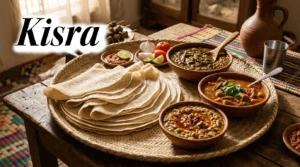
Kisra is a traditional, thin, fermented bread that has been enjoyed in Sudan for centuries!
It is a dish typically served with stews and braised dishes, and is an indispensable part of the Sudanese diet.
In this article, we’ll explore the charm, style, and history of Kisra.
Please watch until the very end!
For instructions on how to make it, please visit the URL below.
~Notice~
TasteTune is now accepting requests for original music inspired by food and dining!
Perfect for personal use or in-store background music!
We offer a wide range of services, from existing dishes to original creations, so feel free to place your order anytime!
Click here for our guide page!
What kind of dish is Kisra?
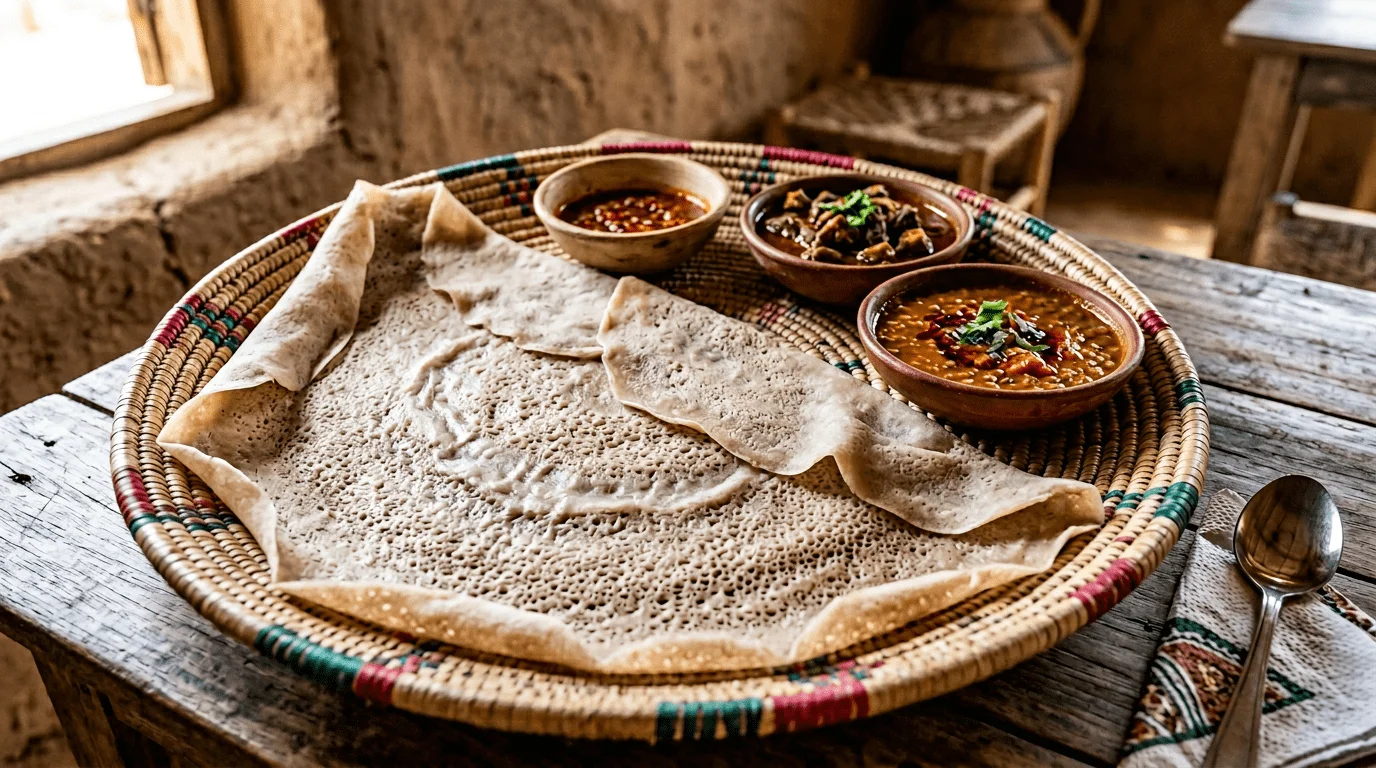
Kisra (kisra) is a bread dish that is a traditional staple food in Sudan.
It has a very thin appearance and is made by fermenting and baking moro-kosi (sorghum) flour.
The name “Kisra” is believed to be a term that has been used in Sudan and the surrounding regions since ancient times.
Although no clear etymology or established theory has been confirmed, it is a traditional name widely used in Central Africa.
Similar-looking dishes include Ethiopian injera, but Kisra is characterized by its thinner, more supple texture.
The Charm of Kisra and How to Enjoy It
Kisra is characterized by its fermented tartness and the nutty aroma derived from sorghum.
The acidity isn't strong at all; it's mild enough to be considered gentle.
Corn has a distinctive nutty aroma, and_ you can taste its simple, grain-like flavor.
The texture is soft and supple, yet it still has a satisfying chew.
Kisra is rarely eaten on its own.
It is served with a Sudanese stew called “Malah (ملاح).”
Kisra itself has a mild flavor with a hint of tartness and a toasty aroma.
For this reason, it tends to really shine as a dish when eaten alongside mullah and other ingredients.
Since it absorbs sauces and soups well, it also serves as a base for enjoying rich sauces.
Kisra's Companion
Here are some muraaf (stews) and sauces that go well with Kisra.
Eating these with a Kisra spoon is a convenient way to experience the local food culture.
Mulah Waika
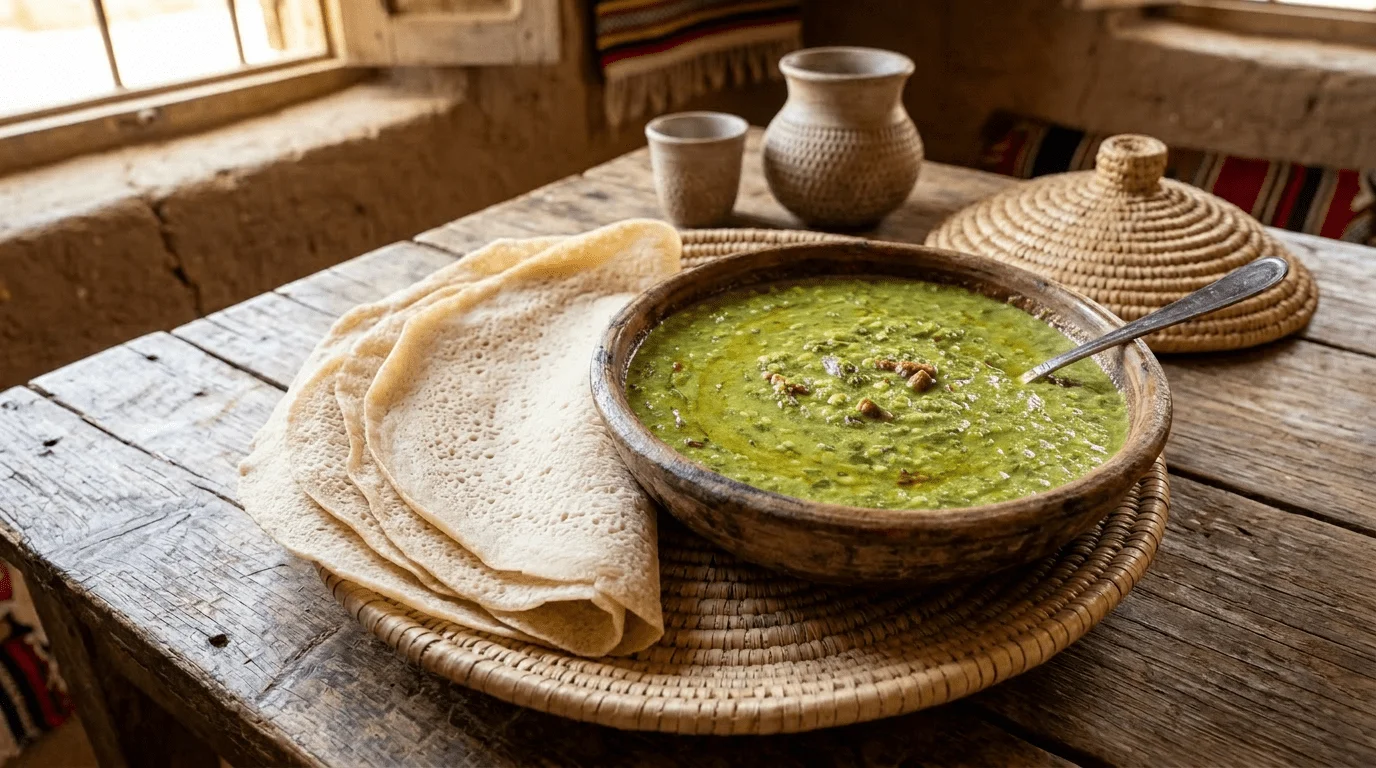
It refers to a thick sauce made by simmering dried okra powder.
It is characterized by the fresh aroma and tartness typical of okra.
It is considered the most classic pairing with Kisra.
Mulah Tagalia
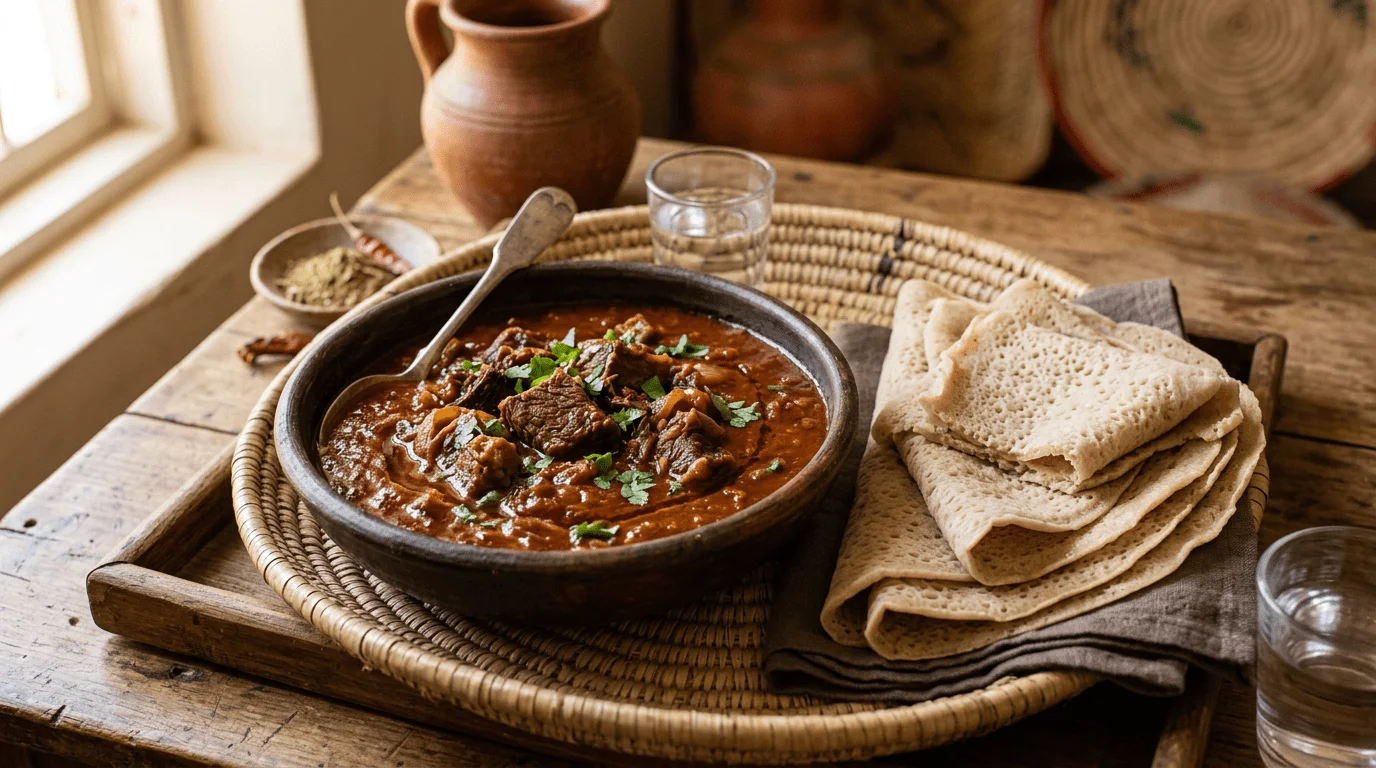
It refers to a rich tomato stew made with onions, spices, and meat.
It has a tomato base and a rich meaty flavor, but the spices are subtle.
It works perfectly when soaked into Kisra.
Rob
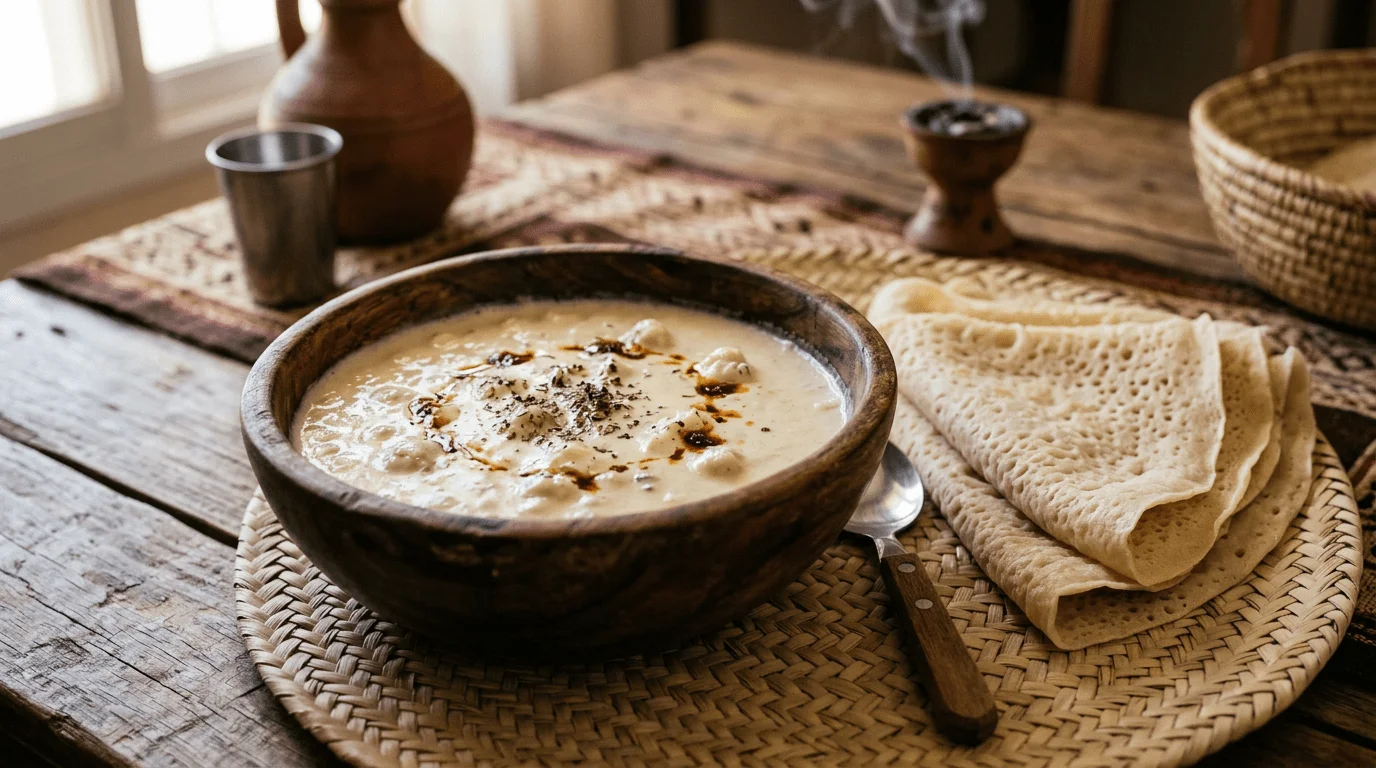
This is a tangy sauce made from fermented milk.
It has a flavor similar to yogurt and pairs well with the aroma of Kisra.
You can enjoy the refreshing flavor unique to this hot region.
Bamia
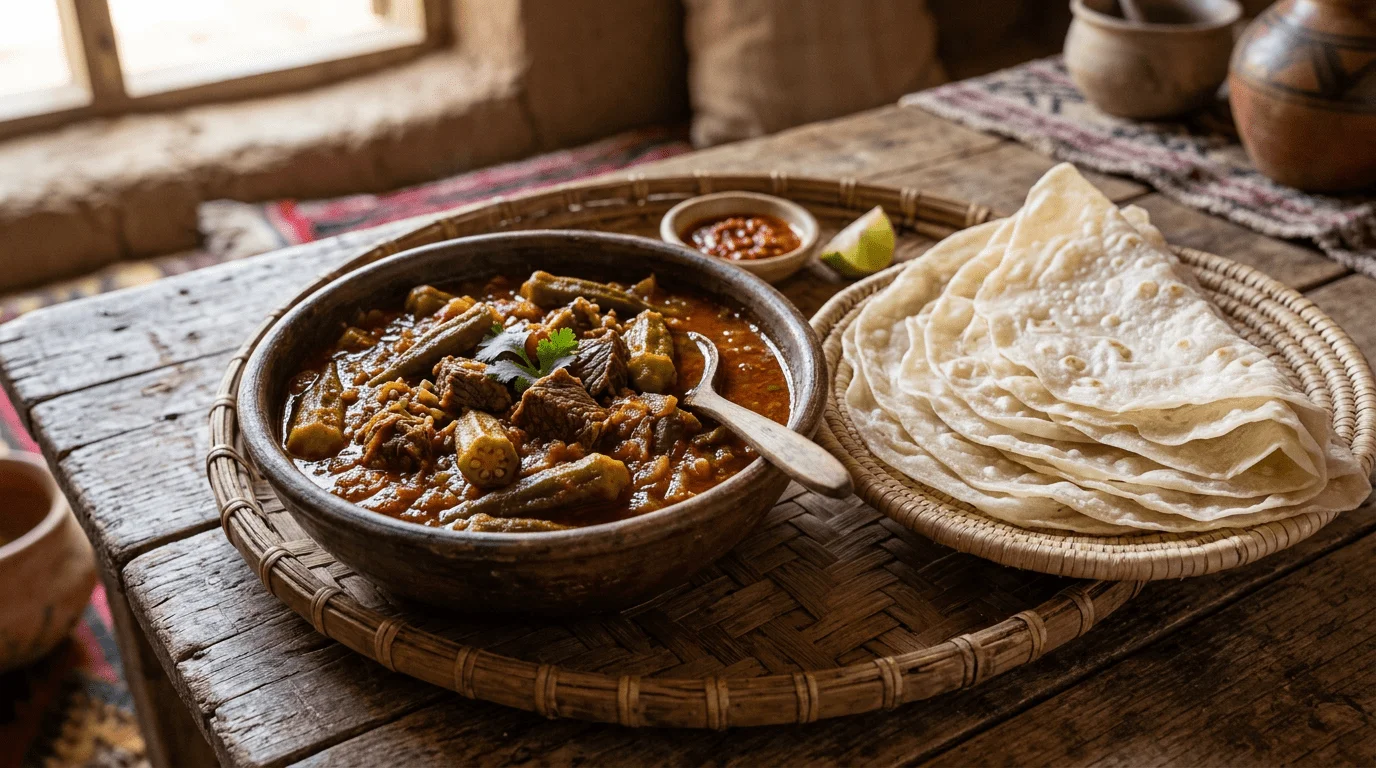
This is a stew made with raw okra and meat, commonly found in the Middle East and North Africa.
The okra's thick, creamy texture pairs perfectly with Kisra, making for a great combination.
The History of Kisra
It could be said that the history of Kisra is not only the history of Kisra itself, but also the very history of sorghum cultivation in Sudan and the Nile River basin.
Kisra, born from the wisdom of fermenting sorghum—a grain that thrives even in arid regions—<SPAN class="swl-marker mark_orange>has sustained Sudan's diet for thousands of years.
Ancient
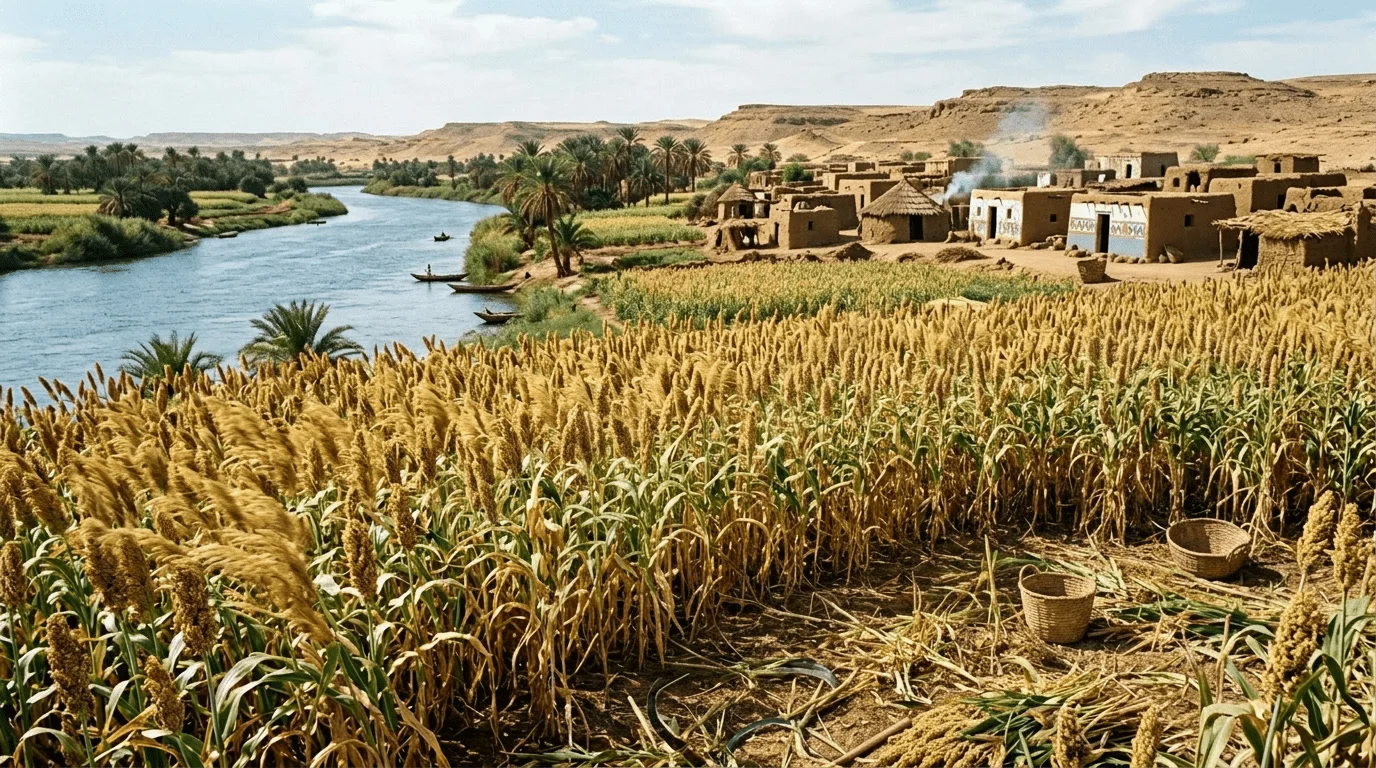
The exact origins of Kisra remain unclear.
However, archaeological research suggests that millet was a very important crop in what is now Sudan.
In particular, in the Nile River basin and Nubia (the region stretching from southern Egypt to Sudan), sorghum—which can grow even in arid regions—served as a staple food for the people.
A manufacturing method similar to that of Kisra has been identified from the Meroitic period (6th century BCE–4th century CE).
At the Hamadab archaeological site on the east bank of the Nile in Sudan, traces of sorghum, grain-grinding equipment, and flat baking stones believed to have been used for baking Kisra have been discovered.
For this reason, researchers generally believe that it is highly likely that fermented cornbread similar to Kisra already existed during this period.
The Middle Ages
By the Middle Ages, maize-based culinary traditions had further developed in the Nubian kingdoms and the Dongola region, which correspond to modern-day northern Sudan.
Archaeological excavations have uncovered a set of items including “doka” (charred wooden boards), grain grinding sites, and hearths.
This suggests that Kisra construction was a routine practice.
Furthermore, from the 12th century onward, Sudan became a stopover on the pilgrimage route connecting West Africa and the Arabian Peninsula.
As a result, diverse culinary traditions have intermingled, but even so, Kisra has continued to be established as a staple food unique to the region.
Early Modern Period
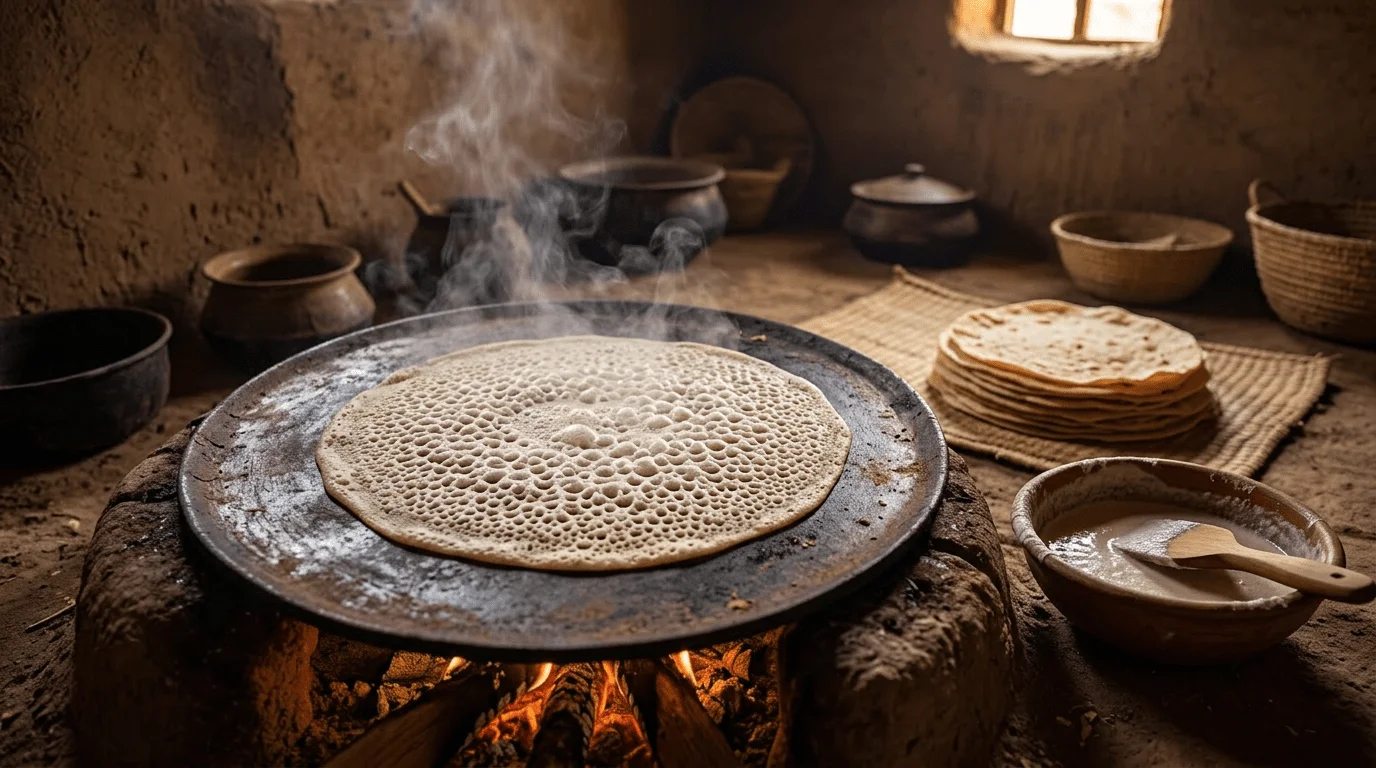
During the Funji Kingdom period (approximately 16th–19th centuries), it is believed that baked clay tiles for Kisra were widely used.
Furthermore, with the development of fermented dough (ajin), the practice of renewing the starter, and techniques for baking thin crusts, it evolved into a form of Kisra that closely resembles the modern version.
In particular, in the Kordofan and Darfur regions, a culture of maintaining sourdough starters in each household has developed and is passed down from generation to generation.
Kordofan … a vast region located in central Sudan
Darfur … a region in western Sudan
By the 20th century, Kisra had become established as Sudan's staple food.
It was estimated that, in the 1990s, between 2 and 3 tons of Sudan’s annual maize consumption was used for making Kisra.
This shows that Kisra was not just a regional dish in certain areas, but was eaten nationwide.
In addition, the combination of Kisra with murah and asida (maize porridge) has come to symbolize Sudanese culinary culture.
Contemporary
Even today, Kisra remains <SPAN class="swl-marker mark_orange>a staple of the Sudanese diet.
On the other hand, in recent years, due to growing interest in gluten-free foods, fermented foods, and ancient grains, they have been gaining attention overseas as well.
In addition, the Sudanese immigrant community has,
- United Kingdom
- Australia
- Kenya
- Uganda
It is also eaten in places like this, and there are families that have been passing down their sourdough starter for decades.
In 2025, it was selected for CNN’s “World’s 50 Best Breads,” which boosted its international profile.
Summary
How was it?
In this article, we introduced Kisra, a dish from Sudanese cuisine!
Kisra originated from the ancient wisdom of Central Africa and has sustained the food supply of the Nile River basin for thousands of years.
And now, that wisdom and charm are spreading throughout the world.
I hope I’ve been able to give you even a small glimpse into Sudan’s culinary traditions.
Thank you for watching until the very end!
Comments