

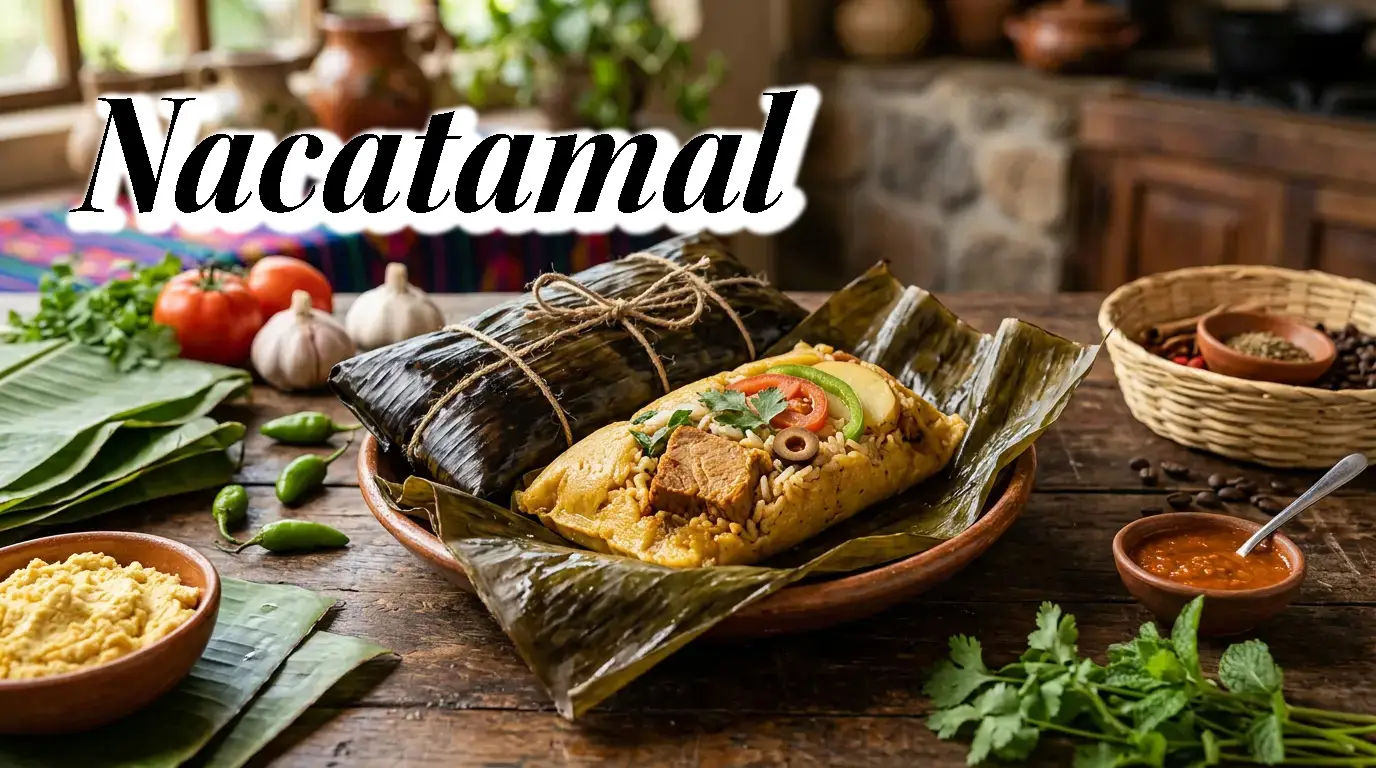
Have you ever heard of a dish called Nacatamal?
Nacatal is a traditional Nicaraguan dish made by wrapping fillings in corn dough and steaming them!
You can enjoy the various flavors and aromas of the ingredients, and the combinations vary by region and household.
In this article, we’ll take a look at what Nicaraguan Nacatamal is all about.
Please watch until the very end!
Also, if you'd like to know how to make Nacatamal, please check out the article below.
~Notice~
Would you like to experience the charm of food through music?
At TasteTune, we create original music inspired by the taste, aroma, atmosphere, and cultural background of each dish.
Whether it is a memorable dish, a cuisine from a country you love, or a special meal you would like to prepare for someone important, we invite you to take a look at our music creation guide.
What kind of dish is Nacatamal?
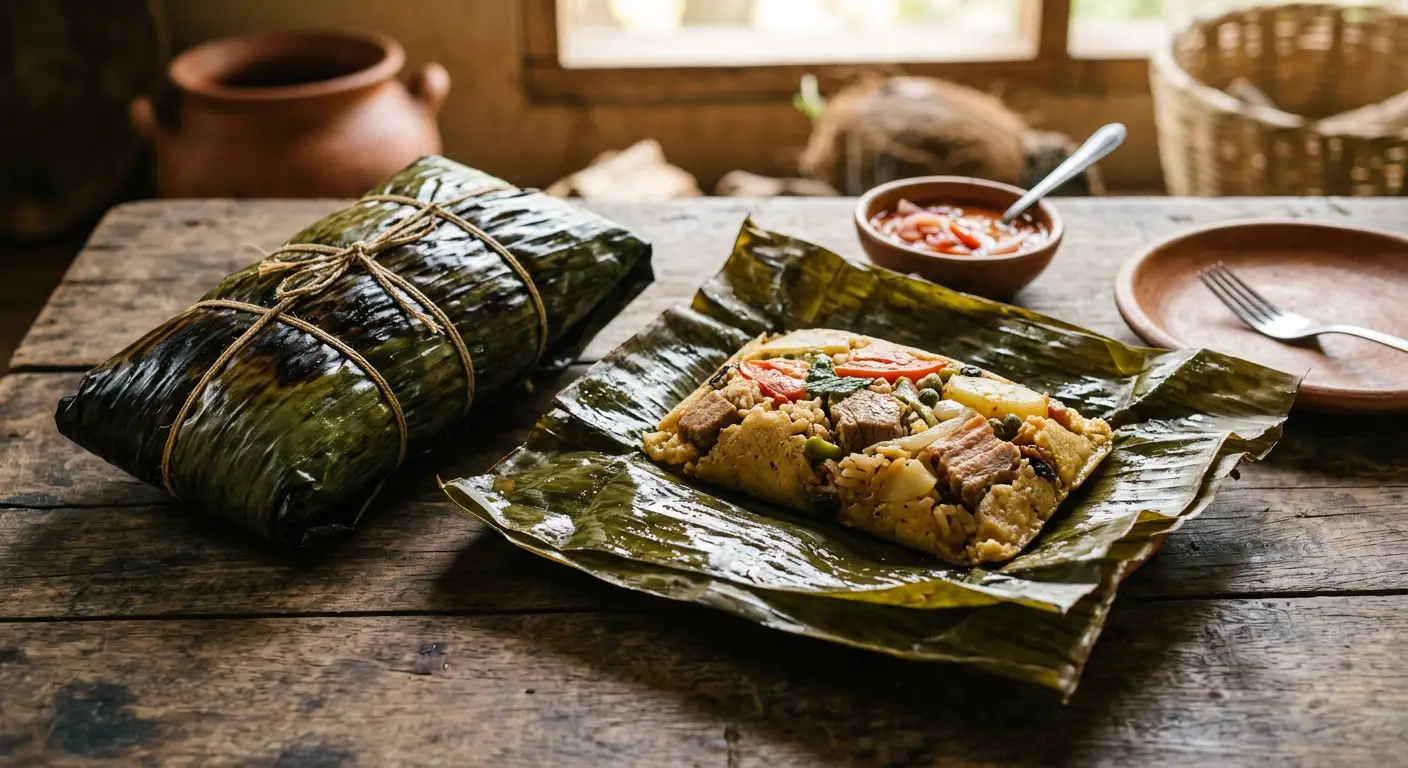
Nacatamal is a Nicaraguan national dish made with corn dough.
To prepare this dish, we use a dough called Masa, which is made from lime-treated corn.
Various fillings are wrapped in this masa, then wrapped in banana leaves and steamed for 4 to 5 hours.
The process of treating corn with lime is called nixtamalization.
This is a traditional technique in which dried corn is boiled in alkaline lime water to soften the husks and increase its nutritional value.
The Charm of Nacatamal
The greatest appeal of Nacatamal is that it’s so satisfying that it can serve as both a staple food and a side dish all on its own.
The reason lies in its portion size and the fact that it combines a staple food, a main dish, and a side dish all in one.
The masa used to wrap the fillings serves a similar purpose to rice or bread in other cuisines.
It has a chewy texture and is quite thick, so it really fills you up.
Inside that masa are various steamed fillings.
It contains a variety of ingredients, such as rice, potatoes, onions, tomatoes, and bell peppers.
With every bite, you’ll experience different flavors and textures, but the long steaming process creates a harmonious, rich umami flavor.
We also use pork and chicken, but we often use them in whole pieces.
It’s satisfying to eat, full of flavor, and a great source of protein.
For these reasons, Nacatamal is beloved as a hearty and_ satisfying dish.
Nacatamal and Tamal
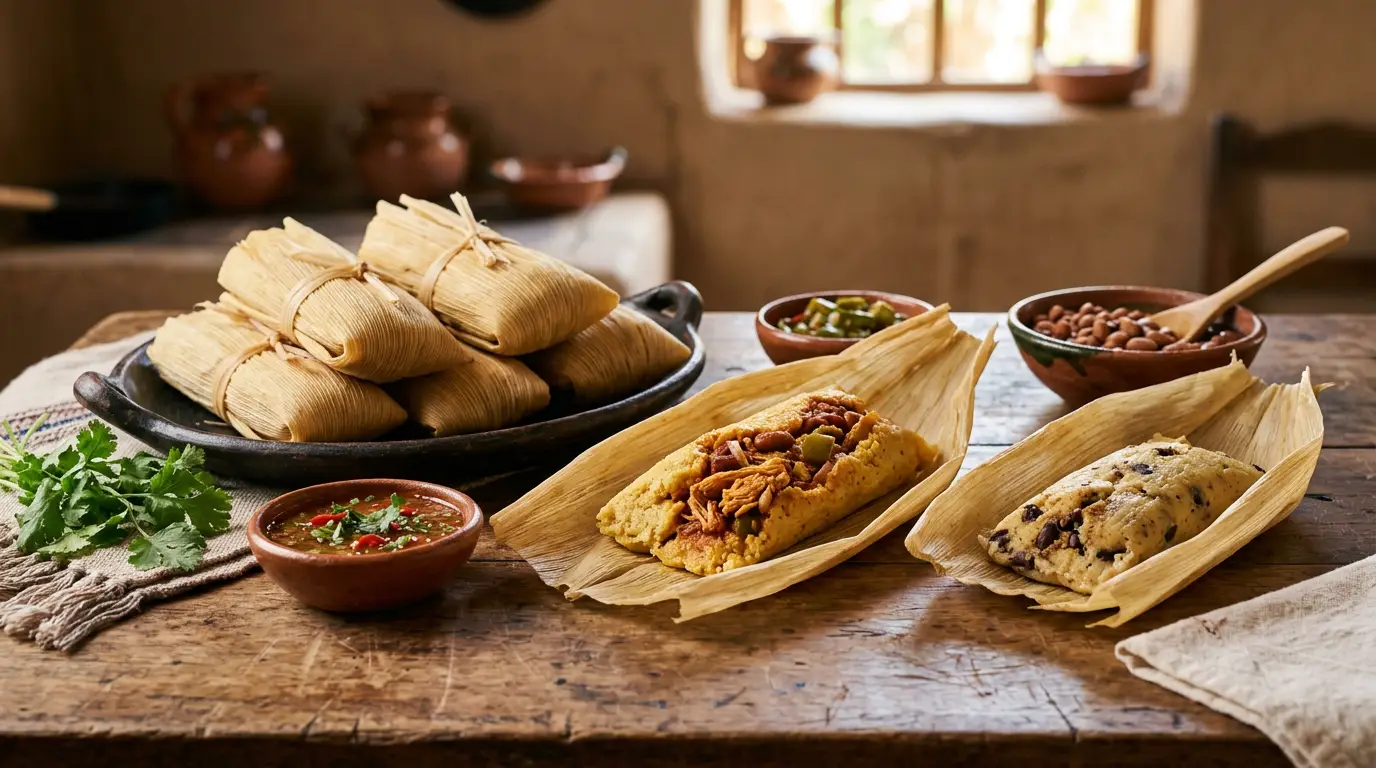
There is one dish you simply can’t miss if you want to get to know Nacatamal.
That is Tamal.
To describe the relationship between nacatamal and tamal in a single sentence: “Nacatamal is a dish that originated in ancient Mesoamerica and was uniquely developed in Nicaragua .”
Although both dishes involve wrapping ingredients and steaming them, they differ in terms of the ingredients used and their size.
Tamal is made with meat, beans, cheese, and chili peppers, and is smaller than Nacatamal.
From everyday meals to street food, it is eaten as a relatively light meal.
The History of Nacatamal
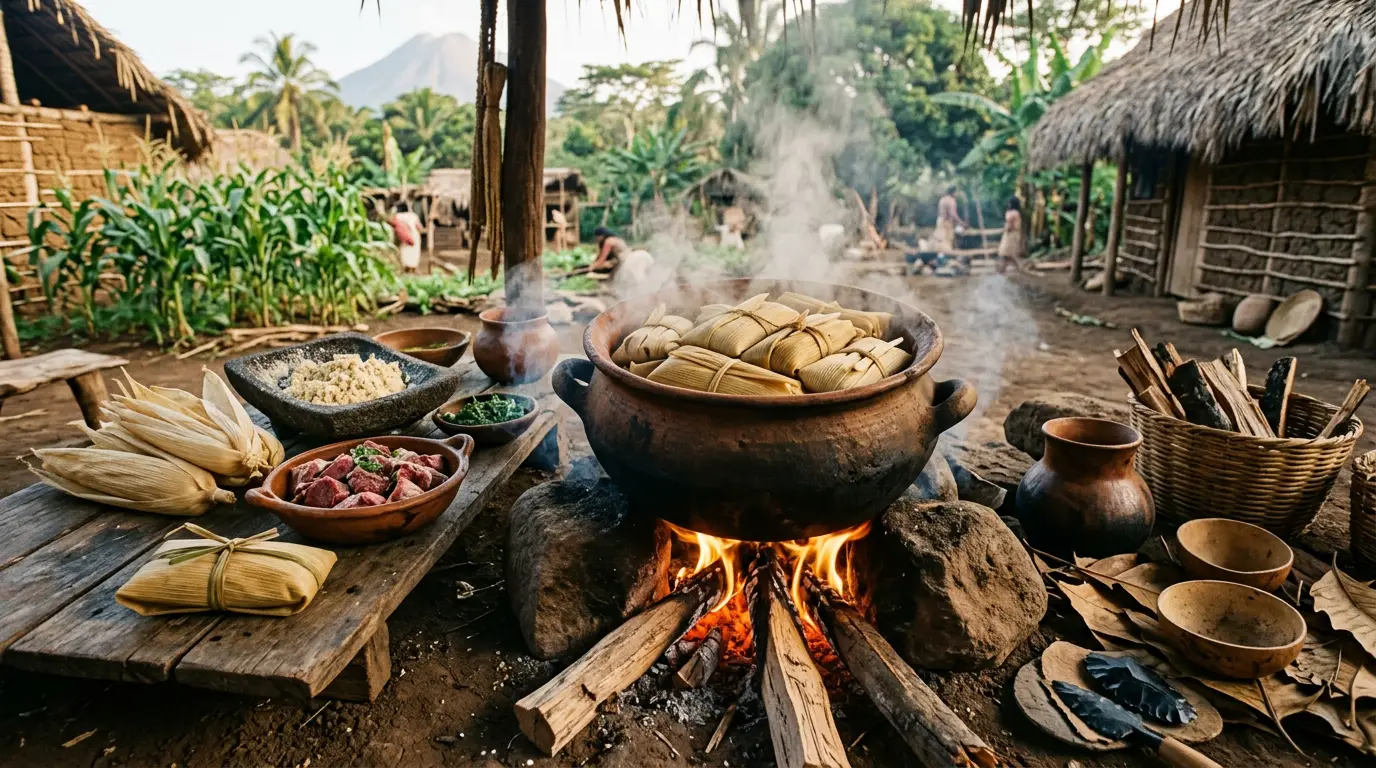
The dish that gave rise to Nacatamal is a very ancient dish that has been eaten since before the Common Era.
That’s Tamal, whom I introduced earlier.
Tamal began to be cooked about 9,000 years ago, when people started cultivating corn.
However, corn in its natural state is hard, and the nutrients cannot be fully absorbed.
That’s how “nixtamalization (lime treatment)”—a process involving boiling in alkaline water—was developed.
As a result, people began using the softened corn as a dough (masa) to prepare it in various forms.
In Mesoamerica at that time, corn was regarded as a sacred food.
For this reason, “tamal”—a dish made by wrapping ingredients in that dough and steaming them—was eaten during exams and religious ceremonies.
It is believed that Tamal, the prototype of Nacatamal, was created during this period.
However, there were some differences from today: they used meat and other ingredients, wrapped them in corn husks, and steamed them.
Nowadays, we steam them in banana leaves, but back then, there were no bananas in Central and South America, which explains the difference.
In addition, at that time, meat—including venison and turkey—was obtained through hunting.
Dishes made with locally sourced ingredients and corn are the origin of Nacatamal.
The Arrival of the Spaniards
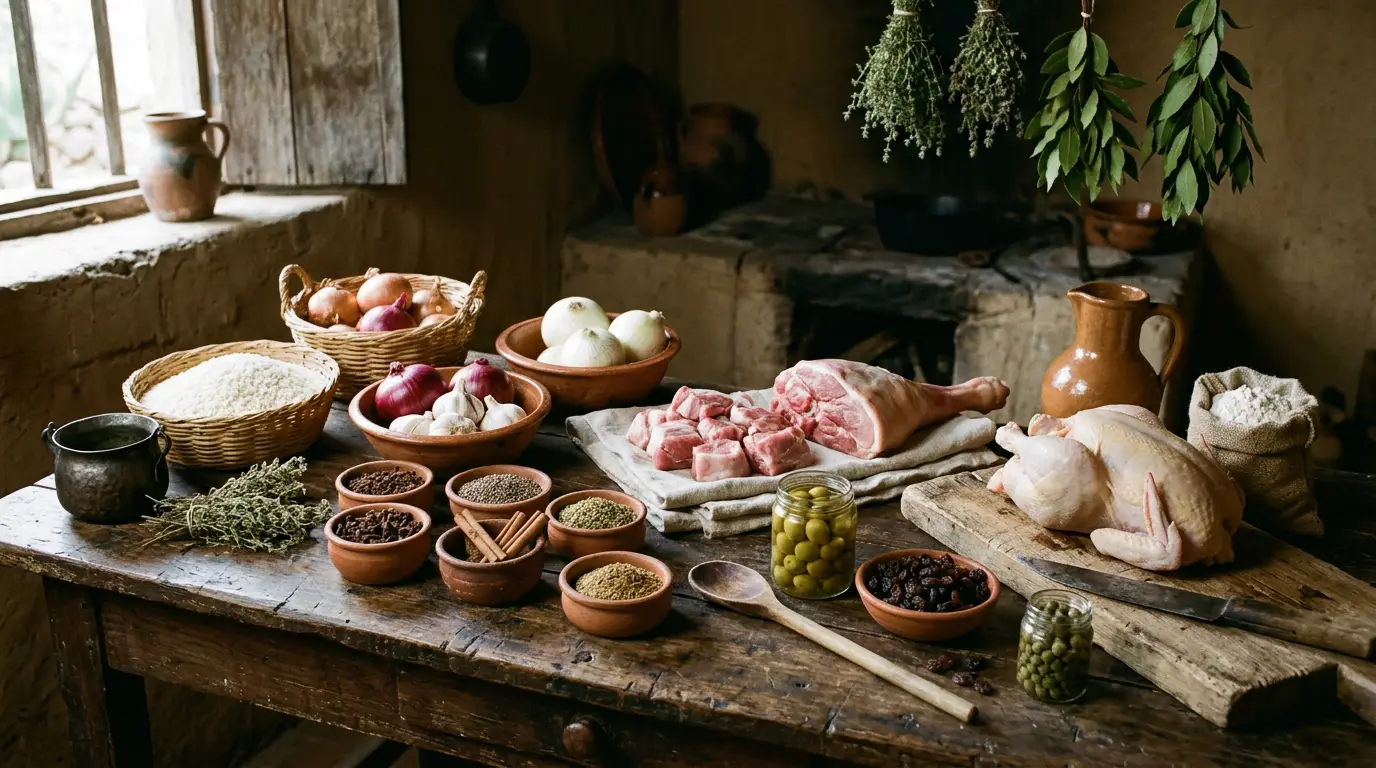
In the 16th century, Spain, Portugal, and other nations conquered and colonized the region.
Nacatamal changes significantly depending on the ingredients brought on board.
The ingredients brought in on this occasion are as follows.
- Pork
- Chicken
- Rice
- Onion
- Olive
- Capers
- Raisins
- Various Spices
With the addition of these ingredients, Nacatamal has evolved into a dish featuring even more luxurious ingredients.
In addition, the wrapping material changes from corn husks to banana leaves.
Banana leaves are large and sturdy, and they add a refreshing aroma to dishes.
For this reason, it has been passed down through the generations and has become a staple even today.
In this way, the blending of indigenous Tamar ingredients with Spanish ingredients resulted in a form that is quite similar to what we have today.
The Establishment of Nacatamal
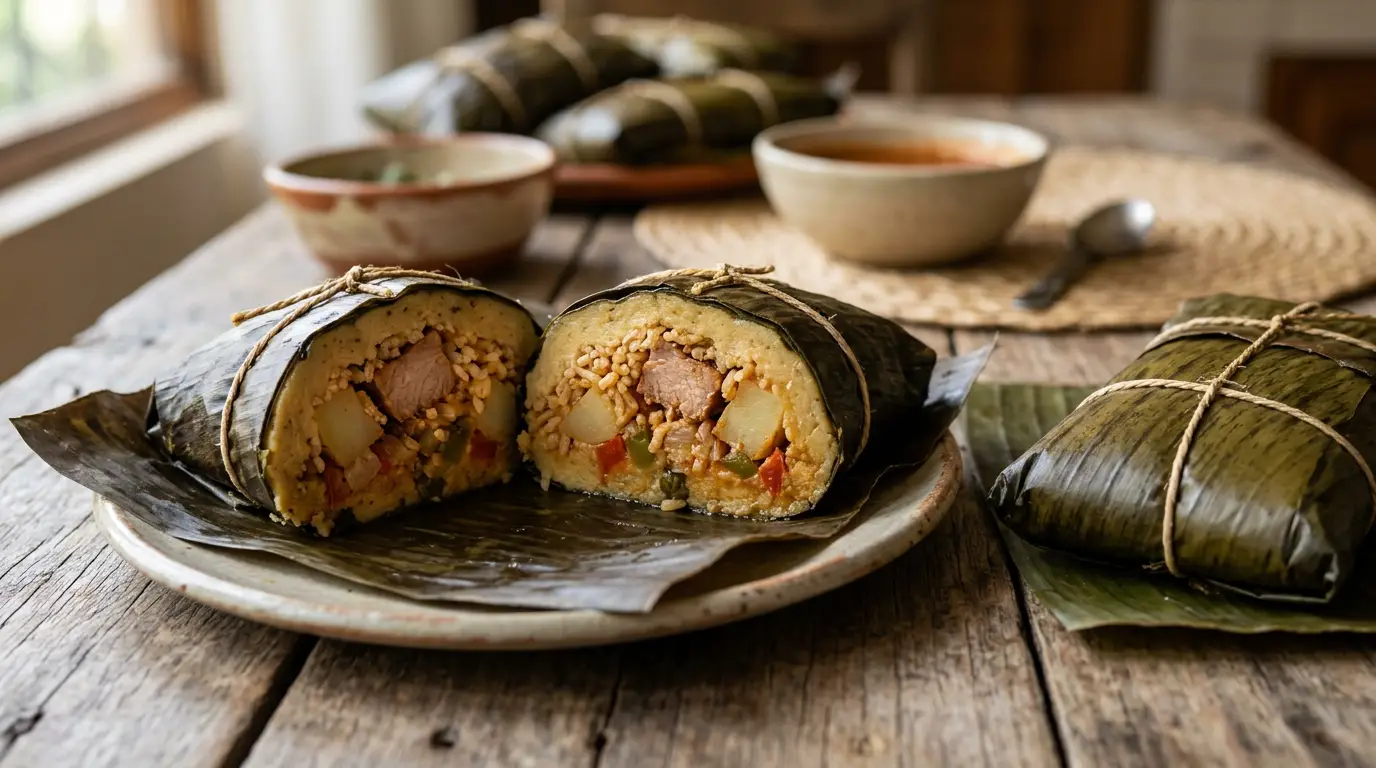
By the 19th century, the recipe for Nacatamal had taken on a form nearly identical to what it is today.
- Pork
- Rice
- Potato
- Tomato
- Onion
- Green Bell Pepper
- Mint
- Achote
The current classic style, which combines these elements and more, is gaining popularity.
In addition, depending on the region or household, unique recipes incorporating olives, raisins, or prunes have emerged.
Among historians in Nicaragua, this dish is described as “the most iconic Mestizo (mixed-culture) dish,” representing a fusion of Indigenous and_ Spanish cultures.
Today, nacatamal has become Nicaragua’s national dish.
Since cooking—from preparation to completion—can take a full day, it seems that families and relatives often gather to make large quantities.
When to eat it, too
- Breakfast on Saturdays and Sundays
- Christmas
- New Year's holidays
- Celebratory events such as baptisms and weddings
- Family gathering
It has been passed down as “a dish enjoyed with family on special occasions,” among other things.
Summary
How was it?
In this article, we introduced Nacatamal, Nicaragua’s national dish.
Make this hearty, nutritious dish with your family and enjoy it together.
I believe that along with cooking methods and tips, this dish has also passed down the irreplaceable moments shared with family and friends.
There is a wonderful cultural tradition embedded in this—even cooking processes that take a little time can be enjoyed as an opportunity for communication.
I don't think you'll have many chances to try Nacatamal, but if you ever come across it or visit Nicaragua, be sure to enjoy it with someone you're close to!
I hope I’ve been able to convey at least a little of Nacatamal’s charm.
Thank you for watching until the very end!
Comments