

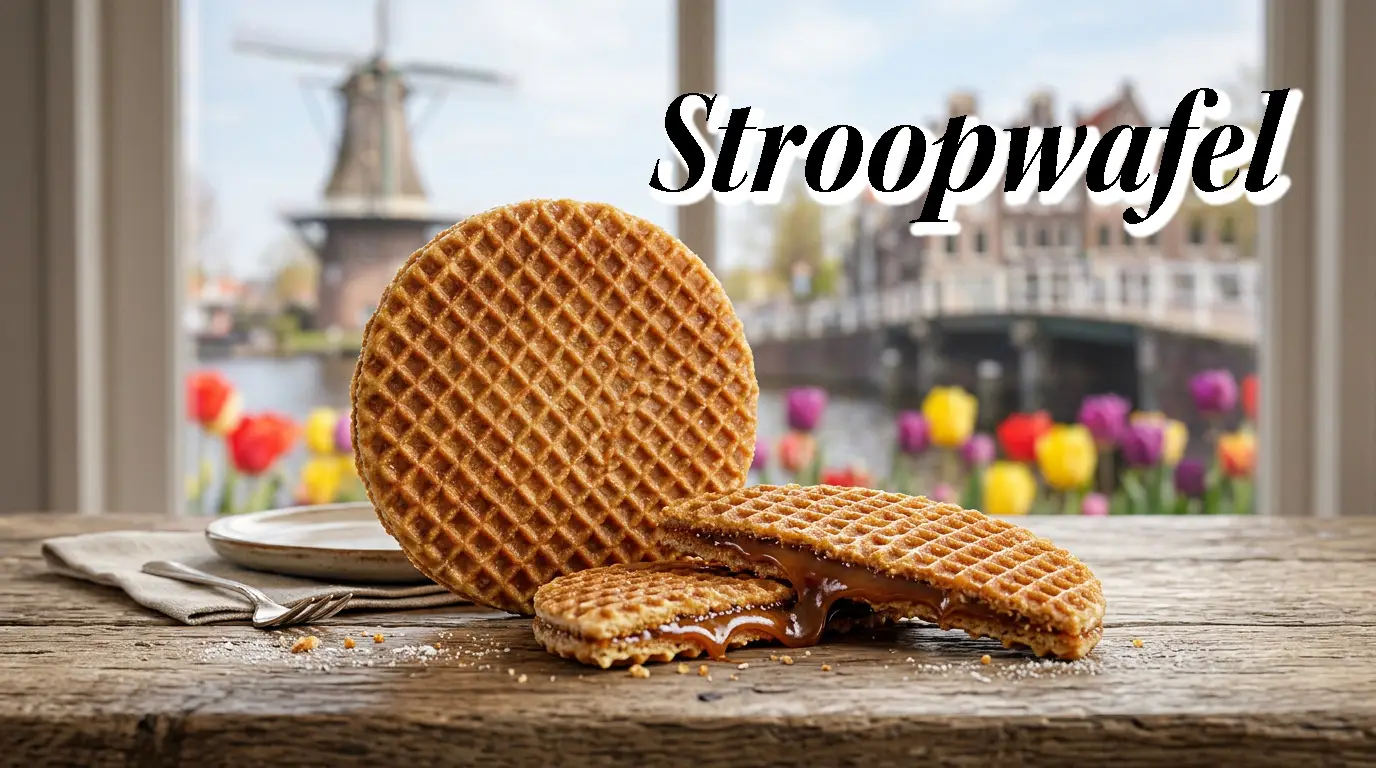
Have any of you ever tried a Stroopwafel?
Stroopwafels are a traditional Dutch treat.
Now known throughout the world, this confection was originally a simple treat born out of a spirit of not wasting food.
In this article, we’ll explore everything from the appeal of Stroopwafels to their history!
Please watch until the very end!
~Notice~
Would you like to experience the charm of food through music?
At TasteTune, we create original music inspired by the taste, aroma, atmosphere, and cultural background of each dish.
Whether it is a memorable dish, a cuisine from a country you love, or a special meal you would like to prepare for someone important, we invite you to take a look at our music creation guide.
What kind of dish is a Stroopwafel?
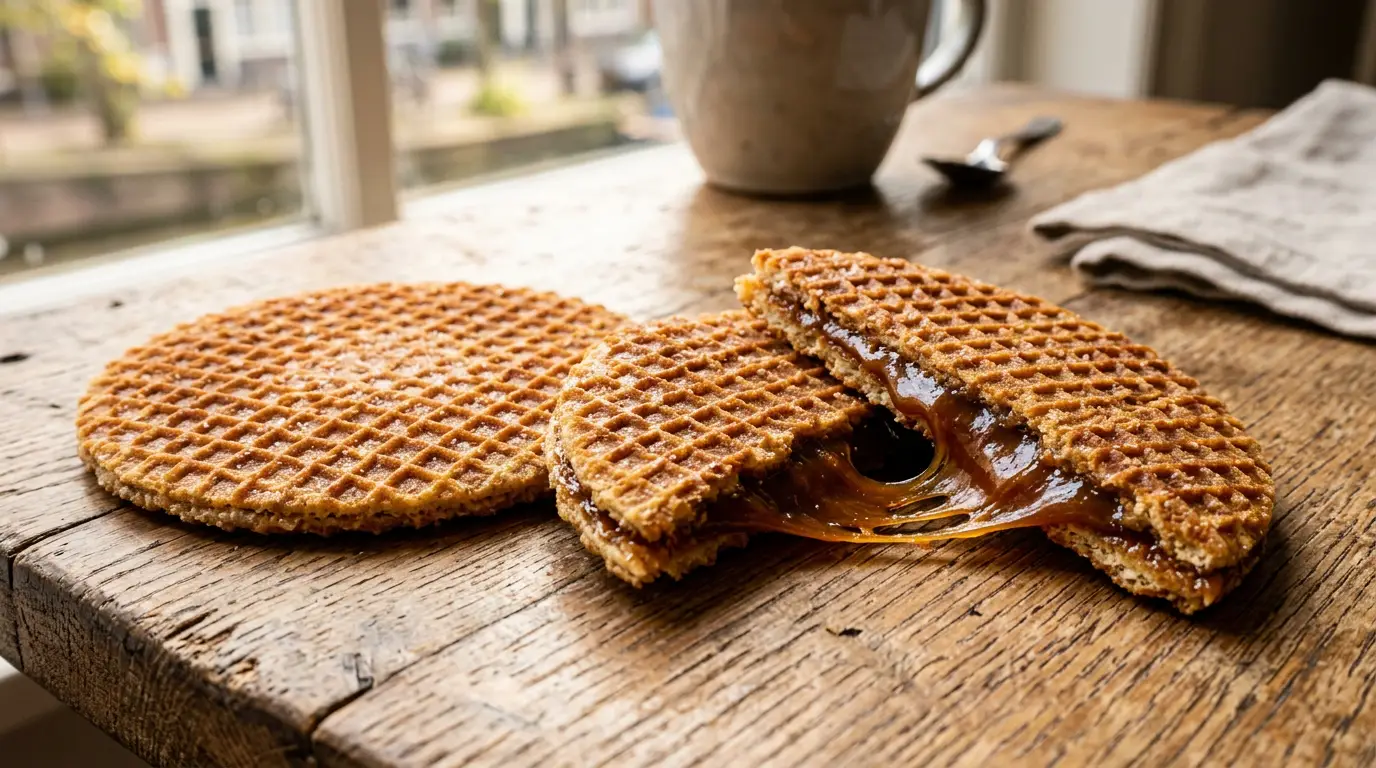
Stroopwafels are a traditional baked treat beloved in the Netherlands.
It is made by cutting a thin, round waffle in half horizontally and sandwiching a caramel-like syrup between the two halves.
In Japan, when people hear the word “Belgium,” they generally think of Belgian waffles, but this has a charm all its own.
Belgian waffles are known for their light, fluffy texture.
However, these Stroopwafels are known for their crisp, cookie-like texture.
The name is in Dutch
Stroop = Syrup
Wafel = Waffle
This means waffles with syrup.
In addition, “wafel” can also refer to a honeycomb-like lattice pattern.
The Appeal of Stroopwafels
Stroopwafels are packed with all kinds of delights.
The first is texture.
When eaten as is, the outside is crispy, and you can taste the syrupy texture inside.
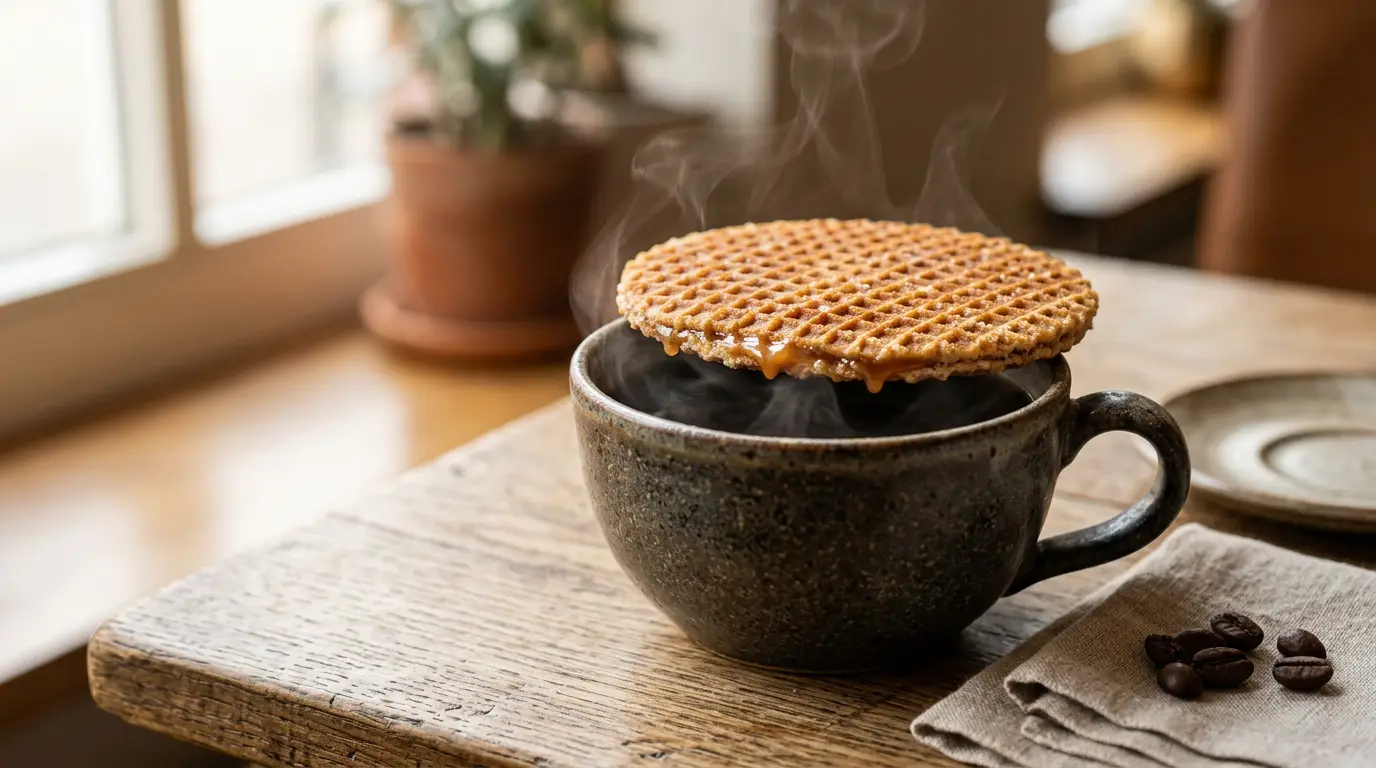
However, if you leave it on top of coffee or tea for a while, its texture changes.
It is commonly considered the classic way to enjoy Stroopwafels—by placing them on top of a cup of coffee or tea for a few minutes to warm them up.
By doing this, the syrup melts, allowing you to enjoy a moist texture that’s almost like it was just made.
In the Netherlands, Stroopwafels are loved as <SPAN class="swl-marker mark_orange>a treat to be enjoyed, including the time it takes to warm them up.
The second point is the scent.
Stroopwafels are <SPAN class="swl-marker mark_yellow">broadly speaking, a blend of four distinct flavors."
- The toasty aroma of baked wheat
- The rich aroma of butter
- The sweet aroma of caramel syrup
- The aroma of spices such as cinnamon
You can really smell the cinnamon and caramel, especially when it's warmed up.
Some people say it has a scent that evokes a sense of nostalgia for Japanese people.
The third point is its connection to coffee.
A Stroopwafel isn't truly complete on its own.
This stems from the history of Stroopwafels as a traditional accompaniment to coffee.
The custom of drinking coffee has long been established in the Netherlands.
That is why the Dutch began making this treat from scraps of bread and cookies.
Perhaps because of this history, the waffle is designed to fit perfectly on the rim of a mug.
It’s also a fun fact that, once you know it, helps you enjoy it even more.
The History of Stroopwafels
Stroopwafels originated in the late 18th century to the early 19th century.
The location is believed to be the city of Gouda in the province of South Holland, the Netherlands.
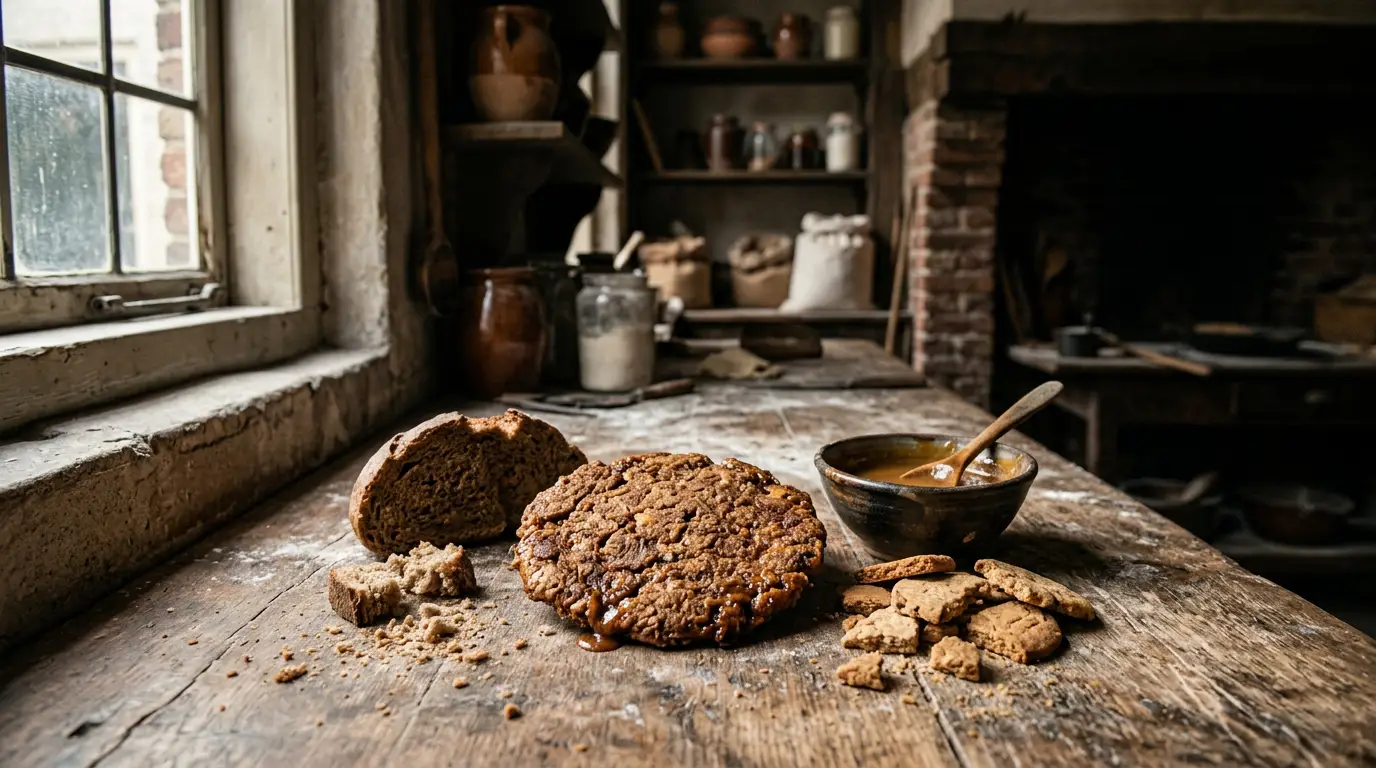
The original form of the Stroopwafel is a treat made by baking bread or cookies together with syrup.
Back then, bakers would use leftover bread crumbs and dough scraps to make baked goods instead of throwing them away.
The Stroopwafel was born out of this spirit of not wasting food.
At that time, these sweets were not as refined as they are today; they were sweets that ordinary people could easily enjoy.
Completion of the Prototype
Around 1810, a baker in Gouda perfected this baked treat, which served as the prototype for today's Stroopwafel.
The baker's name is Gerard Kamphuisen (Gerard Kamphuisen).
He began using a thin dough made with yeast and a rich, spiced syrup.
This method has been passed down to the present day, and the Kamhausen shop is famous as the “Original Stroopwafel.”
From Gouda to the Whole Country
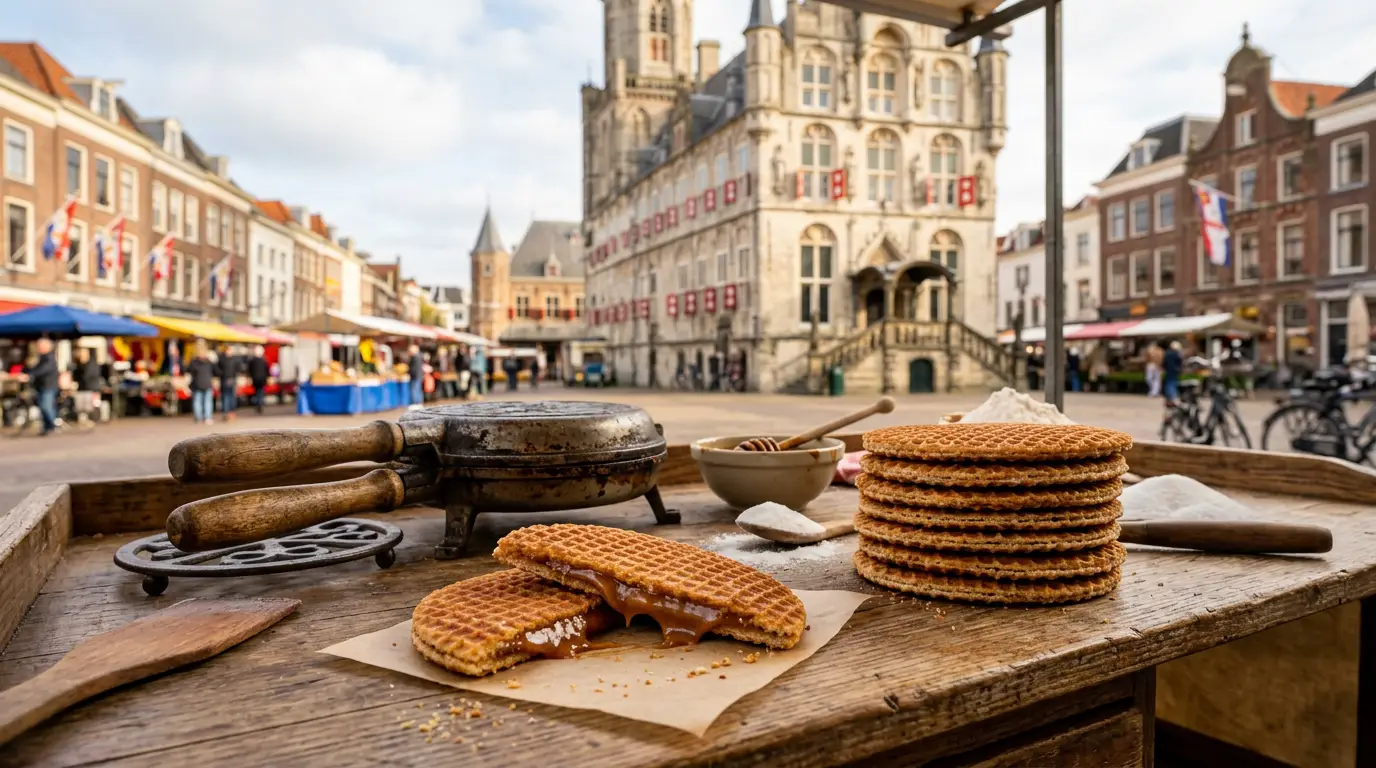
By the 19th century, Stroopwafels had begun to be sold at the market in Gouda.
As it gained popularity among many people, the method spread to other bakers as well.
As production spread to various regions, each shop began experimenting with the amount of cinnamon, the sweetness of the syrup, and the thickness of the dough, competing to create their own unique flavors.
By this time, it had become firmly established as “A must-try local specialty when visiting Gouda .”
With the advent of the 20th century, advances in manufacturing machinery made mass production possible.
Stroopwafels, which until then had only been available at markets and bakeries, are now sold at supermarkets, candy stores, and cafes as well.
Advances in packaging technology have also extended the shelf life of these products.
As a result, demand has increased not only as a snack but also as a souvenir."
From the Netherlands to the World
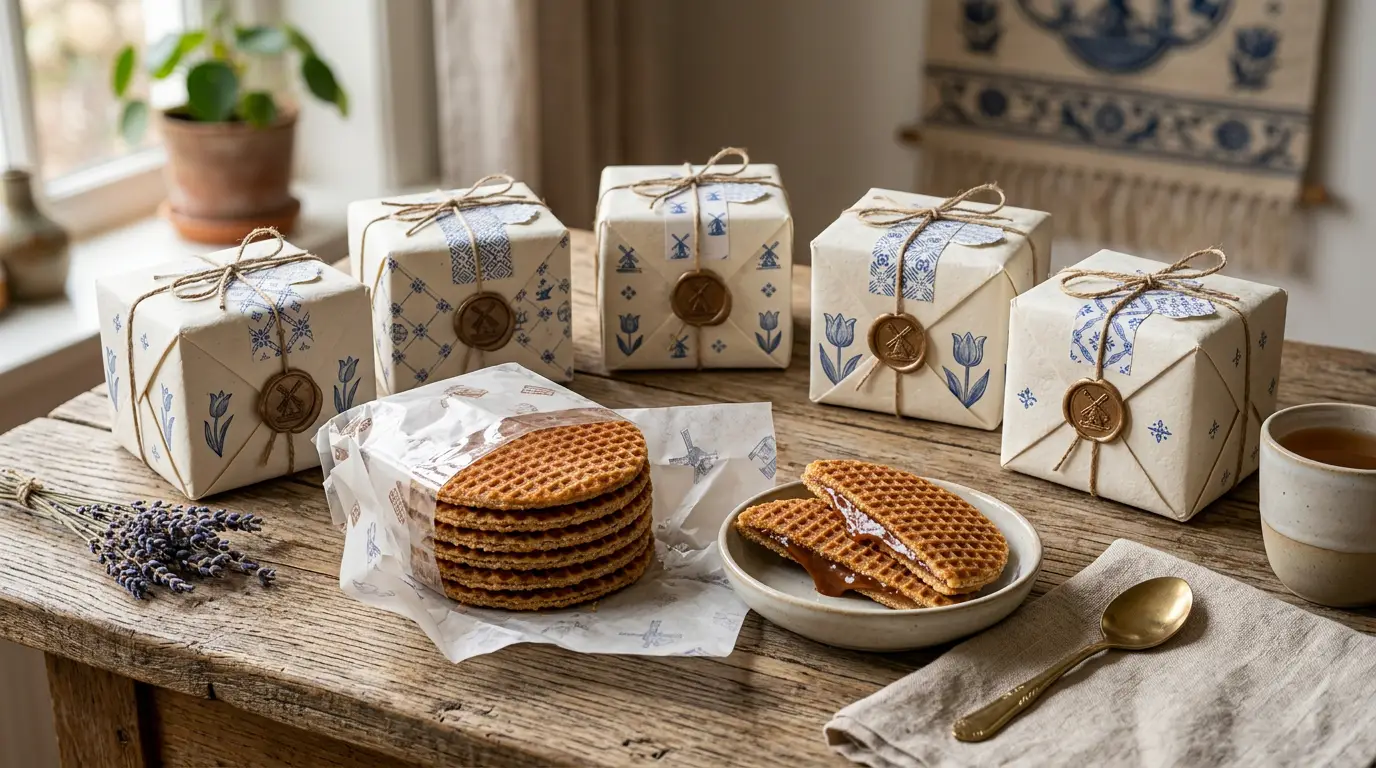
As overseas travel became more popular in the 20th century and beyond, Stroopwafels spread around the world as a classic Dutch souvenir.
The main reason for the increase in its profile was,
- The fact that it was sold at an airport in the Netherlands
- The fact that tourists took them home as souvenirs
- It was served as part of the in-flight service on a flight operated by the Dutch airline KLM
These are just a few examples.
In Gouda, the cheese’s birthplace, shops that sell freshly baked cheese made using traditional methods are gaining popularity.
On the other hand,
- Chocolate Coating
- Honey Syrup
- Caramel Salt
- Mini Size
- Gluten-Free Formula
Among other things, many new arrangements have appeared.
Even so, the basic method of sandwiching syrup between thin waffles has remained virtually unchanged for over 200 years.
It has become a world-renowned confectionery that is sold not only in Europe but also in supermarkets and specialty import food stores around the world.
Summary
How was it?
In this article, we introduced Stroopwafels, a traditional Dutch treat.
If you learn about its history, I think you'll understand why this article is so popular and famous around the world.
What was once a treat for the common people has now become a national specialty.
But perhaps it is precisely because these sweets add a little richness to everyday life that they have been loved for 200 years.
You can buy Stroopwafels at familiar stores like Kaldi, Muji, and_ Starbucks.
Be sure to try it with a cup of coffee or tea!
Thank you for watching until the very end!

Comments