

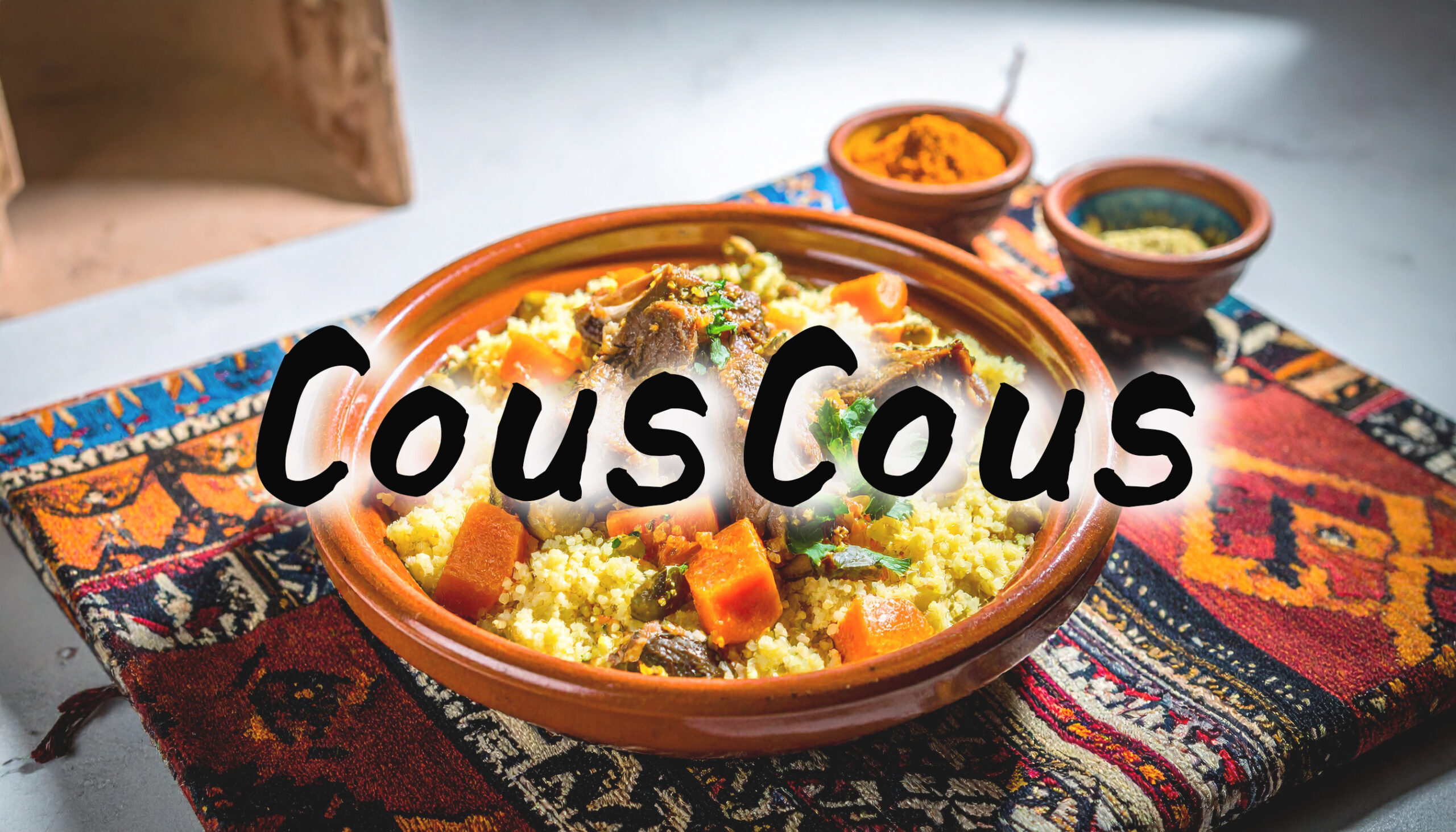
Fragrant spices that evoke the atmosphere of a foreign land, and a simple, somewhat nostalgic flavor—that is “couscous,” a traditional Moroccan dish.
With its roots in North Africa, this dish has been passed down through generations in Moroccan homes and at festive gatherings.
Couscous is not just a staple food; it is also something special that brings people together.
Let’s explore the appeal of couscous, along with its history and culture.
What is couscous?

Couscous is one of the traditional staple foods of North Africa (particularly Morocco, Algeria, and_ Tunisia).
It is primarily made by mixing coarsely ground durum wheat flour (semolina) with water to form a grain-like texture, which is then steamed.
It is sometimes referred to as “the precursor to pasta,” and is used as a staple food in place of rice or_ bread.
In Morocco, it is typically served with a soup simmered with vegetables, chickpeas, lamb, and chicken, and it is a dish with a rich aroma of spices such as cumin, cinnamon, and_ saffron.
TasteTune「Couscous」
Hey everyone, have you heard tastetune's song “Couscous”?
The core of tastetune lies in sharing music to help more people become familiar with cooking and to make them feel it's delicious.
Here, we introduce the thoughts, expressions, and ingenuity embodied in this music.
The Earth's Resonance and Traditional Tones
At the heart of this song lies the traditional sounds of Morocco.
The rhythm of hand-beaten drums evokes the texture of couscous's tiny grains and the lively gathering of people around it. The deep tones of the stringed oud instrument spread through the heart like the wind sweeping across the Moroccan desert, evoking a sense of nostalgia and warmth. These instruments express the history and culture embedded in couscous through sound.
Layers of spices and vegetables expressed through sound
The light resonance enveloping the entire piece evokes the essential spice aroma of couscous and the deep flavor of vegetables simmered over time. The fluffy sound expresses the rising steam-like fragrance, while the overlapping layers of sound represent the rich taste born from blending various ingredients. Listeners will feel warmth and flavor as if they were actually eating couscous.
Desert Winds and the Warmth of the Table
This piece not only paints the cooking with sound, but also reflects the landscapes of Morocco.
The light resonance evokes the dry wind sweeping across the desert, drawing the heart toward vast nature. The sounds of drums and oud conjure the warmth of a table shared with family and friends over couscous. This speaks to how deeply couscous is woven into people's lives.
Couscous for the ears
This song is more than just background music. It's crafted to let you savor the warmth of couscous, the aroma of spices, and the culture of Morocco through your ears. Close your eyes, and images of desert landscapes and bustling dining tables will come to mind. Please enjoy this “couscous” to your heart's content.
History of Couscous
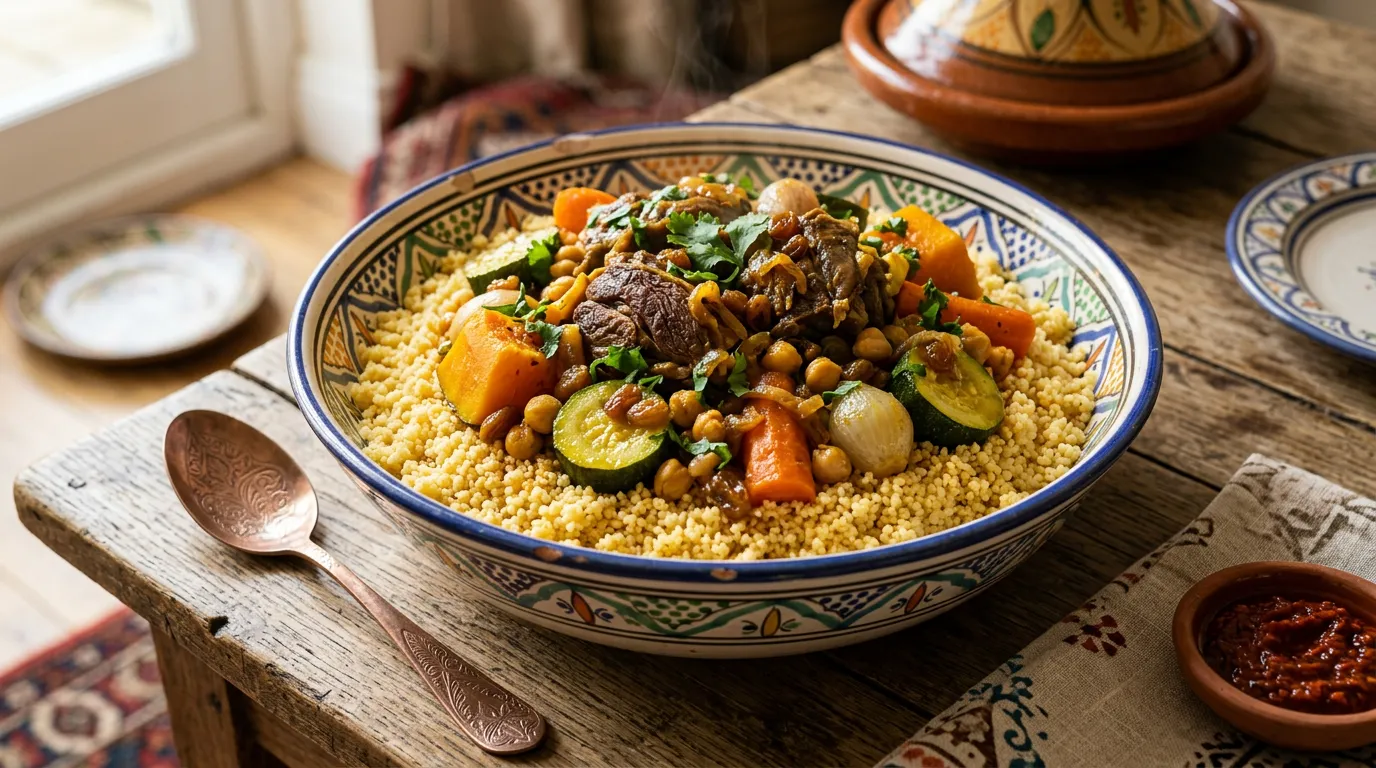
The history of couscous dates back about 2,000 years, to the 2nd century BCE, when it was part of the daily lives of the Berbers living in North Africa.
As they experimented with limited ingredients, they developed a technique involving steaming durum wheat that had been ground into small grains.
And this technique became the prototype for later couscous.
As the Middle Ages began, couscous spread widely along with the expansion of Islam and the development of trade.
In Morocco in particular, it has become a staple dish that adds color to special occasions, such as family meals after Friday prayers and celebratory gatherings.
Each household has its own unique seasoning and ingredients, and each locally rooted style has been passed down through the generations.
From the 19th century onward, it spread to Europe alongside France’s colonial policies and was incorporated into the local culinary culture by immigrants from North Africa.
Today, it has become so popular across borders that it can be easily found in supermarkets in France and Italy.
Then, in 2020, “The Art and Culture of Making Couscous,” a joint nomination by four countries—Morocco, Algeria, Tunisia, and Mauritania—was inscribed on the UNESCO List of Intangible Cultural Heritage, reaffirming its cultural value to the world.
A short story about couscous
Couscous is an intangible cultural heritage
With its inscription on UNESCO’s Intangible Cultural Heritage list, couscous is no longer merely a dish; it is recognized worldwide as “a culture that connects people.”
The wisdom of cooking passed down in the home and the scenery of the dining table are attracting attention as a valuable culture that should be preserved for the future.
Sweet couscous "Sehwa" is also popular.
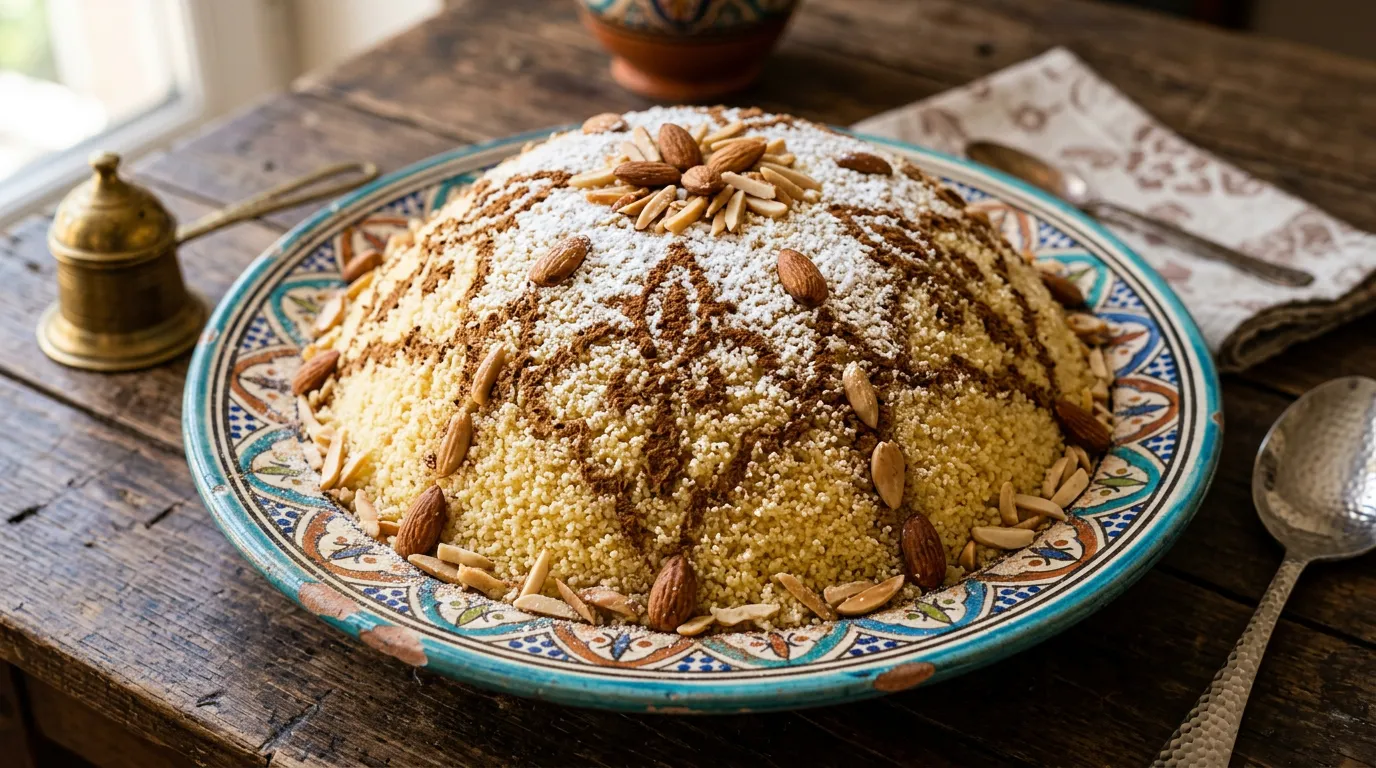
When people hear the word “couscous,” many might think of savory dishes, but in Morocco, there is also a sweet version called “Seffa.”
This is a dessert-like dish made by adding powdered sugar, cinnamon, butter, raisins, almonds, and other ingredients to steamed couscous; it is often served at celebrations such as weddings.
Symbol of Moroccan hospitality
In Morocco, couscous is the quintessential “dish served to welcome guests.”
Therefore, it's not just for special occasions—it's also essential for family gatherings and neighborhood get-togethers.
The practice of gathering around a single large platter to eat together embodies “a spirit of sharing” and “a spirit of mutual support”.
Highly nutritious and remarkable in modern times
Because couscous is low in fat, high in protein, and rich in dietary fiber, it has been gaining popularity in recent years among health-conscious people."
Its appeal lies in its light, refreshing texture despite being a carbohydrate-rich food, and it is used in a variety of dishes, including salads, soups, and main courses.
How to make couscous
In Morocco, couscous is carefully steamed using a special steamer (couscousier).
However, these days, instant couscous makes it easy to recreate this dish at home.
Here, we’ll introduce some simple couscous recipes that are easy to make in a Japanese kitchen.
Ingredients (serves 2-3)
- Couscous (dried) ... 150g
- Boiling water...180 ml
- Olive oil... 1 tablespoon
- Salt... a pinch
Examples of Ingredients
- Chicken thigh meat... 150g (cut into bite-sized pieces)
- Onion... 1 (thinly sliced)
- Carrot... 1 (diagonally sliced)
- Zucchini... 1/2 (sliced)
- Chickpeas (boiled) ... 1/2 cup
- Canned tomatoes (chopped) ... 1/2 can
- Garlic... 1 clove (finely chopped)
- Cumin powder, cinnamon, turmeric... 1/2 teaspoon each
- Salt and pepper... to taste
- Olive oil... 1 tablespoon
How to cook them
- Preparing the ingredients
Heat olive oil in a pot and sauté the garlic and onion.
Once the aroma rises, add the chicken and stir-fry until browned. - Soup making
Add carrots, zucchini, chickpeas, canned tomatoes, and spices.
Once everything is well combined, add about 400ml of water and simmer for about 15 minutes. Finally, season with salt and pepper to taste. - Steaming couscous
Transfer to another bowl, pour boiling water over it, and add salt and olive oil.
Cover with plastic wrap or a lidabout 5 minutes. Fluff with a forkand it's ready to serve. - Presentation
Spoon the couscous onto a plate, ladle the hearty soup over it, and enjoy. For added flavor, top with raisins or nuts if desired.
Summary
Couscous is a deep and heartwarming dish that reflects the lives and hearts of the Moroccan people.
The history, culture, and family bonds contained in each dish gently speak to those who eat it.
You can make it with ingredients you have at home, so please try it out for yourself.
I'm sure that feeling the breeze from a foreign land will make mealtimes a little more special.
Comments